

Apple is preparing to deepen ties with Intel in a move that could alter the balance of power in the global chip industry, strengthen Washington’s push for domestic semiconductor production, and give Intel its biggest external manufacturing endorsement in years.
The two companies have reached a preliminary agreement for Intel to manufacture some of the chips used in Apple devices, according to people familiar with the matter cited by WSJ, capping more than a year of negotiations that increasingly drew in the White House and senior U.S. economic officials.
The arrangement remains in its early stages, and it is still unclear which Apple products will ultimately rely on Intel-made chips, according to the report. But the implications stretch far beyond a normal supplier agreement.
Register for the next Tekedia Mini-MBA.
Register for Tekedia AI in Business Masterclass.
Join Tekedia Capital Syndicate and co-invest in great global startups.
The deal represents an attempt for Apple to reduce dependence on Asia-centered semiconductor manufacturing at a time when artificial intelligence demand is consuming advanced chip capacity at unprecedented levels. It is also seen as a high-stakes opportunity for Intel to prove it can once again compete with industry leaders after years of technological decline.
In addition, the deal is seen as a validation of Washington’s aggressive industrial strategy designed to pull critical semiconductor production back onto U.S. soil.
The agreement arrives at a pivotal moment for the semiconductor industry, where AI infrastructure spending has transformed chip manufacturing from a largely commercial business into a geopolitical priority.

For years, Apple relied almost exclusively on Taiwan Semiconductor Manufacturing Company to produce the custom chips powering the iPhone, iPad, and Mac ecosystem. That partnership became one of the most successful relationships in modern technology, helping Apple develop increasingly powerful processors after abandoning Intel-designed Mac chips in 2020 in favor of its own Arm-based silicon.
But the AI boom has fundamentally changed the economics of chip production. Explosive demand from companies such as Nvidia, cloud providers, and AI startups has overwhelmed advanced semiconductor fabrication and packaging capacity worldwide. AI accelerators and high-performance GPUs now command priority access to the most sophisticated manufacturing nodes, forcing even giants like Apple to compete more aggressively for supply.
Apple executives have recently acknowledged the growing strain. CEO Tim Cook said supply shortages involving advanced chips were constraining production of some Mac products.

“We think, looking forward, that the Mac Mini and the Mac Studio may take several months to reach supply-demand balance,” Cook said during a recent earnings call.
AI infrastructure is beginning to crowd out traditional consumer electronics demand, reflecting a shift in the industry. In effect, Apple is now operating in a semiconductor market increasingly shaped by AI capital expenditure cycles rather than smartphone refresh patterns.
That has elevated the strategic importance of manufacturing diversification. The Intel deal gives Apple a potential secondary source for advanced chip production while aligning the company more closely with Washington’s effort to rebuild domestic semiconductor capabilities amid rising geopolitical concerns surrounding Taiwan.
Boosting Trump’s Domestic Manufacturing Push
The political dimension surrounding the agreement is unusually significant. The Trump administration spent the past year actively encouraging major U.S. technology firms to support Intel’s foundry ambitions as part of a wider effort to restore American leadership in chip manufacturing.
Last summer, the administration converted nearly US$9 billion in federal support into Intel equity, giving the U.S. government a 10% stake in the company. The investment transformed Intel from a struggling chipmaker into a centerpiece of America’s industrial and national security strategy.
Commerce Secretary Howard Lutnick reportedly met repeatedly with Apple executives, Nvidia leadership, and Elon Musk to encourage partnerships with Intel.
President Donald Trump also personally pressed Cook during White House discussions.
“I like Intel,” Trump said in January. “As soon as we went in, Apple went in, Nvidia went in, a lot of smart people went in.”
The administration increasingly views semiconductor manufacturing not merely as an economic issue but as a national security imperative, especially as tensions between Washington and Beijing continue reshaping technology supply chains.
Intel’s revival, therefore, carries political significance well beyond Wall Street. The company had spent much of the last decade losing technological leadership after repeated manufacturing delays allowed TSMC and Samsung Electronics to dominate advanced fabrication.
A series of failed transitions, executive turnover, and engineering setbacks badly damaged Intel’s reputation among major customers. The company’s foundry division struggled to attract external business as customers questioned whether Intel could reliably produce cutting-edge chips at scale.
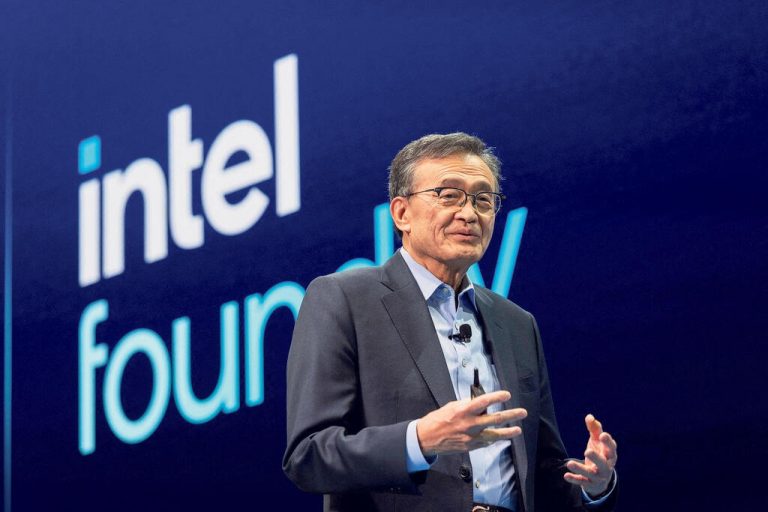
That trajectory began changing after Intel appointed Lip-Bu Tan as CEO in 2025. Tan launched an aggressive restructuring campaign focused on rebuilding Intel’s engineering culture, streamlining management, and restoring confidence in its manufacturing roadmap. He invested heavily in Intel’s next-generation 14A process technology while reshaping the company’s leadership ranks, including recruiting former TSMC executive Wei-Jen Lo, a move that reportedly triggered legal action from TSMC. Intel also reorganized its data center, client computing, and custom silicon operations in an effort to become more responsive to outside customers.
The Apple agreement may now become the strongest indication yet that Intel’s turnaround is gaining credibility. Importantly, Intel has already secured support from several major AI-era players.
Nvidia invested US$5 billion in Intel last year and partnered with the company on custom data center processors. Elon Musk’s businesses also announced a manufacturing partnership with Intel tied to Musk’s Texas-based Terafab initiative, which is expected to support chip production for Tesla, SpaceX, and xAI.
With Apple now joining that ecosystem, Intel is gradually positioning itself as the manufacturing backbone of a broader American AI and technology alliance.
However, TSMC continues to hold a commanding technological lead in several advanced manufacturing areas, particularly in process maturity, yield consistency, and large-scale production execution.
Manufacturing chips for Apple also represents one of the most demanding assignments in the semiconductor industry. Apple’s performance, efficiency, and reliability requirements are among the strictest globally, meaning Intel will face intense scrutiny if the partnership moves forward.
Analysts say the deal is less about Intel immediately replacing TSMC and more about Apple building optionality in an increasingly constrained and politically sensitive supply environment.
The agreement also underscores how AI is redrawing corporate alliances across Silicon Valley. Companies that once competed primarily in consumer products are now increasingly linked by a shared need for computing infrastructure, access to semiconductors, and energy-intensive AI systems.
In that environment, chip manufacturing capacity has become as strategically important as software innovation – and the Apple-Intel partnership reflects that new reality.