

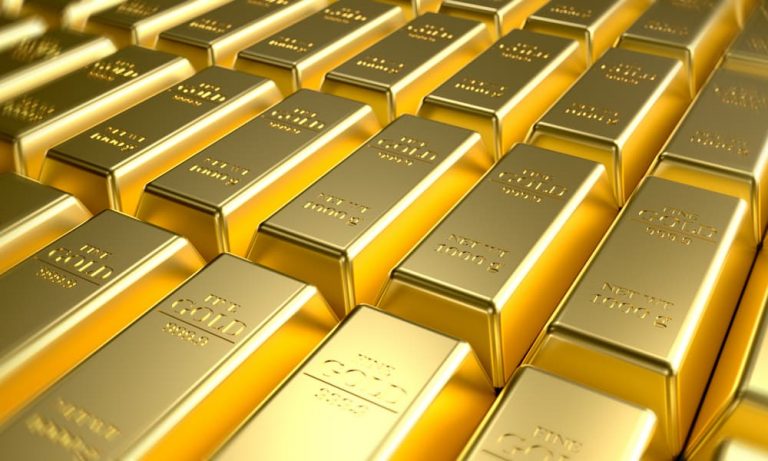
Gold’s climb to $4,719.32 per ounce, with a 0.42% daily gain, reflects more than the usual market anxiety surrounding geopolitical instability. Traditionally, gold rallies during wars, recessions, or inflationary shocks because investors seek safety in tangible assets when confidence in financial systems weakens.
Yet the current surge reveals something deeper and potentially more transformative: a growing global fear that the international monetary system itself has become a weapon. For decades, the United States dollar has operated not only as the world’s reserve currency but also as the central nervous system of global trade.
Energy markets, sovereign debt, commodity pricing, and international banking are deeply intertwined with dollar infrastructure. Access to the SWIFT payment system, correspondent banking relationships, and dollar liquidity has allowed nations to participate in the modern global economy. However, the same structure that provides stability also grants extraordinary geopolitical leverage to the United States and its allies.
Register for the next Tekedia Mini-MBA.
Register for Tekedia AI in Business Masterclass.
Join Tekedia Capital Syndicate and co-invest in great global startups.
Recent years have demonstrated how economic sanctions can cripple entire economies without a single missile being launched. Nations can be isolated from global banking systems, cut off from energy markets, frozen out of reserve assets, and excluded from critical financial networks. In effect, financial infrastructure has become a form of kinetic power.
A country does not necessarily need to be invaded militarily to experience economic devastation; it can instead be strategically disconnected from the arteries of global commerce. This reality is changing how sovereign states think about reserves and financial security. Gold is increasingly viewed not merely as a hedge against inflation or market volatility, but as an asset beyond political reach.
Unlike foreign-held Treasury bonds or reserves stored within Western-controlled systems, physical gold carries no counterparty risk. It cannot be frozen digitally, sanctioned electronically, or devalued by another nation’s monetary policy. In an era where economic warfare has become normalized, this neutrality has become immensely valuable.
The rise in gold prices therefore reflects a broader loss of trust in the permanence of the post-World War II financial order. Countries across Asia, the Middle East, Africa, and Latin America are reassessing their dependence on the dollar system. Central banks have accelerated gold purchases at historic rates, seeking diversification away from assets that could theoretically become liabilities during geopolitical disputes.

This trend is not necessarily anti-American in nature; rather, it is driven by the rational calculation that no sovereign treasury wants to remain vulnerable to external financial coercion. The fear extends beyond governments. Institutional investors are beginning to recognize that reserve currencies are no longer politically neutral instruments.
If access to trade, banking, and energy infrastructure can be weaponized, then the concept of risk-free sovereign assets becomes increasingly fragile. Gold benefits from this uncertainty because it exists outside the architecture of state-controlled digital finance.
The growing politicization of currency systems may accelerate fragmentation within the global economy. Alternative payment rails, bilateral trade agreements settled in local currencies, and central bank digital currency initiatives are emerging partly in response to concerns about dollar dominance. Nations are searching for mechanisms that reduce dependency on a system perceived as vulnerable to geopolitical manipulation.
Yet despite these developments, replacing the dollar remains extraordinarily difficult. The United States still possesses the deepest capital markets, the most liquid financial instruments, and the largest institutional trust network in the world. The dollar’s dominance is supported not only by military and economic power but also by decades of entrenched infrastructure.

However, dominance and trust are not identical concepts. Gold’s rally signals that while the dollar may remain dominant, confidence in its neutrality is deteriorating. Gold trading near record highs is not simply a reflection of war fears or inflation expectations. It represents a profound shift in how nations and investors perceive sovereignty, reserve security, and financial power.
In a world where currencies and banking systems can function as instruments of strategic pressure, gold is reclaiming its historical role as the ultimate neutral reserve asset. The message from the market is increasingly clear: when money itself becomes geopolitical weaponry, hard assets become political insurance.