

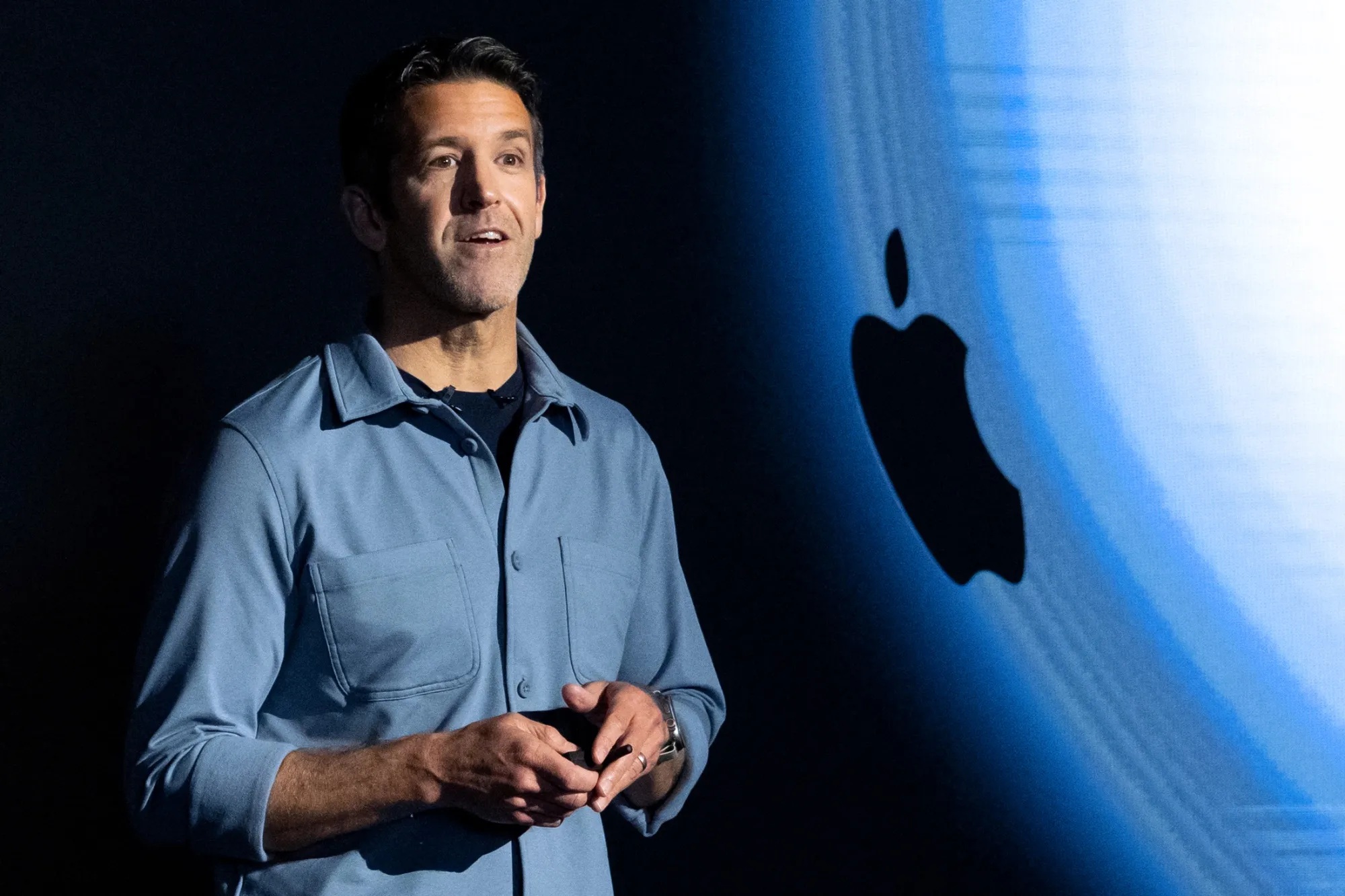
Apple is entering a consequential leadership transition that could redefine its trajectory, as longtime hardware chief John Ternus prepares to take over as chief executive in September from Tim Cook, ending a tenure that reshaped the company into a services and operations powerhouse.
The shift is already prompting debate among investors about what Apple’s next chapter should look like — and how much it should diverge from the Cook era. Longtime shareholder Fran Tarkenton framed the moment as one that demands independence rather than continuity, pointing to advice once given by Steve Jobs to Cook ahead of his own succession in 2011.
“He said to Tim Cook, When you’ve got to make a decision, don’t say to yourself, what would Steve Jobs do? You do what you think is the best thing for the company,” Tarkenton said.
Register for the next Tekedia Mini-MBA.
Register for Tekedia AI in Business Masterclass.
Join Tekedia Capital Syndicate and co-invest in great global startups.
That guidance, which Cook later recalled during a memorial tribute to Jobs, now serves as a benchmark for Ternus as he steps into a role defined by both high expectations and shifting industry dynamics.
Tarkenton was explicit about the need for differentiation. “He cannot be Tim Cook,” he said.
The comment reflects a broader investor sentiment: while Cook’s leadership delivered scale, profitability, and resilience, the challenges facing Apple today are materially different. Growth in core hardware segments has moderated, competition has intensified, and the center of gravity in the tech industry is shifting toward artificial intelligence.

Ternus’s appointment signals a potential recalibration. With more than two decades at Apple and a background rooted in hardware engineering, he represents a return to the company’s product-driven DNA — a contrast to Cook’s operational focus, which emphasized supply chain efficiency, global expansion, and the rapid scaling of services.
Tarkenton endorsed the choice, describing Ternus as “the right guy at the right time,” but stressed that execution will depend on how effectively he leverages that experience.
“He cannot be Tim Cook,” he repeated, adding that Ternus must rely on his 25 years inside Apple to navigate the transition.

Cook’s tenure leaves a complex legacy. Under his leadership, Apple expanded its services business into a multi-billion-dollar engine spanning subscriptions, payments, and digital content, in some periods outpacing hardware in revenue growth. That diversification strengthened margins and reduced reliance on flagship products like the iPhone.
However, it shifted investor expectations. Apple is now being judged not only on financial performance but on its ability to deliver the next major technological leap, particularly in AI.
The timing of the transition amplifies that pressure. Rivals have moved aggressively to integrate generative AI into both consumer and enterprise ecosystems, raising questions about Apple’s pace and positioning. For Ternus, the challenge will be to integrate AI into Apple’s tightly controlled hardware-software ecosystem in a way that aligns with its emphasis on privacy, performance, and user experience.
His hardware background could prove central to that effort. Apple’s historical advantage has come from vertical integration, designing chips, devices, and software as a unified system. Extending that model into AI could allow the company to differentiate without competing directly on scale with cloud-based AI providers.
Still, the tension lies largely in Cook’s model. Cook’s model prioritized predictability and operational discipline. Ternus inherits that foundation but faces a market that increasingly rewards visible innovation and category creation.
Tarkenton, who began investing in Apple around 2015 and has maintained a long-term position, said his confidence in the company remains unchanged.
“I’ve never sold any of the stock, and I reinvest the dividends every quarter,” he said.
His conviction is partly rooted in Apple’s internal culture and leadership pipeline. “The teams that win have the best coaches, and the best coaches make sure they get the best players,” Tarkenton said. “Apple does that naturally.”
The governance structure also provides continuity. Cook is expected to remain as executive chairman, offering oversight while allowing Ternus to assume operational control. The arrangement is designed to preserve institutional knowledge while enabling a shift in leadership style.
Internally, Ternus’s rise has been anticipated. Tarkenton said his contacts within Apple had been discussing him as a potential successor for years, suggesting the transition is the result of deliberate succession planning rather than a reactive decision.
As recently as last month, Cook downplayed speculation about stepping aside, saying he could not imagine his life without Apple. His continued presence as chairman may help reassure investors during the transition, even as strategic direction evolves.
The broader question is how far that evolution will go. A return to product-centric leadership could signal renewed focus on breakthrough hardware, deeper AI integration, and potentially new categories. At the same time, the services ecosystem built under Cook remains a critical pillar of profitability.
The challenge for Apple is not choosing between the two models but reconciling them, combining operational strength with renewed innovation.