

Apple’s latest hardware gamble, the ultra-thin iPhone Air, may be off to a rocky start in one of its most important markets.
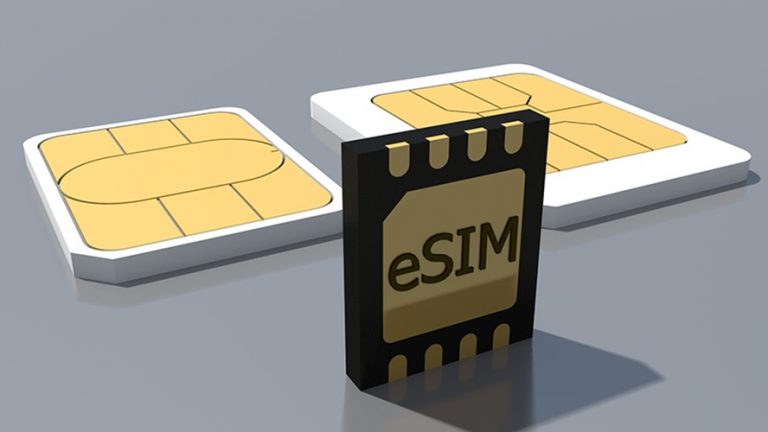
The device, unveiled Tuesday at Apple’s fall event, is the company’s thinnest iPhone yet, measuring just 5.6 millimeters. To achieve the slim profile, Apple removed the traditional SIM card slot and made the iPhone Air eSIM only, leaving more room for its compact battery and other components.
But that design choice poses a challenge in mainland China, where not all carriers have rolled out eSIM service, according to a report by Business Insider.
Register for Tekedia Mini-MBA edition 20 (June 8 – Sept 5, 2026).
Register for Tekedia AI in Business Masterclass.
Join Tekedia Capital Syndicate and co-invest in great global startups.
Register for Tekedia AI Lab.
Release date disappears
Originally, Apple had scheduled iPhone Air deliveries in China to begin on September 19, alongside the iPhone 17 lineup. But in the days following the launch, the South China Morning Post noticed a quiet change: Apple’s Chinese website no longer listed the Air’s release date. Instead, it now displays a message reading: “Release information will be updated later.”
Apple does list China Mobile, China Telecom, and China Unicom as carriers that will support eSIM, but adds that rollout is “subject to regulatory approval.” While Apple didn’t specify which regulator is involved, the Ministry of Industry and Information Technology (MIIT) oversees telecoms in China and is likely to be the deciding authority.
The iPhone Air starts at 7,999 yuan (about $1,123) in China, placing it in the premium tier of the market.

Apple’s China challenge
This is not the first time Apple has hit turbulence in China. The company has steadily lost market share to domestic rivals like Huawei and Xiaomi, which offer competitively priced models that often benefit from government subsidies. Those local advantages have squeezed Apple, especially among price-sensitive buyers.
Still, Apple’s Greater China revenue grew 4% year-on-year last quarter, a surprise that cheered Wall Street analysts.
“This was a major step in the right direction for Cook and Cupertino, with China the star of the show,” wrote Wedbush analyst Dan Ives, who has long been bullish on Apple’s prospects in the region.

A risky but strategic bet
Apple’s push toward eSIM-only devices has been gathering pace. In the United States, it dropped the SIM card slot with the iPhone 14 in 2022, effectively nudging U.S. carriers to accelerate eSIM adoption. In Europe, too, regulators and carriers have been more aligned on digital SIM rollouts.
China, however, presents a trickier environment. While the big three state-run carriers have the technical capacity, rollout has been piecemeal, and adoption has lagged. Regulatory approval processes, coupled with state sensitivities about digital infrastructure, mean Apple’s strategy is colliding with a slower-moving system.
Analysts say the vanished release date highlights the risks of Apple’s hardware design decisions being outpaced by local market realities. Unlike the U.S. or Europe, Apple has less leverage in China, where government policies and local champions like Huawei can tilt the competitive balance.
Buzz vs. barriers
Despite the regulatory hiccups, early chatter around the iPhone Air — amplified by its record-thin design — has generated notable buzz among Chinese consumers, according to SCMP. If Apple can navigate the eSIM hurdle, analysts believe the Air could give its China business an added boost in the final quarter of 2025.
But for now, the device sits under uncertainty — a product that embodies Apple’s design ambitions, yet underlines how geopolitical and regulatory dynamics in China can quickly complicate Cupertino’s plans.