

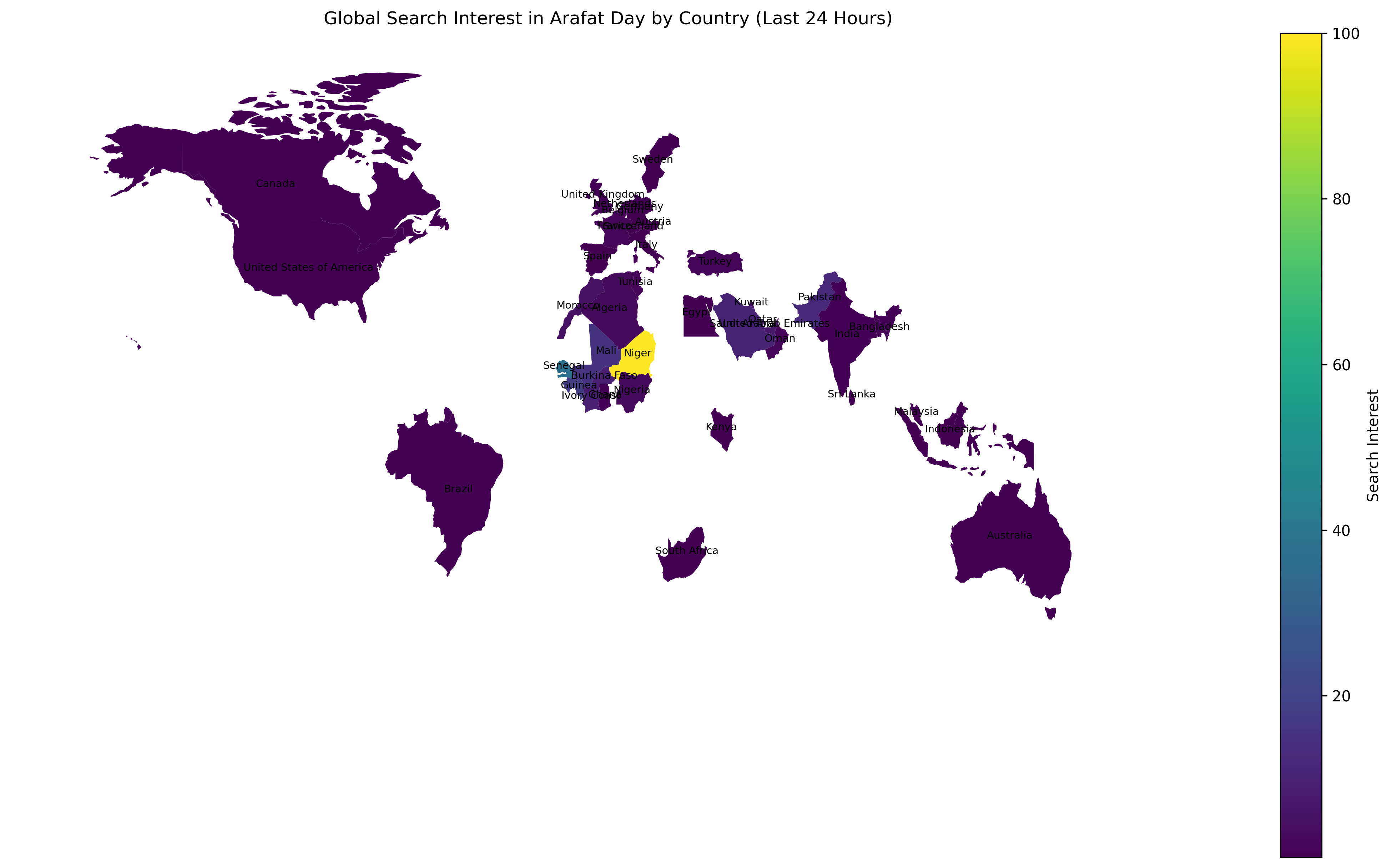
Search interest in Arafat Day has surged across the world in the past 24 hours, with countries in West Africa emerging as unlikely leaders in online attention as Muslims seek information on prayers, fasting and the timing of one of Islam’s holiest days.
Analysis of global search behaviour shows a sharp rise in queries linked to the Day of Arafah, the day before Eid al-Adha and the spiritual climax of the annual Hajj pilgrimage to Mecca. But rather than broad theological questions, users appear to be turning online for practical guidance on how to observe the day.
Searches for “arafat day” recorded the highest level of interest, while “arafat 2026” ranked closely behind, suggesting many users are already looking ahead to future observance dates. Queries including “arafat time”, “day of arafat” and “2026 arafat day” also featured prominently, pointing to uncertainty around timing and local observance, often shaped by lunar calendar calculations and moon sightings.
Register for the next Tekedia Mini-MBA.
Register for Tekedia AI in Business Masterclass.
Join Tekedia Capital Syndicate and co-invest in great global startups.
The strongest pattern in search behaviour, however, concerned worship. Terms including “dua arafat”, “dua”, “dua for arafat” and “invocation arafat” ranked among the most searched related queries, indicating that many people were actively preparing for the day through prayer and spiritual reflection.
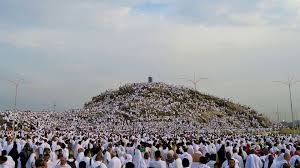
For Muslims, the Day of Arafah marks the peak of the Hajj pilgrimage, when millions of worshippers gather on the plains of Mount Arafat near Mecca for prayer and repentance. Muslims not undertaking Hajj are encouraged to fast, a practice believed to carry particular spiritual merit, helping explain the prominence of searches related to fasting and supplication.
At the same time, interest in real-time developments around the pilgrimage appears to be growing. Searches for “live arafat”, “mount arafat” and “hajj” suggest users are increasingly following events as they unfold, whether through livestreams, news coverage or religious broadcasts from Saudi Arabia.

Perhaps the most striking finding is geographical. While Saudi Arabia and Gulf states featured in search activity, the strongest concentration of interest came from West Africa.
Niger recorded the highest search interest globally in the past 24 hours, followed by Senegal, Guinea and Mali. Mauritius and the Maldives also registered significant activity, while Pakistan, Saudi Arabia, Qatar and the United Arab Emirates showed moderate but notable levels of engagement.
The pattern underlines the growing visibility of Muslim communities in West Africa within global digital trends. In countries such as Niger, Senegal and Mali, religious observance around Eid al-Adha and the Day of Arafah remains deeply embedded in public life, often accompanied by heightened demand for guidance on prayer, fasting and communal observance.

The data also reveals a strong multilingual dimension. French-language searches including “jour de arafat”, “le jour de arafat” and “doua arafat” featured prominently, suggesting significant demand among francophone Muslim communities, particularly in west and north Africa.
Smaller levels of interest were also visible across Europe, including in France, Belgium and the UK, reflecting engagement among Muslim diaspora communities seeking updates on observance and pilgrimage events abroad.
The timing of the surge is unsurprising. Search activity linked to Islamic holy days often intensifies shortly before observance as people seek practical answers to immediate questions: when the day begins, which prayers to recite and whether fasting is recommended.
Yet the latest figures suggest something broader. Rather than simply learning about Arafat Day, users appear to be preparing for it, using search engines as a form of religious infrastructure, a place to find schedules, prayers and a sense of connection to a sacred event taking place hundreds or thousands of miles away.
In an era when religious practice increasingly intersects with digital habits, the rise in Arafat-related searches offers a snapshot of how faith is being navigated online, one prayer, timetable and livestream at a time.