

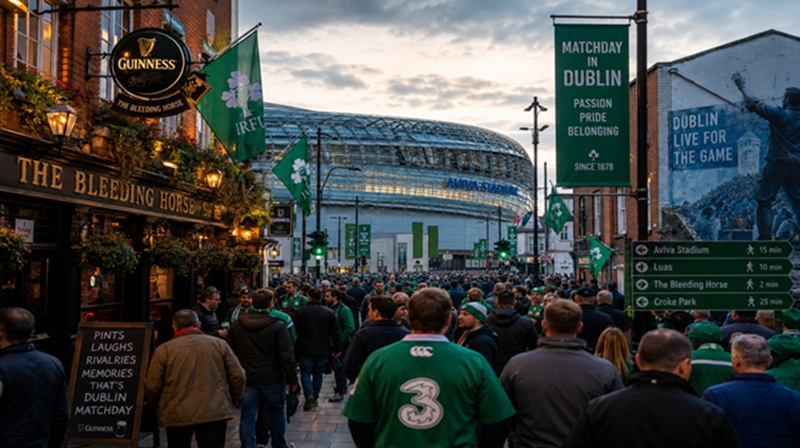
If you have been in Dublin on a game day, you already know that there is a drastic transformation of the city. This change happens quickly; it is almost like hitting a switch (the past that the city was just like before). By the time you are on your way to the stadium, you will find that the normally deserted streets are bustling with people dressed in their teams’ colors, chatting with each other, and the aroma of deep-fried food is coming from all the pubs along the way to the stadium. Many people see these games solely through the lens of the sport.
Europe. Prior to a major match day event, some fans will look up the team’s lineup, others will view stats through the 1xbet app, while others will be searching for a nearby pub to enjoy.
Sports in Ireland are very unique. There are no clear lines separating the spectator from the player. Anyone who attends a game, or just sits in a crowded pub and watches it on television, is a part of something greater than themselves. Dublin is the focal point for all of that. It is a city that has many different sports being played side by side. In Dublin you can go and watch international rugby matches at Aviva Stadium, the All-Ireland Final at Croke Park or club games at Tolka Park, and each one will give you a totally different sporting experience.
Aviva Stadium and rugby: when the stadium becomes a temple
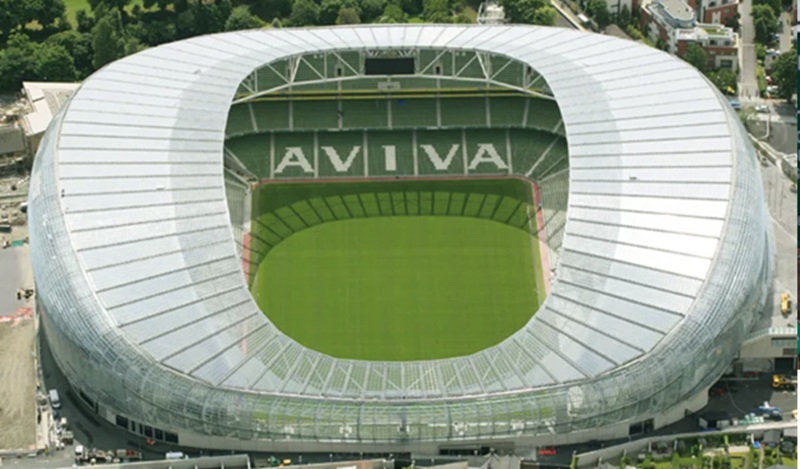
The Aviva Stadium is indeed one of Europe’s finest stadiums and undoubtedly one of the most stunning stadiums in. The Aviva Stadium, which opened in 2010 and is located on the site of the historic Lansdowne Road (the oldest football stadium in the world, dating back as far as 1878), is the primary stadium for both the Irish rugby and football teams with a capacity of over 51,000 spectators. When visiting the Aviva, visitors will be in absolute awe of the stadium’s architecture, be it the glass exterior, the curvilinear gabled roofs, or the cantilevered seating, each element creates its own unique acoustic environment, meaning; the crowd sounds different at the Aviva than any other venue.
The atmosphere in the surrounding area on Match Days is completely transformed. Two hours before kick-off, the DART and Luas tram services are operating full to capacity. The roadways leading to the stadium – Donnybrook Road, Lansdowne Road, and Shelbourne Road – are one large festive stream, filled with patrons walking through each other, chatting and arguing in the spirit of what is still to come.
Rugby days have a certain magic to them. The Six Nations tournament is an event that unites people of all ages and from all walks of life from across the Irish nation, much like a giant family get together. When we play against teams from England or France, Aviva Stadium becomes a boiling pot of emotion. We do not just scream out our support, we sing! ‘Ireland’s Call’, when 51,000 people sing together as one for our national rugby team is something you will carry with you forever. That song, which was composed specifically for the national rugby team of Ireland, always will give me the chills regardless of how many times I have heard it.
What makes a rugby matchday special
The culture of rugby support in Ireland is strikingly different from what you’re used to in other countries. There is no aggression – just enthusiasm. Even rival fans feel like welcoming guests here, and that’s no figure of speech. After the match, the city turns into one big pub – winners and losers share drinks together, discuss the key moments and agree on a rematch in the next tournament.
Here are a few things that set an Irish rugby match day apart from all the rest:
- Singing together in the stadium – from the national anthem to folk songs at half-time.
- The ‘before and after’ culture – pubs open early, and queues form long before kick-off.
- A mixed crowd – families, students, older fans, tourists – all together in the same stands.
- Absence of overt hostility – even in the most heated matches, the spirit of sporting rivalry prevails, rather than hatred of the opponent.
- A tradition of hospitality – away fans are traditionally allocated separate sections, and mingling between fans after the match is the norm, not the exception.
Croke Park: a stadium with the soul of the nation
If Aviva is the home of international sport, then Croke Park is something entirely different in significance and scale. Ireland’s largest stadium and the third-largest in the British Isles, with a capacity of over 82,300 spectators, it is a sanctuary for Gaelic games – Gaelic football and hurling. It is located in the northern part of Dublin, in the Jones Road area, and is in itself an architectural symbol of Irish cultural independence.
Croke Park is not just a stadium. It houses the GAA Museum, which documents in detail the history of Gaelic sports from their revival in 1884 to the present day. There are memorials here linked to the tragic events of Bloody Sunday in 1920, when British troops opened fire on the crowd during a match. This memory has not faded away – it is woven into the very fabric of this place.
For decades, the two sporting worlds – the GAA and ‘foreign games’ (rugby and football) – barely overlapped. But in 2007, during the renovation of the Aviva, the unthinkable happened: the Irish rugby team played their first Six Nations match against England at Croke Park. For a country with such a complex shared history, it was a moment of immense symbolic significance. Ireland won that match 43–13, and those who were there say the atmosphere was unlike anything they had ever experienced before.
Gaelic football and hurling: a rivalry that never grows old
Dublin’s hurling team – Dublin’s Gaelic football team (The Dubs) – have dominated the national championship over the last decade with absolutely unprecedented consistency. Five consecutive championship titles between 2015 and 2019 have made them either darlings or targets – depending on where you’re from.
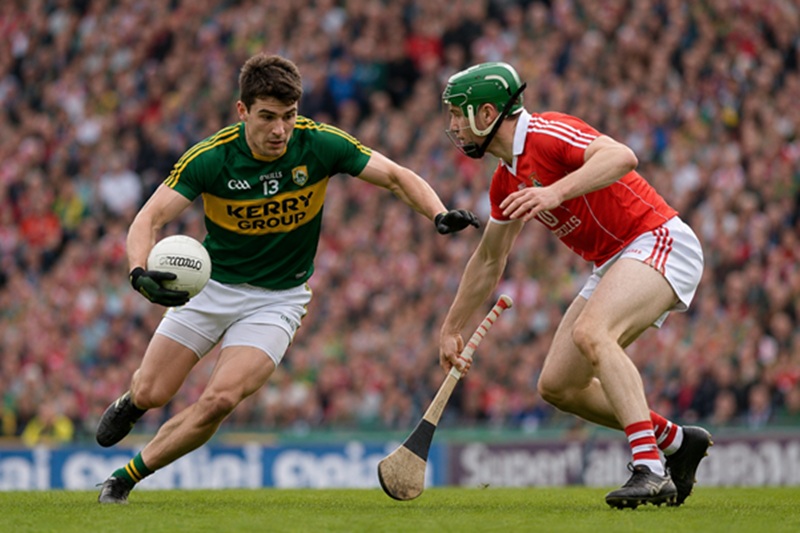
The rivalry with Kerry is the oldest and most passionate in Irish sport. When these two teams meet in the All-Ireland final at Croke Park, Dublin literally comes to a standstill. Tickets sell out in a matter of minutes. Those who can’t get into the stadium gather in front of screens in pubs across the city.
Major venues and their character
| Stadium | Capacity | Main sport | Area | Most famous events |
| Aviva Stadium | 51,700 | Rugby, football | Ballsbridge | Six Nations, international matches |
| Croke Park | 82,300 | Gaelic football, hurling | Jones Road | All-Ireland Final |
| Tolka Park | 8,000 | Football (League of Ireland) | Drumcondra | Bohemians, Shelbourne matches |
| Dalymount Park | 6,800 | Football | Phibsborough | Dublin club football |
| UCD Bowl | 5,000 | Football, rugby | Bellfield | University sport |
Each of these stadiums has its own character. Tolka Park and Dullimount are places where club football thrives without any corporate glitz. Here, neighbours know each other by sight, the manager is criticised loudly and without diplomacy, and every goal is celebrated as a personal triumph. There are no big screens or expensive hot dogs – just the stands, the cold wind and a genuine love for the game.
Pubs, streets and rituals: how Dublin lives before and after the match
Matchday in Dublin begins long before the first whistle. If the game is at 3 pm, the first groups start gathering in the pubs as early as 11 am. This is no exaggeration – it’s the standard routine for big games. The city starts to ‘warm up’ gradually: first, conversations like ‘do you think we’ll win?’, then the first pint, then a pre-match analysis with all the details, while others check the teams’ news or the fixture list on the 1xbet app before heading to the stadium.
There are a few traditional spots without which it’s hard to imagine a matchday in Dublin:
- Mulligan’s on Poolbeg Street – one of the city’s oldest pubs, founded in 1782. There’s no live music or slot machines here – just a pint and a chat.
- The Bleeding Horse on Camden Street – a large, multi-level space where you can find a seat even on the busiest day.
- Ginger Man near Fenian Street – close to Aviva, perfect for a pre-match pint of Guinness.
- Hogans on South Great George’s Street – popular with both football fans and Dublin’s LGBTQ+ community, it’s always packed on big match days.
- The Flowing Tide near Croke Park – a legendary pre-match pub for GAA fans, where the atmosphere starts building three or four hours before the game.
After the match, whatever the result, people return. A win is a reason to celebrate; a defeat is a reason to analyse and argue until midnight. But in both cases, the conversation goes on for a long time, and that, perhaps, is the main thing.
The rivalries that shape Dublin sport
Ireland v England: more than just a match
A clash between Ireland and England in any sport is always more than just a sporting contest. Centuries of shared and painful history do not simply vanish, although modern fans are mostly focused on the game itself rather than the symbolism. Nevertheless, a victory over England is special. Whether it’s rugby, football or boxing, it doesn’t matter. It’s celebrated in a special way, with more fanfare and greater joy.
Dublin vs Kerry: a battle of identities
If the rugby rivalry with England is about national pride, then the clash between Dublin and Kerry in Gaelic football is about regional identity in its purest form. Kerry is a traditional GAA stronghold, a place where every generation grows up with a ball in their hands. Dublin is an urban giant with vast resources, a huge player pool and modern training methods. This tension – between old tradition and new opportunities – has fuelled the rivalry for decades and makes every meeting between these teams a national event.
League of Ireland: an underrated gem
Local club football in Dublin is a world of its own, often overshadowed by international Premier League broadcasts. But the rivalry between Bohemian and Shelbourne, known as the North Dublin Derby, or the clash between the Bohemians and Shamrock Rovers, are matches where the passion in the stands is every bit as intense as in the bigger stadiums. Many young fans keep track of statistics and results from other leagues via the 1xbet app, but the atmosphere in Dublin’s stadiums remains the main reason to attend a match in person.
Dublin and football: between the local and the global
There is one interesting paradox in Dublin’s sporting life: a city that so passionately supports its own national team and local clubs is, at the same time, one of the biggest markets for support of the English Premier League outside the UK. Pubs in the Irish capital broadcast matches involving Manchester United, Liverpool and Arsenal just as regularly as domestic fixtures.
This isn’t a contradiction – it’s a quirk. Irish culture is capable of accommodating several sporting loyalties at once, and a Dubliner may well support The Dubs in Gaelic football, the Republic of Ireland rugby team and Liverpool in the Premier League – and see no conflict in that whatsoever.
Why you should experience a Dublin matchday at least once
There are cities where sport is entertainment. And then there is Dublin, where sport is a way of life, a language through which people express themselves and their sense of belonging. You don’t need to be a rugby or Gaelic football expert to experience something authentic here. The atmosphere in the stands or in a packed pub during a decisive moment of the game is powerful enough to captivate anyone.
Matchday in Dublin is a combination of several things at once: a public event, a cultural ritual and simply a good time with people who care. This is a city where, after the match, strangers discuss the key moment of the game as if they’ve known each other for years. Where defeat doesn’t disappoint completely, and victory keeps you awake until morning. Where sport isn’t an escape from real life, but an integral part of it.
If you’re planning a visit to Dublin and it happens to coincide with a big match, don’t think twice. Buy a ticket in advance, or simply find the right pub near the stadium two hours before kick-off. That will be enough to understand why the people of Dublin love their sport so much – and why that love is contagious.