

Argentina has renewed its 130 billion yuan ($19 billion) currency swap agreement with China for another five years, extending a financial lifeline that has become a cornerstone of the country’s foreign reserve strategy, according to SCMP.
The move comes amid pressure from Washington, which has spent more than a year urging Buenos Aires to reduce its financial dependence on Beijing.
The extension, signed on Wednesday between the Argentine central bank and the People’s Bank of China (PBOC), comes just one day before the previous agreement was due to expire. The renewed arrangement will remain in place until 2031, marking the longest extension since the two countries first established the facility in 2009.
Register for the next Tekedia Mini-MBA.
Register for Tekedia AI in Business Masterclass.
Join Tekedia Capital Syndicate and co-invest in great global startups.
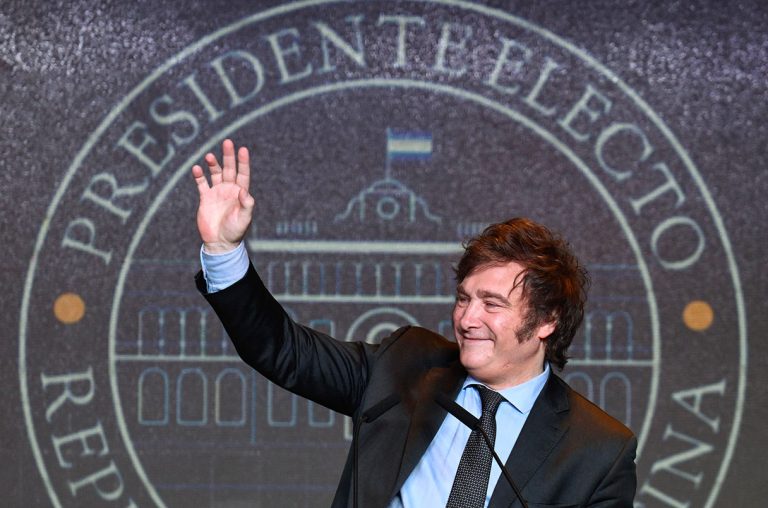
The agreement ends months of uncertainty over whether President Javier Milei, who campaigned on a pledge to distance Argentina from communist governments and has since become one of U.S. President Donald Trump’s closest allies in Latin America, would allow the facility to lapse.
Argentina’s central bank said the longer maturity would provide “greater predictability over the continuity of this tool,” underscoring the importance of the swap as the country continues rebuilding its foreign exchange reserves while navigating a fragile economic recovery.
The renewed agreement also signals that Milei’s government is balancing its increasingly close relationship with Washington against the practical need to maintain access to Chinese financial support, highlighting the constraints facing Argentina as it attempts to stabilize an economy still burdened by high debt, limited hard currency and recurring balance-of-payments pressures.

A currency swap functions as a standing credit line between central banks. Under the arrangement, Argentina can obtain yuan from the PBOC in exchange for pesos and repay the funds with interest at a later date. Although the full 130 billion yuan counts toward Argentina’s gross foreign exchange reserves, the funds only become available for spending once specific tranches are activated, at which point they become debt obligations.
The facility has become important for Argentina, accounting for roughly 40% of the country’s gross international reserves, although that share has declined from nearly 60% in 2023 as reserves have recovered.
Over the years, yuan drawn under the arrangement have financed imports from China, supported the peso during periods of intense market volatility and helped Argentina meet repayment obligations to the International Monetary Fund.

Neither central bank has disclosed the interest rate charged under the facility. However, research led by Harvard economist Carmen Reinhart estimated Argentina pays about 400 basis points above China’s Shanghai Interbank Offered Rate (Shibor), roughly double the cost faced by countries such as Turkey and Mongolia under similar arrangements.
The swap has evolved significantly since it was first established. Argentina became the first Latin American nation to sign a currency swap agreement with China when then-central bank governor Martín Redrado agreed to a 70 billion yuan facility with then-PBOC Governor Zhou Xiaochuan in July 2009, during the global financial crisis. The original agreement expired three years later without any funds being drawn.
The arrangement only became operational in 2014, when disbursements were linked to financing two hydroelectric dam projects in Patagonia awarded to China Gezhouba Group. Former President Mauricio Macri later expanded the facility to its current size in 2018.
Its role changed dramatically under former President Alberto Fernández. Rather than financing infrastructure, the swap became an emergency financial instrument. Then-Economy Minister Sergio Massa activated a $5 billion tranche in 2023, using the funds to repay the IMF and defend the peso ahead of Argentina’s presidential election.
Milei inherited that liability after taking office in late 2023, only weeks after campaigning on a promise that “we do not make pacts with communists, not with Cuba, not with Venezuela, not with North Korea, not with China.”
His stance shifted quickly once in office. Within days, Milei wrote to Chinese President Xi Jinping seeking assistance in maintaining access to the swap line. Beijing subsequently agreed to postpone repayment deadlines twice, first in 2024 and again in 2025.
By September 2024, Milei had significantly softened his rhetoric, describing China as “a very interesting trading partner” that “demands nothing.” Two months later, he met Xi during the G20 summit in Rio de Janeiro, further signaling a pragmatic approach to bilateral relations.
The extension also comes after sustained criticism from Washington over China’s expanding financial influence in Latin America.
Mauricio Claver-Carone, then Trump’s special envoy for Latin America, described Chinese currency swaps as “extortionate” in April 2025 and said Washington’s priority was ensuring Argentina’s IMF program did not “reinforce China’s position.”
“As long as it has the swap, Argentina is not free,” Claver-Carone said the following month.
U.S. Treasury Secretary Scott Bessent adopted a more measured tone during a visit to Buenos Aires, saying Argentina should eventually accumulate sufficient foreign currency reserves to repay the Chinese facility.
The Chinese embassy responded swiftly, accusing Bessent of making “malicious defamations and slander” and urging Washington to stop “obstructing or deliberately sabotaging the assistance provided by other countries.”
Even as Washington pressed Argentina to reduce its dependence on Beijing, the United States strengthened its own financial support. In October 2025, the U.S. Treasury signed a separate $20 billion swap arrangement with Argentina’s central bank and immediately used $2.5 billion to purchase pesos in an effort to stabilize the currency ahead of midterm elections. Argentina repaid those funds two months later.
A bilateral trade agreement signed in January committed Argentina to reducing its dependence on energy supplied by “non-market actors,” language widely interpreted as referring to China. By then, Argentina had repaid almost all of the funds previously drawn under the Chinese swap, reducing outstanding obligations from nearly $5 billion to approximately $679 million by mid-January.
The sharp decline in outstanding borrowing fueled speculation that Milei intended to abandon the arrangement altogether. Central bank Governor Santiago Bausili rejected those reports, insisting there was “no plan to eliminate” the facility and describing the relationship with the PBOC as “stable and quasi-permanent.”
He added that Argentina initially sought to renew the agreement under existing terms, which would have extended it only until 2029. Bausili later met PBOC Governor Pan Gongsheng in Shanghai during a central bankers’ symposium, discussions that ultimately paved the way for the new five-year extension.
The previously activated $5 billion tranche remains available under the renewed agreement and can be used “without additional authorizations,” Bausili has said.
The currency swap now forms one of three pillars of Argentina’s strategy to strengthen its external financial position ahead of the 2027 presidential election, alongside dollar futures operations and repurchase agreements with international banks.
Those efforts have contributed to a significant improvement in the country’s reserve position, with Argentina’s gross international reserves reaching $49.6 billion this week, their highest level since September 2019. The renewed Chinese facility provides an additional financial buffer as the government seeks to stabilize the peso, reassure investors, and reduce vulnerability to future external financing shocks while maintaining flexibility in managing relations with both Washington and Beijing.