

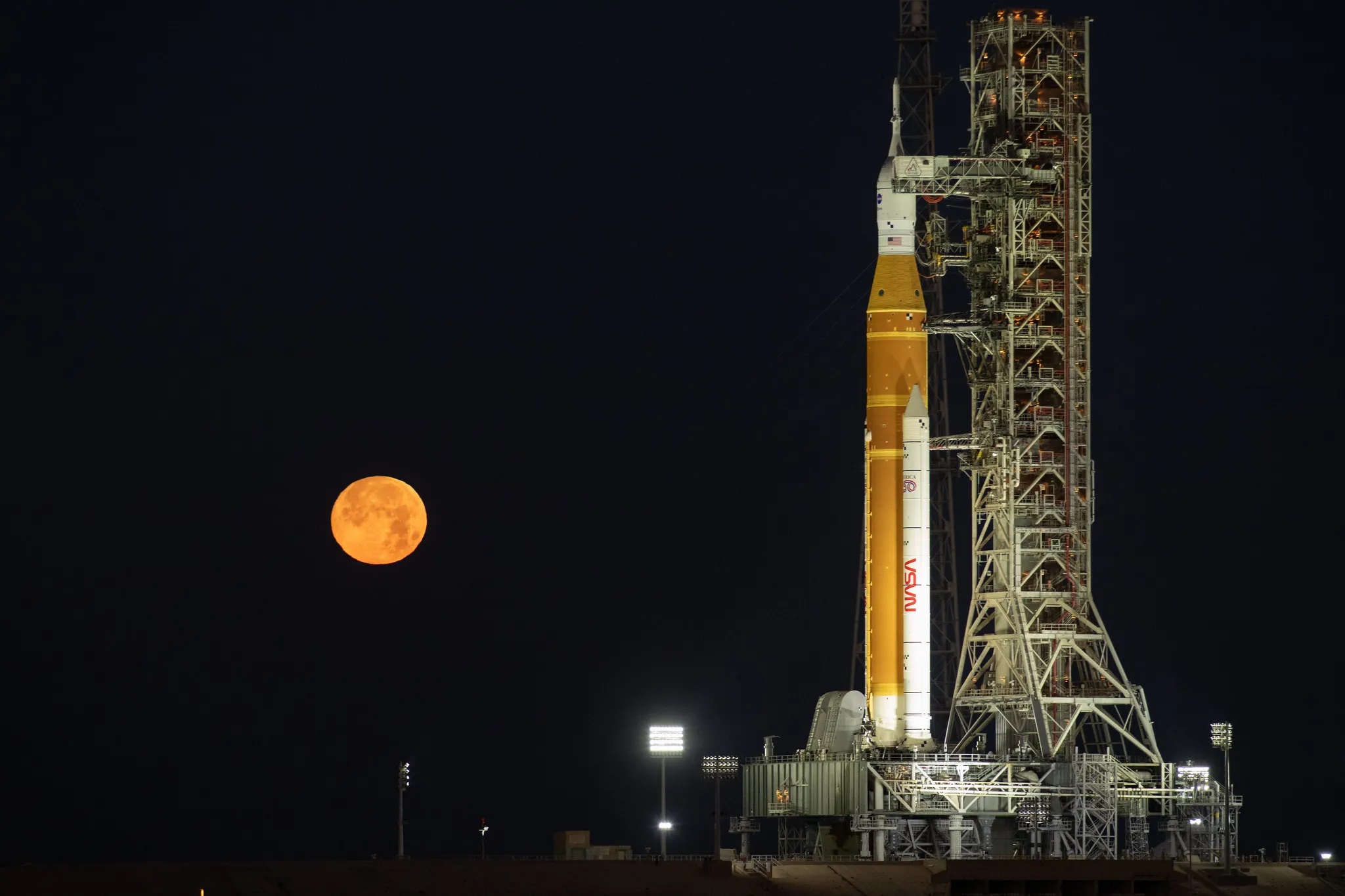
The crew of NASA’s Artemis II mission has publicly expressed gratitude to engineers in Germany and across Europe for their critical contribution to humanity’s return to deep space exploration.
During a visit on Tuesday, the astronauts highlighted the importance of the European-built service module, which successfully powered the Orion spacecraft during its journey around the Moon, underscoring the increasingly international nature of modern space missions.
The Artemis II mission represents a historic milestone in space exploration. It is scheduled to become the first crewed mission to travel beyond low-Earth orbit since NASA’s Apollo 17 mission in 1972.
Unlike previous lunar missions that were largely national endeavors, Artemis II demonstrates how global partnerships have become essential in tackling the technological and financial challenges of deep-space exploration.
Register for the next Tekedia Mini-MBA.
Register for Tekedia AI in Business Masterclass.
Join Tekedia Capital Syndicate and co-invest in great global startups.
At the center of this cooperation is the European Service Module (ESM), a key component developed by the European Space Agency (ESA) with Airbus engineers in Germany leading much of the manufacturing work. The service module functions as the powerhouse of the Orion spacecraft.
It provides propulsion, electrical power, thermal regulation, water, and air necessary to sustain astronauts during their journey through space. The Artemis II crew acknowledged that without the advanced engineering expertise provided by European partners, the mission would not be possible in its current form.
The service module is responsible for executing crucial maneuvers, including orbital adjustments and trajectory corrections, ensuring that the spacecraft can safely travel around the Moon and return to Earth.
Germany has played a particularly significant role in the project. Airbus facilities in Bremen have been central to assembling and testing the service module.

German engineers have spent years refining technologies capable of withstanding the harsh conditions of deep space, including extreme temperatures and radiation exposure. Their work represents one of Europe’s largest contributions to human spaceflight in recent decades.
The Artemis program itself aims to establish a sustainable human presence on and around the Moon. NASA plans to use lunar missions as a stepping stone for future crewed expeditions to Mars.
Artemis II will carry four astronauts on a lunar flyby mission, testing spacecraft systems and operational procedures before the more ambitious Artemis III mission, which is expected to land astronauts on the lunar surface.

The cooperation between NASA and ESA highlights a new era of international collaboration in space exploration. Beyond technological achievements, such partnerships also symbolize diplomatic unity and shared scientific ambition.
By pooling expertise and resources, participating nations can accomplish missions that would be significantly more difficult and expensive for a single country to undertake alone. European involvement in Artemis extends beyond the service module.
ESA is also contributing components to the Lunar Gateway, a planned space station that will orbit the Moon and serve as a staging point for future missions. This long-term cooperation strengthens Europe’s role in shaping the future of human exploration beyond Earth.
For the Artemis II astronauts, recognizing the contributions of European engineers is more than a gesture of appreciation; it is an acknowledgment that space exploration has become a collective human endeavor.
Every successful mission depends on thousands of scientists, engineers, technicians, and support personnel working across continents toward a common goal.
As preparations for Artemis II continue, the mission stands as a symbol of what international cooperation can achieve. The successful development of the European Service Module demonstrates that humanity’s return to the Moon is not solely an American project but a shared global mission.
With nations working together, the dream of establishing a permanent human presence on the Moon—and eventually sending astronauts to Mars—appears more achievable than ever before.