

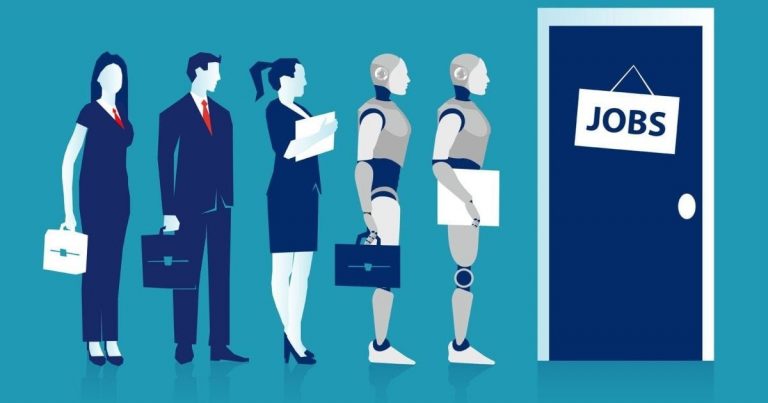
Some tech leaders have been swift to dismiss predictions that artificial intelligence will spark widespread unemployment, while others believe the impact will be significant. Steve Preston, CEO of Goodwill—a U.S. nonprofit with more than 650 job centers— agrees with the latter, saying the shift is no longer hypothetical, according to Fortune.
He noted that it is already unfolding, with consequences most acutely felt by entry-level and low-wage workers.
Last year alone, over 2 million people sought help from Goodwill’s employment services. Now, Preston says the charity is preparing for a “flux of unemployed young people—as well as other people—from AI.” The 65-year-old, who previously served as the 14th U.S. Secretary of Housing and Urban Development, told Fortune that large organizations are already making “significant layoffs based on a move to AI.”
Register for Tekedia Mini-MBA edition 20 (June 8 – Sept 5, 2026).
Register for Tekedia AI in Business Masterclass.
Join Tekedia Capital Syndicate and co-invest in great global startups.
Register for Tekedia AI Lab.
Call centers and sales teams are feeling the brunt of automation. “I don’t know that it’ll be catastrophic,” Preston explained, “but I do think we’re going to see a significant reduction in a number of jobs. I think it’s going to hit low wage workers especially hard.”
A Blow to Young Workers, Especially Non-Grads
Entry-level jobs, often seen as stepping stones for young workers fresh out of school, are shrinking. Preston notes that the labor market squeeze is particularly painful for Gen Z, especially those without college degrees.
“It’s much harder to find a job,” he said. “It’s really hitting college students right now in the marketplace. It’s really hitting young adults without college degrees.”

Research suggests young men are especially exposed to this wave of unemployment.
This reality contrasts with earlier arguments that skills-based hiring would make degrees less relevant.
“What I’m seeing is of the overall unemployment, people without college degrees have no jobs,” Preston stressed.

And while entry-level jobs once provided the foundations for career growth—mentorship, skill-building, and workplace familiarity—AI is eroding these opportunities. Without that training ground, even higher-level roles could be starved of fresh talent in the future.
U.S. vs. Global Workforce Shifts
The U.S. is not alone in this reckoning. In Europe, unions have warned that AI is hollowing out clerical and customer service jobs, leading governments in countries like France and Germany to expand reskilling subsidies. In Asia, call centers in the Philippines—a major global outsourcing hub—are under pressure, as generative AI begins to replicate tasks previously offshored to human workers.
In contrast, economies like India are attempting to balance the disruption by aggressively promoting “AI plus human” service models, where workers are retrained to supervise or complement automated systems rather than be replaced outright.
The comparative picture highlights the uneven pace of adaptation: while U.S. nonprofits like Goodwill brace for a surge in unemployment claims, other countries are embedding AI literacy and clean tech training directly into national policy.
Preston believes that the path forward lies in skills—both digital and practical. Goodwill has been working with employers to identify what will matter tomorrow.
“Digital skills are really critical,” he said, warning that being active on social media is not the same as mastering workplace technologies.
He pointed to tools like Microsoft Excel, Google Docs, and increasingly AI assistants like ChatGPT and Gemini as gateways to employability.
“People who are proficient in using AI tools are beginning to leapfrog other people going into the marketplace,” he said.
For those outside the corporate track, Preston says clean tech jobs—from solar panel installation to EV charging station maintenance—offer promising alternatives without requiring a college degree.
The warning extends beyond Gen Z. “If you are someone seeking a job in your 30s—or even 40s—and you haven’t acquired those skills, you’re pretty much locked out of a massive percentage of the jobs that are available,” he said.
However, Preston insists it is not too late. He recalls cases of people who went from homelessness to high-paying jobs at firms like Accenture and Google after completing intensive digital boot camps.
“When those people get those skills, we just see the doors busting open,” he added.