

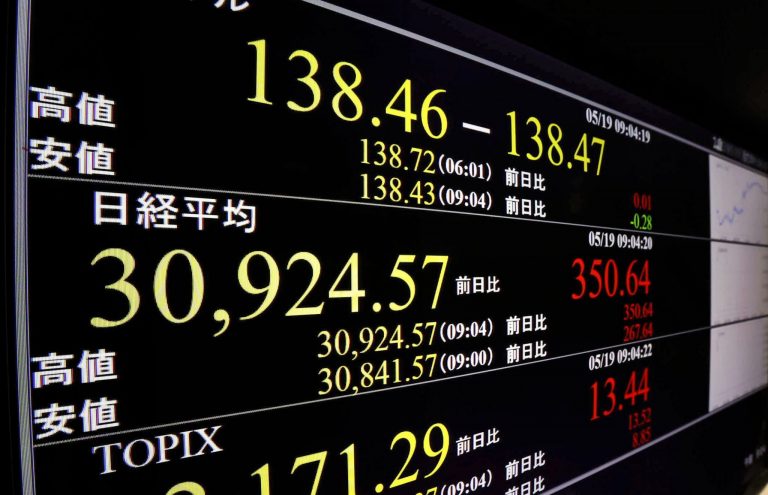
Asian markets extended their late-year rally on Friday, with regional equities climbing to their highest levels in six weeks as investors leaned into risk assets, encouraged by easing inflation pressures, expectations of eventual U.S. rate cuts and a renewed appetite for technology and growth stocks.
At the same time, a relentless surge in precious metals and persistent volatility in currency markets underscored lingering unease over global debt, geopolitics and central bank policy paths.
According to a Reuters report, trading was thinner than usual, with markets in Australia, Hong Kong and most of Europe closed, but the lack of liquidity did little to slow momentum. Investors appeared keen to lock in gains before year-end, extending a recovery that has gathered pace over the past week after markets weathered bouts of volatility in November.
Register for Tekedia Mini-MBA edition 20 (June 8 – Sept 5, 2026).
Register for Tekedia AI in Business Masterclass.
Join Tekedia Capital Syndicate and co-invest in great global startups.
Register for Tekedia AI Lab.
Japan once again stood out. The Topix index rose to a fresh all-time high, last up 0.5%, reflecting strong performance across industrials, exporters and financials. Gains have been supported by improving corporate earnings, shareholder-friendly reforms and still-accommodative financial conditions, even as the Bank of Japan has begun a gradual shift away from ultra-loose policy.
South Korea’s benchmark index advanced 0.6%, pushing its gain for the year to about 72% and making it the world’s best-performing major equity market in 2025. Chipmakers and technology stocks have been the main drivers, buoyed by sustained global demand for semiconductors tied to artificial intelligence, data centers and electric vehicles.
China’s CSI300 blue-chip index rose 0.27%, putting it on course for an annual gain of around 18%, its strongest performance since 2020. The advance reflects a steadier economic outlook, targeted policy support and renewed foreign interest after prolonged underperformance in previous years. The broader MSCI Asia-Pacific index climbed to its highest level since mid-November and is up about 25% for the year, marking a powerful rebound across the region.

Beyond equities, precious metals remained the standout story. Spot silver surged more than 4% to a new record high, while gold also hit a fresh peak, last trading at $4,503.39 per ounce. The rally has accelerated into year-end, driven by a combination of strong central bank buying, heavy inflows into gold-backed exchange-traded funds and investor demand for hard assets amid concerns over rising global debt and long-term currency debasement.
Gold has gained more than 71% this year, its strongest annual performance since 1979, while silver has soared roughly 158%, vastly outperforming most other asset classes. Analysts say the move reflects not only safe-haven demand but also tight physical supply and expectations that looser monetary conditions globally will persist over the medium term.
Soojin Kim, a commodities analyst at MUFG, said the strength of the rally suggests it may not be nearing exhaustion. With major banks projecting further gains into 2026, she noted that persistent geopolitical risks, heavy official-sector demand and uncertainty over fiat currencies continue to underpin prices.

Currency markets, however, painted a more cautious picture. The U.S. dollar remained under pressure as investors focused on the outlook for Federal Reserve policy and political uncertainty around the next Fed chair. Traders are now pricing in at least two rate cuts in 2026, though expectations are that the Fed will hold steady until at least June. The central bank has signaled only one cut next year, and divisions among policymakers have added to market sensitivity.
Attention is also fixed on President Donald Trump’s expected nomination of a successor to Jerome Powell, whose term as Fed chair ends in May. Any signal of Trump’s choice could trigger sharp moves in currencies, bonds and equities, given the potential implications for monetary policy independence.
The dollar index was on track for a 0.8% weekly decline, its weakest showing since July, while the euro, sterling and Swiss franc traded near recent highs. The yen hovered around 156.23 per dollar, slightly weaker on the day but still on course for its biggest weekly gain since September.
Despite the Bank of Japan’s recent rate hike to a 30-year high, the yen has struggled to strengthen decisively. Markets have interpreted Governor Kazuo Ueda’s comments as signaling a cautious, data-dependent approach to further tightening. Analysts say the BOJ is deliberately keeping its guidance ambiguous to retain flexibility, even as it continues to nudge borrowing costs higher.
Japanese officials have repeatedly warned against excessive currency moves, keeping the risk of intervention alive. Thin year-end liquidity has heightened speculation that authorities could step in, as such conditions can amplify the impact of any official action.
In the bond market, Japanese government bonds edged higher, with yields easing back from a 26-year peak. Expectations of restrained debt issuance and reassurances from Prime Minister Sanae Takaichi over fiscal discipline helped calm investor concerns about an expansionary budget and rising borrowing needs.
As markets head into the final stretch of the year, investors are balancing optimism over easing inflation and resilient growth against unresolved risks around monetary policy, geopolitics and government intervention. The strong finish to 2025 across Asian equities and commodities suggests risk appetite remains intact, but thin liquidity and crowded trades leave markets vulnerable to sudden shifts in sentiment.