

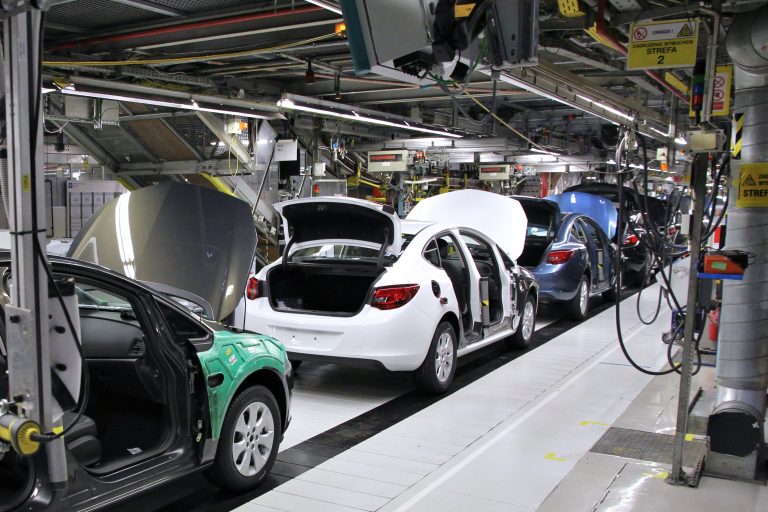
The global auto industry is inching toward a production crisis as China’s export restrictions on rare earth minerals and magnets begin to bite, halting some manufacturing lines in Europe and prompting dire warnings from US automakers.
The restrictions, in place since early April, require companies to obtain a license to export key materials used in electric vehicles and other critical technologies. But only about 25 percent of license requests have been approved, according to Nikkei, with others held up in bureaucratic limbo as tensions between Washington and Beijing deepen.
Auto parts suppliers across Europe have already started shutting down operations due to the shortage of rare earth components, according to the European Association of Automotive Suppliers (CLEPA).
Register for Tekedia Mini-MBA edition 20 (June 8 – Sept 5, 2026).
Register for Tekedia AI in Business Masterclass.
Join Tekedia Capital Syndicate and co-invest in great global startups.
Register for Tekedia AI Lab.
“With a deeply intertwined global supply chain, China’s export restrictions are already shutting down production in Europe’s supplier sector,” said Benjamin Krieger, CLEPA’s secretary general. “We urgently call on both the EU and Chinese authorities to engage in a constructive dialogue to ensure the licensing process is transparent, proportionate, and aligned with international norms.”
In the United States, executives in the auto sector are warning that production cuts could follow within weeks unless supplies resume. Rare earth magnets are essential to electric and hybrid motors but are also found in traditional components like catalytic converters and electronic seats. Their absence could stall not just EV output, but wide swaths of conventional car production as well.
The export restrictions are part of China’s tit-for-tat response to US tariffs introduced by President Donald Trump. While many of those tariffs have been temporarily paused, China has not reversed its curbs on rare earth exports. That decision has made rare earth minerals a central lever in trade negotiations, and many analysts believe it gives Beijing the upper hand. China controls more than 90 percent of the global rare earth supply chain, leaving Western industries deeply exposed.

Trump on Thursday revealed that he had held his first direct conversation with Chinese President Xi Jinping since returning to the White House in January, describing the call as “very positive.” In a post on his social media platform, Trump said the hour-and-a-half-long discussion had led to a breakthrough, with both sides agreeing to hold trade talks aimed at resolving the standoff over tariffs and the supply of rare earths.
“Our respective teams will be meeting shortly at a location to be determined,” Trump wrote.
The US delegation will include Treasury Secretary Scott Bessent, Commerce Secretary Howard Lutnick, and US Trade Representative Jamieson Greer.

Trump also disclosed that Xi “graciously” invited him and First Lady Melania Trump to China and that he had extended a reciprocal invitation for the Chinese leader to visit the United States. While no formal meetings have been scheduled, expectations are building that rare earth access will be front and center in the upcoming talks.
In the meantime, manufacturers are bracing for worsening conditions. The New York Times reported this week that even Chinese magnet producers have begun pausing operations due to the licensing bottleneck, raising concerns of deeper shortages in the months ahead.
Beyond the auto sector, the restrictions threaten to disrupt industries from consumer electronics to defense systems. But carmakers — particularly those dependent on electric vehicle production — remain the most exposed, especially as they navigate the broader fallout of shifting trade policies under Trump’s renewed administration.
With negotiations pending, automakers on both sides of the Atlantic are in a holding pattern, anxiously awaiting any signal that rare earth shipments might resume.