

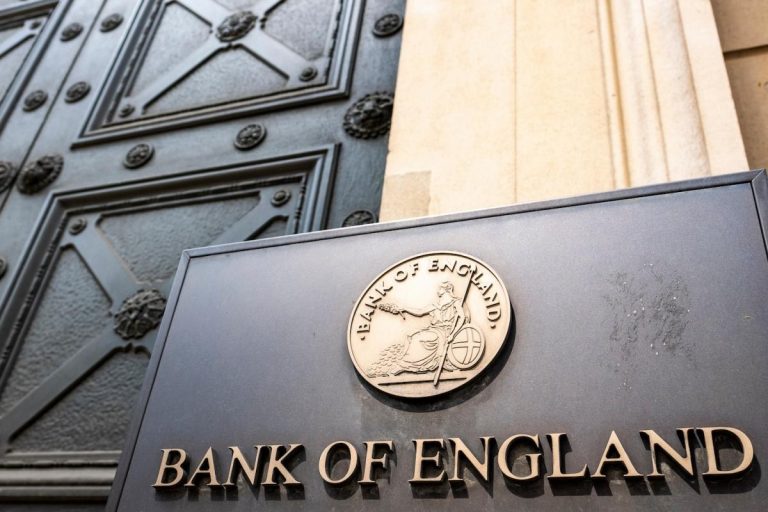
The Bank of England kept its benchmark interest rate unchanged on Thursday, as expected, but the emergence of a third policymaker calling for higher borrowing costs signaled that concern over inflationary pressures is gaining traction within the central bank.
The Monetary Policy Committee (MPC) voted 6-3 to leave the Bank Rate at 3.75%, with policymakers choosing to wait for more evidence on the inflation outlook even as rising energy risks and AI-related supply constraints continue to cloud the economic picture.
The decision was widely anticipated by financial markets after U.K. headline inflation eased to 2.6% in June, its lowest level in 15 months. However, the voting split and policymakers’ comments suggest the central bank is becoming increasingly uneasy about upside risks that could derail progress toward its 2% inflation target.
Register for the next Tekedia Mini-MBA.
Register for Tekedia AI in Business Masterclass.
Join Tekedia Capital Syndicate and co-invest in great global startups.
Following the announcement, the British pound edged 0.08% higher against the U.S. dollar to $1.3376, as investors interpreted the statement as slightly more hawkish than expected.
Three Policymakers Back Another Rate Hike
Committee members Megan Greene, Huw Pill and Catherine Mann voted for a 25-basis-point increase, arguing that inflation risks remain elevated despite recent improvements in headline price growth.
Their dissent marked an increase from two policymakers at the previous meeting, suggesting that support for tighter monetary policy is gradually building within the MPC.

The Bank said all committee members agreed that risks to energy prices remain skewed to the upside, reflecting continued uncertainty stemming from geopolitical tensions and global supply disruptions.
Greene argued that inflation has remained above the Bank’s target for around five years and warned that fresh supply shocks could prolong price pressures. She pointed to risks including a potential second energy bottleneck in the Red Sea and ongoing shortages of AI-related hardware as factors that could fuel another round of inflation.
“A proactive hike in Bank Rate may reduce the probability that second-round effects set in,” Greene said.

Her comments highlight how central banks are increasingly monitoring developments in the artificial intelligence industry alongside traditional inflation drivers. Strong demand for AI chips, memory components and advanced semiconductor manufacturing has tightened global supply chains, contributing to higher costs across technology and industrial sectors.
Pill also pointed out that persistent uncertainty surrounding global energy markets warrants a more proactive policy response.
“Profound uncertainty surrounding the energy price outlook is likely to be prolonged and of unknown duration, rendering efforts to fine-tune the economy with monetary policy hazardous,” he said.
He added that raising interest rates now would provide “a clear and unambiguous signal” that the Bank remains committed to containing inflation risks arising from developments in the Gulf region.
The conflict involving Iran has become an important factor for central banks. Higher oil and gas prices can feed through to transportation, manufacturing and household energy costs, raising the risk that temporary price shocks become embedded in broader inflation through wages and consumer expectations.
Hawkish Hold Keeps September In Focus
Although the Bank ultimately chose to leave policy unchanged, economists said the tone of the meeting was more hawkish than markets had anticipated.
Felix Feather, economist at Aberdeen, said the increase in dissenting votes indicates inflation concerns are spreading within the committee, making additional rate increases more likely if inflation fails to continue moderating.
“This was a slightly more hawkish Bank of England hold than expected,” Feather said.
Simon Dangoor, deputy chief investment officer of fixed income and head of fixed income macro investing at Goldman Sachs Asset Management, said recent inflation data had given policymakers room to pause.
However, he cautioned that a prolonged Middle East shock could quickly alter the outlook.
“A persistent Middle East shock could change the calculus, however, keeping a September meeting live,” Dangoor said.
Markets Reassess The Policy Path
The latest decision suggests the Bank of England is attempting to balance encouraging signs of easing inflation against a growing list of external risks.
While headline inflation has fallen significantly from its recent peaks, policymakers remain concerned that higher energy prices, resilient wage growth and supply-side disruptions could slow or even reverse that progress.
The addition of a third vote in favor of tightening also signals that the debate within the MPC is shifting. Rather than discussing when to begin easing monetary policy, officials are increasingly focused on whether renewed inflationary pressures may require another rate hike.
That places the September policy meeting firmly in focus. Future decisions are likely to depend on incoming inflation, wage and labor market data, as well as developments in global energy markets and supply chains. If geopolitical tensions keep commodity prices elevated, or supply disruptions intensify, the Bank could find itself tightening policy again even after a prolonged period of restrictive interest rates.