

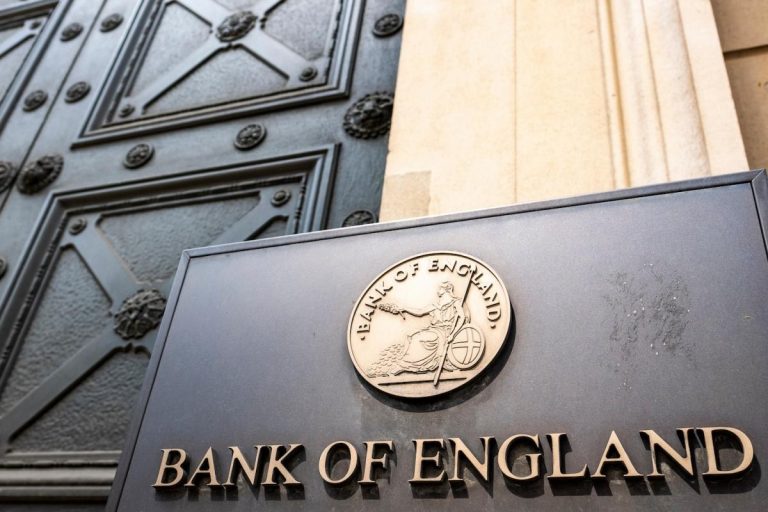
The Bank of England is widely expected to hold interest rates steady this week, as policymakers weigh the early economic fallout from the Iran war against renewed inflation risks building in the UK economy.
Markets have already priced in a pause at Thursday’s Monetary Policy Committee (MPC) meeting, with Bank Rate expected to remain at 3.75%. The decision would extend a wait-and-see approach adopted in March, when the committee also held rates unchanged while assessing how sharply higher energy costs would filter through to inflation and growth.
Behind the apparent calm, however, expectations for the policy path are shifting. Money markets are now pricing a series of rate increases later this year, including a potential quarter-point move in July, another in September, and a smaller probability of a further hike before year-end. That repricing has unfolded even as Governor Andrew Bailey has cautioned that tightening policy prematurely could prove costly.
Register for the next Tekedia Mini-MBA.
Register for Tekedia AI in Business Masterclass.
Join Tekedia Capital Syndicate and co-invest in great global startups.
The divergence highlights a familiar tension for the central bank: inflation persistence versus weakening growth momentum.
The Iran conflict has amplified concerns around energy prices, with Britain seen as particularly exposed due to its reliance on imported natural gas. Higher wholesale energy costs are already feeding into business input prices, with firms reporting sharper increases in recent surveys and expectations for future price rises accelerating at a record pace.
That shift has revived memories of the inflation surge in 2022, when UK inflation peaked above 11%, and has placed renewed focus on whether current price pressures could become entrenched through wage negotiations and services inflation.

Some members of the MPC are expected to scrutinize a recent uptick in service price growth, alongside signs that companies are continuing to pass on costs to consumers. Others are likely to focus on weakening hiring conditions and softening sentiment among households and businesses, which could dampen demand in the months ahead.
Chief Economist Huw Pill’s recent remarks underscore the internal debate. “If you’re waiting and seeing and you don’t see, then you’ve just waited,” he said on April 17, a comment interpreted as a warning against delaying action if inflationary pressures prove persistent.
Economists surveyed by Reuters largely expect an 8–1 vote in favor of holding rates steady, slightly more divided than March’s unanimous decision. However, some analysts suggest as many as three MPC members could vote for an immediate increase to 4.0%, reflecting concern that inflation expectations may be drifting higher.

That possibility reflects a broader policy dilemma: acting too slowly risks allowing inflation to become embedded, while tightening too aggressively could deepen an economic slowdown already beginning to take shape.
The Inflationary impact of the war has placed additional strain on an economy already navigating high borrowing costs. The UK’s exposure to global energy markets has made it particularly sensitive to supply disruptions, with businesses reporting rising cost pressures and households facing renewed energy bill uncertainty.
The International Monetary Fund has projected UK inflation could peak at around 4% this year, keeping it among the highest in the G7. That outlook reinforces the challenge facing policymakers attempting to stabilize prices without tipping the economy into a sharper downturn.
This week’s meeting will also include a full update of the BoE’s economic forecasts, the first since the escalation of the Iran conflict. Economists expect revisions pointing to higher inflation and weaker growth through 2026 and 2027, reflecting both energy-driven cost pressures and reduced consumer demand.
Edward Allenby, senior UK economist at Oxford Economics, said greater attention will be placed on scenario analysis rather than central forecasts alone.
“Our baseline forecast assumes Bank Rate will remain on hold for the rest of the year,” he said, adding that the key uncertainty is how quickly the energy shock feeds through the broader economy.
Given the limited visibility on how long the energy shock will persist, the MPC is expected to reiterate its readiness to respond as needed. That messaging approach allows the bank to retain flexibility while avoiding premature commitments on either tightening or easing.
Thomas Pugh, chief UK economist at RSM, noted that even a more hawkish tone this week would not necessarily signal imminent action.
“The economic data is likely to take a downturn over the next few months, which could shift the emphasis back to concerns about the economy before the next meeting,” he said.
Governor Andrew Bailey is expected to address the press shortly after the rate decision, alongside other MPC members, in what will be closely watched for any signals on whether internal divisions are widening.
At its core, the Bank of England is confronting an environment defined by overlapping uncertainties: geopolitical risk, volatile energy markets, and fragile domestic demand. The result is a policy outlook that markets increasingly view as tilted toward future tightening, while economists remain more cautious about the scope for rate increases.