

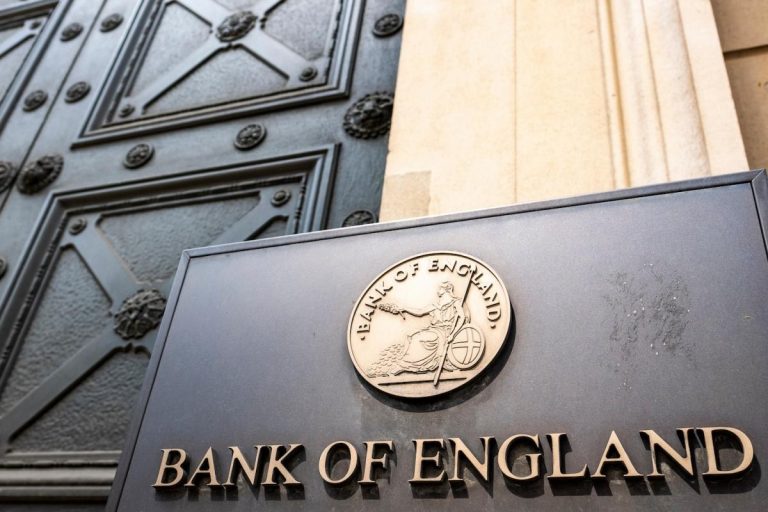
Bank of England Governor Andrew Bailey on Wednesday cautioned investors against getting carried away with expectations of near-term interest rate hikes, arguing that financial markets are moving ahead of policymakers as Britain grapples with the economic fallout from the Iran war.
In an interview with Reuters at the central bank’s London headquarters, Bailey made clear that while the Bank remains prepared to tighten policy if inflation risks intensify, its immediate priority is to avoid compounding the damage already being inflicted on growth and employment by the surge in global energy prices.
The remarks amount to the clearest signal yet that the Monetary Policy Committee is in no rush to validate market expectations for multiple rate increases this year, even as the conflict in the Middle East continues to fuel fresh inflationary pressures through higher oil and gas costs.
Register for Tekedia Mini-MBA edition 20 (June 8 – Sept 5, 2026).
Register for Tekedia AI in Business Masterclass.
Join Tekedia Capital Syndicate and co-invest in great global startups.
Register for Tekedia AI Lab.
“We will have to, obviously, act on monetary policy if we think it’s appropriate to do so,” Bailey said. “But it strikes me, and it still strikes me today, that the most important thing to do is to tackle the source of the shock.”
He added that the Bank’s inflation mandate requires it to respond in a way that “causes the least damage in terms of activity in the economy and in terms of jobs,” underscoring a growing concern within Threadneedle Street that an aggressive policy response to imported inflation could deepen an already weakening domestic economy.
Markets had been pricing in as many as four rate hikes earlier in the crisis and are still factoring in two increases before year-end. Bailey, however, suggested those expectations are excessive.

“(The market)’s still pricing us to raise rates … I think they’re getting ahead of themselves,” he said.
The comments briefly lifted British government bond prices as traders pared back bets on imminent tightening. In a swift response, JPMorgan revised its forecast, now expecting only one Bank of England rate hike in 2026, likely in June, rather than the previously anticipated moves in April and July.
The Bank last month voted unanimously to keep the benchmark Bank Rate unchanged at 3.75%, a notable shift from earlier divided votes that had exposed internal debate over whether easing should resume. The unanimous hold reflected the extraordinary uncertainty unleashed by the war and the sharp repricing of global energy markets. The next MPC decision is due on April 30.

Bailey’s intervention highlights the difficult balancing act facing the central bank.
On one side is inflation, now expected to rise to 3.5% in the third quarter of 2026, well above the BoE’s 2% target, largely because of the jump in oil and gas prices following supply disruptions in the Middle East. On the other is a visibly softening economy, where labor market conditions are deteriorating, and business demand remains weak.
Britain is especially vulnerable to the inflation shock because of its heavy dependence on natural gas for electricity generation and household heating. The Bank has already warned that the conflict has heightened broader financial stability risks, from sovereign debt markets to private credit and leveraged funds.
Bailey said policymakers are watching a recent jump in household inflation expectations “very carefully,” but stressed that conversations with businesses suggest limited pricing power across the economy.
“Businesses consistently say to me that they’re operating in a context of an absence of pricing power,” he said.
That assessment significantly suggests firms may struggle to fully pass rising energy costs on to consumers, potentially limiting second-round inflation effects that would ordinarily justify tighter monetary policy.
While some pass-through is still expected, Bailey noted that the present environment differs markedly from the inflation surge triggered by Russia’s invasion of Ukraine in 2022, when demand conditions were stronger, and firms had greater scope to raise prices.
“The context at the moment is of a softening labor market,” he said. “We think activity is a bit below potential, so a bit of an output gap is opening up.”
That widening output gap, a classic sign of spare capacity in the economy, may strengthen the case for patience rather than pre-emptive tightening.
Bailey also invoked comments made by former Governor Mervyn King during the 2011 inflation spike, when the Bank argued that policy should absorb supply-side shocks in a way that minimizes harm to households and businesses.
The implication is that the BoE may be willing to tolerate above-target inflation for longer if it judges the shock to be externally driven and temporary, rather than rooted in domestic wage-price dynamics.