

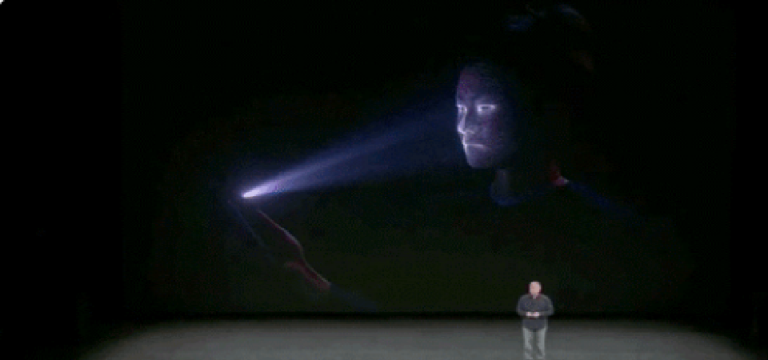
BASF has sued Apple in the United States, accusing the iPhone maker of infringing seven patents covering technology designed to make facial authentication more resistant to spoofing attacks.
The lawsuit, filed Thursday in the U.S. District Court for the Western District of Texas, was brought by BASF’s technology subsidiary trinamiX. The company alleges that Apple uses its patented material and skin-detection technology in a range of recent iPhone and iPad models without authorization.
BASF is seeking unspecified damages and an order preventing Apple from continuing to use the technology.
Register for the next Tekedia Mini-MBA.
Register for Tekedia AI in Business Masterclass.
Join Tekedia Capital Syndicate and co-invest in great global startups.
The dispute centers on a security problem inherent in conventional facial-recognition systems. A system that relies primarily on a person’s facial geometry can potentially be deceived using photographs, three-dimensional masks, or silicone replicas designed to reproduce an individual’s features.
trinamiX says it spent roughly a decade developing technology capable of distinguishing genuine human skin from artificial materials, adding another layer of verification to facial authentication.
According to the complaint, Apple did not use BASF’s patented technology when it introduced Face ID with the iPhone X in 2017. BASF alleges, however, that Apple later incorporated material and skin detection into Face ID across a range of products, including certain iPhone 15, iPhone 16 and iPhone 17 models and iPad Pro devices.

“Apple knew or should have known of the high probability that updating its iPhones and iPads to incorporate Face ID using material and skin detection” infringed trinamiX’s patents, BASF said in the complaint.
The company alleges that Apple’s use of the technology has caused “substantial damages and irreparable injury.”
The patents at the center of the dispute trace back to research conducted by BASF scientists more than a decade ago. According to the complaint, the technology originated around 2010, when BASF researchers working on organic solar cells made discoveries that eventually led to early prototypes for three-dimensional cameras.

BASF established trinamiX as a standalone company in 2014 to develop commercial applications for advanced 3D and material-sensing technologies. The company says trinamiX now holds more than 800 granted or pending patents worldwide, giving BASF a substantial intellectual-property portfolio in a technology area increasingly relevant to smartphones, digital identity and biometric security.
The company’s technology is aimed at determining whether the material detected by a camera is genuine human skin rather than an artificial representation. That distinction can be useful for biometric systems. Facial authentication is increasingly used not only to unlock smartphones but also to authorize payments, access applications, and authenticate users for sensitive services.
Apple Faces Potentially Significant Exposure
The case puts intellectual property used in one of Apple’s most important security features at the center of a legal dispute.
Apple generated $196.5 billion in iPhone revenue and $21.7 billion in iPad revenue during the nine months ended June 27, according to the company’s filings. Even though the lawsuit does not specify a damages amount, the scale of the affected product lines gives the dispute potentially significant financial implications if BASF ultimately prevails.
The company is also seeking to halt further infringement, which could create a larger strategic issue than monetary damages if a court determines that Apple’s implementation of Face ID relies on technology protected by BASF’s patents. Such an injunction could potentially force changes to the way affected devices perform biometric authentication, although the practical consequences would depend on the scope of any eventual court order and whether Apple could redesign the relevant technology.
The case is at an early stage, and BASF’s allegations have not been established in court.
The lawsuit arrives as biometric authentication becomes more deeply embedded in consumer electronics. Face ID is designed to provide secure authentication by mapping a user’s face and using multiple signals to determine whether the person presenting to the device is genuine. Adding material or skin detection can strengthen such systems by making it harder for an attacker to fool the authentication process with an artificial replica.
The technology is becoming more integrated into technology as smartphones are used to access banking applications, digital wallets, corporate systems and other services containing valuable personal and financial information.
The dispute therefore involves more than a component or isolated software feature, especially for Apple. Face authentication is part of the security architecture surrounding its broader device ecosystem.
The case could ultimately test how far patent protection extends around the technologies that make biometric authentication more difficult to spoof, as well as how companies using those systems must license third-party intellectual property. With Apple selling hundreds of billions of dollars worth of iPhones and iPads annually, the financial stakes could become substantial if the litigation expands to cover a broader range of products or results in a finding of infringement.