

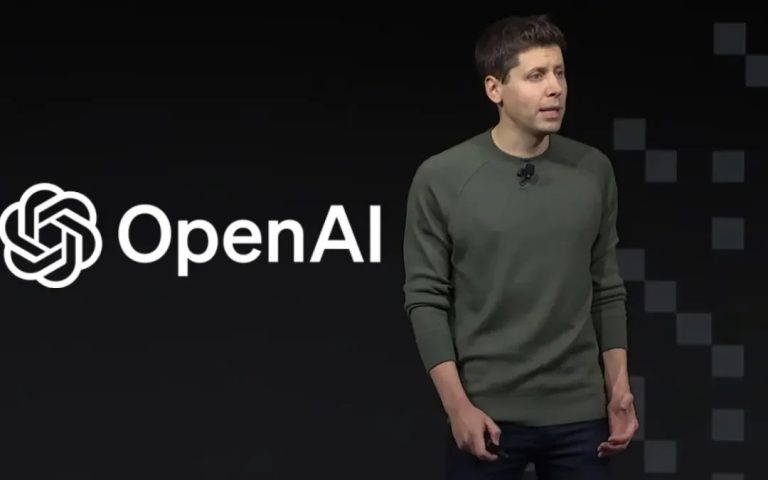
OpenAI has released GPT-6 Astra, describing it as the world’s most intelligent and aligned model to date.
The artificial intelligence company unveiled the system positioning it as a significant advance in computer use, software engineering, cybersecurity, science, and professional workflows.
Announcing the launch OpenAI wrote,
Register for the next Tekedia Mini-MBA.
Register for Tekedia AI in Business Masterclass.
Join Tekedia Capital Syndicate and co-invest in great global startups.
“We are introducing GPT-6 Astra, the world’s most intelligent and aligned model. GPT-6 Astra brings together years of research and big bets across pre-training, reinforcement learning, and alignment. Astra is state-of-the-art in computer use, browsing, software engineering, cybersecurity, science, and professional work”.
According to OpenAI, Astra builds on years of research in pre-training, reinforcement learning, and alignment. The company states that it is state-of-the-art across multiple domains and sets a new standard for handling complex, multi-step tasks on computers and browsers with greater speed, accuracy, and judgment than previous models.
Benchmarks highlighted by the company include a 98% score saturating FrontierMath Tier 4, a 98% score on ARC-AGI-3, and a perfect 100% on ExploitBench. The model has also helped solve long-standing open problems in mathematics.

In practical terms, Astra performs strongly on real-world agentic tasks. It can manage browser-based work, fill forms, update records, organize calendars, and execute software engineering workflows more efficiently than earlier systems.
GPT-6 Astra can conduct online research and draft summaries in your email or in your document editor. It can analyze scientific data, generate plots, create a website, and run frontend QA checks to make sure all the features on that site work. It can help users autonomously install and test software, and troubleshoot problems.
OpenAI reports improvements in staying focused on tasks, understanding user intent, adhering to boundaries, and completing multi-step processes.

Company president Greg Brockman called it “our most intelligent and, also very importantly, our most aligned model yet,” noting that it represents a real shift in the kinds of work people can reliably delegate to AI. He further suggested that looking back in a few years, people may view this period and possibly this model as marking the arrival of the AGI era.
Access is rolling out in phases. Astra became available first to a limited set of organizations through OpenAI’s Daybreak Access (or Trusted Access) program focused on cybersecurity and enterprise testing.
Over the coming days, it will expand to ChatGPT Plus, Pro, Business, and Enterprise users, as well as the OpenAI API, Microsoft Azure, and AWS Bedrock.
API pricing is set at $10 per million input tokens and $50 per million output tokens. The model features a large context window of approximately 1.05 million tokens and a knowledge cutoff around April 30, 2026.
Safety and alignment received particular emphasis. Astra is the first OpenAI model to reach the “Critical” level of cybersecurity capability under the company’s Preparedness Framework, meaning it can identify previously unknown vulnerabilities and develop exploits with greater autonomy when given the right tools.
In response, OpenAI strengthened safeguards against harmful cyber actions, improved robustness to jailbreaks, and enhanced the model’s ability to stay within authorized scope. Internal evaluations showed marked reductions in unauthorized behavior compared with the prior GPT-5.6 Sol model.
Advanced cybersecurity features remain restricted, with broader defensive access planned through controlled programs. The release follows earlier delays tied to safety evaluations after prior incidents, reflecting OpenAI’s effort to balance capability gains with stronger controls.
Early reports and company materials indicate Astra delivers higher performance while often using fewer output tokens on many tasks, potentially improving cost-efficiency despite the higher per-token rates.
OpenAI has intensified competition in the artificial intelligence industry with the release of GPT-6 Astra, its latest flagship AI model, as leading technology companies continue to roll out increasingly capable chatbots and AI systems.
The launch comes at a time when competition among AI companies is accelerating. Anthropic, Google and Meta have also been advancing their own models and chatbot products, creating a rapidly evolving market in which companies are competing on intelligence, speed, reasoning, coding, agentic capabilities and enterprise adoption.
For OpenAI, Astra therefore represents more than another model upgrade. It is an attempt to strengthen the company’s position at the frontier of AI as rivals push aggressively to close the gap and establish their own leadership in the next generation of intelligent systems.