

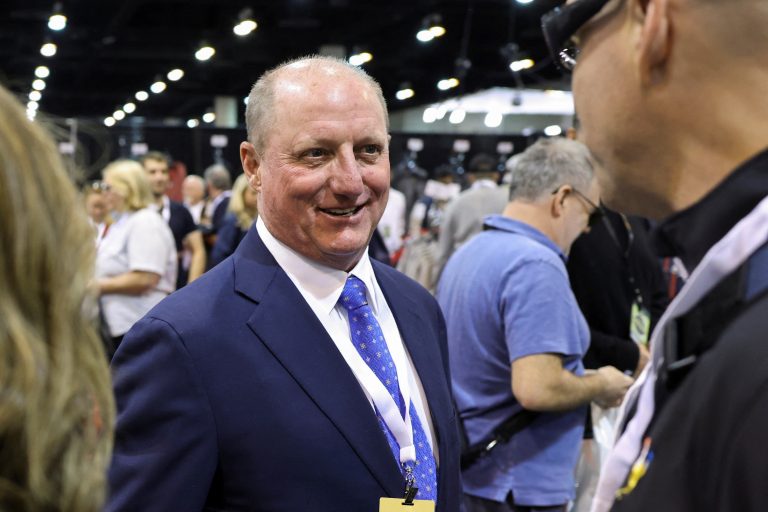
For years, investors questioned whether Warren Buffett had become too cautious.
Now, less than a year after handing over the chief executive role to Greg Abel, Berkshire Hathaway appears to be sending its clearest signal yet that a new era of capital deployment may be taking shape.
The conglomerate has agreed to purchase $10 billion worth of stock in Alphabet through a private placement while simultaneously pursuing an $8.5 billion acquisition of Taylor Morrison Home Corporation. Together, the transactions represent one of Berkshire’s most significant bursts of dealmaking activity in years and could indicate a meaningful shift in how the company intends to use its enormous cash reserves.
Register for the next Tekedia Mini-MBA.
Register for Tekedia AI in Business Masterclass.
Join Tekedia Capital Syndicate and co-invest in great global startups.
The move is particularly notable because Berkshire has spent much of the past three years accumulating cash rather than deploying it. By the end of March, the conglomerate’s cash, Treasury bills, and other liquid assets had reached a record $380 billion, nearly triple the level held at the end of 2022.
That cash buildup became one of the defining features of Buffett’s final years as CEO. Buffett repeatedly argued that soaring asset prices, intense competition for acquisitions, and limited availability of attractively valued businesses made it difficult to find opportunities that met Berkshire’s standards. The result was a company that increasingly resembled a financial fortress, generating vast amounts of cash while struggling to redeploy it.
Abel appears willing to be more proactive.

The Alphabet transaction alone marks one of Berkshire’s largest equity investments in recent memory. Berkshire will purchase $5 billion of Class A shares at roughly $352 per share and another $5 billion of Class C shares at about $348. With Alphabet stock closing above $370 on Monday, Berkshire is securing the shares at approximately a 6% discount to prevailing market prices.
That discount is significant because it aligns closely with Buffett’s longstanding investment philosophy: buying high-quality businesses when available at attractive valuations. The deal also substantially deepens Berkshire’s exposure to one of the world’s most important technology companies.
Berkshire already owned nearly 58 million Alphabet shares as of March 31, valued at roughly $17 billion. Assuming the company has maintained that position, the new investment could increase Berkshire’s Alphabet stake to more than $32 billion, placing it among the conglomerate’s largest holdings.

The timing is equally noteworthy.
Alphabet remains one of the central players in the global artificial intelligence race, competing against rivals such as OpenAI, Microsoft, and Anthropic. Through its Gemini models, cloud business, and custom AI chips, Alphabet is investing aggressively to maintain leadership in search, digital advertising, and AI infrastructure.
For Berkshire, the investment provides greater exposure to one of the most powerful secular growth themes in the market without abandoning its preference for dominant, cash-generating businesses.
The Taylor Morrison acquisition adds another layer to the story.
While Alphabet represents a bet on technology and AI-driven growth, Taylor Morrison gives Berkshire additional exposure to housing, an area where long-term demographic trends and persistent supply shortages continue to support demand.
The combination of the two deals suggests Abel is not simply chasing one sector or investment theme. Instead, he appears to be pursuing opportunities across multiple industries where Berkshire sees attractive risk-adjusted returns.
The activity also comes against the backdrop of a broader change in Berkshire’s capital allocation strategy. During Buffett’s final years as CEO, Berkshire largely stepped back from share repurchases. The company conducted no buybacks for six consecutive quarters, reflecting Buffett’s view that Berkshire’s own stock was no longer trading at a sufficiently attractive valuation.
That policy has changed under Abel. Berkshire resumed buybacks in March, another sign that management may be taking a more active approach to capital deployment.
While Berkshire remained a net seller of stocks during the first quarter, that headline figure obscures growing investment activity beneath the surface. The company purchased approximately $16 billion worth of shares during the quarter, its largest buying spree in four years. Those purchases were outweighed by roughly $24 billion in stock sales, though many of those disposals were linked to the unwinding of positions associated with former investment manager Todd Combs following his departure to JPMorgan Chase.
Together, the data suggest Berkshire’s investment engine is becoming more active rather than less. That matters because Berkshire’s vast cash pile has become both a strength and a source of frustration.
Supporters argue that the cash provides extraordinary flexibility during market downturns. Buffett himself built much of Berkshire’s reputation by deploying capital aggressively during periods of financial stress, including the 2008 financial crisis, when few others had the resources to act. Critics, however, have argued that holding hundreds of billions of dollars in low-yielding assets creates an opportunity cost, particularly during periods when equities continue rising.
Abel now faces the challenge of balancing those competing priorities. He must preserve Berkshire’s financial strength while demonstrating that the company can still generate attractive returns on an asset base that has grown so large it limits the universe of meaningful investment opportunities.
The recent transactions alone will not dramatically reduce Berkshire’s cash stockpile. Even after committing $18.5 billion to Alphabet and Taylor Morrison, Berkshire would still possess well over $350 billion in liquid assets.
Yet the symbolic significance may outweigh the immediate financial impact. For years, Berkshire’s story centered on what it was not doing: not making major acquisitions, not buying back stock, and not deploying its growing cash reserves.
The narrative is beginning to change.
The Alphabet investment, the Taylor Morrison acquisition, renewed buybacks, and increased stock purchases collectively indicate that Abel is prepared to put Berkshire’s balance sheet to work more aggressively than many investors expected.