

The rapid development of artificial intelligence is forcing society to reconsider one of the oldest assumptions about work: that if a machine can perform a task more efficiently, the task should eventually be automated.
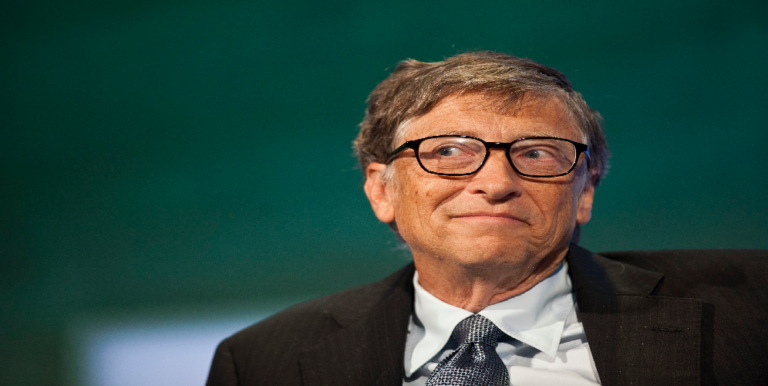
Microsoft co-founder Bill Gates is challenging that logic with a proposal he calls “Human Reserved,” arguing that some jobs should remain exclusively human even when artificial intelligence is capable of doing them.
Gates compares the concept to protecting land from development. In some cases, land may generate greater economic returns when developed, but society can still decide that preserving it provides greater social value. He believes certain forms of human labor could deserve similar protection because their importance extends beyond productivity.
Register for the next Tekedia Mini-MBA.
Register for Tekedia AI in Business Masterclass.
Join Tekedia Capital Syndicate and co-invest in great global startups.
Childcare and jury service are among the clearest examples. Gates argues that these activities involve trust, human connection, responsibility and social participation that cannot be measured purely by efficiency.
Even if AI systems eventually become capable of performing parts of these roles, replacing people entirely could create social costs that outweigh the financial benefits.
Other sectors, including education and healthcare, would follow a different model. Rather than banning AI, Gates envisions humans and intelligent machines working together.
AI could handle administrative duties, analyze information and provide personalized assistance, while human professionals retain responsibility for judgment, empathy and relationships. The broader version of Gates’ proposal is potentially far more consequential.

Under the most expansive interpretation, as many as 40% of jobs could be designated human-only. Such a policy would represent a fundamental departure from conventional economic thinking, effectively establishing boundaries around automation based on social value rather than technological capability.
Gates has revived his argument for a robot tax. His concern is that the existing tax system can unintentionally encourage companies to replace workers with machines. Employee wages generate payroll and income taxes, while businesses can often deduct investments in equipment and technology.
If automation reduces a company’s tax burden while eliminating jobs, governments may have a financial incentive to reconsider how technological investment is taxed.
The debate is becoming increasingly urgent as AI begins to influence employment.

Employers have linked artificial intelligence to 112,713 announced job cuts in 2026, making AI the leading stated reason for layoffs for five consecutive months. These figures have intensified concerns that increasingly capable AI systems could accelerate workforce displacement across industries.
Yet the employment picture remains more complicated than the headline numbers suggest. July layoffs reportedly fell to a two-year low, while hiring plans increased by 25%. This indicates that AI is not simply destroying employment across the economy.
Businesses may be eliminating certain positions while simultaneously creating new roles, restructuring teams and investing in workers with different skills. That tension lies at the heart of the AI employment debate.
Technological progress can raise productivity and create new opportunities, but the transition can also be disruptive and unequal.
Gates’ “Human Reserved” idea therefore raises a difficult question: should society allow automation wherever technology permits it, or should certain forms of human work be protected because they serve purposes that economics cannot fully capture?
The answer will shape the future of work. AI may prove most valuable not when it replaces humans everywhere, but when society deliberately decides where machines should assist—and where humans should remain indispensable.