

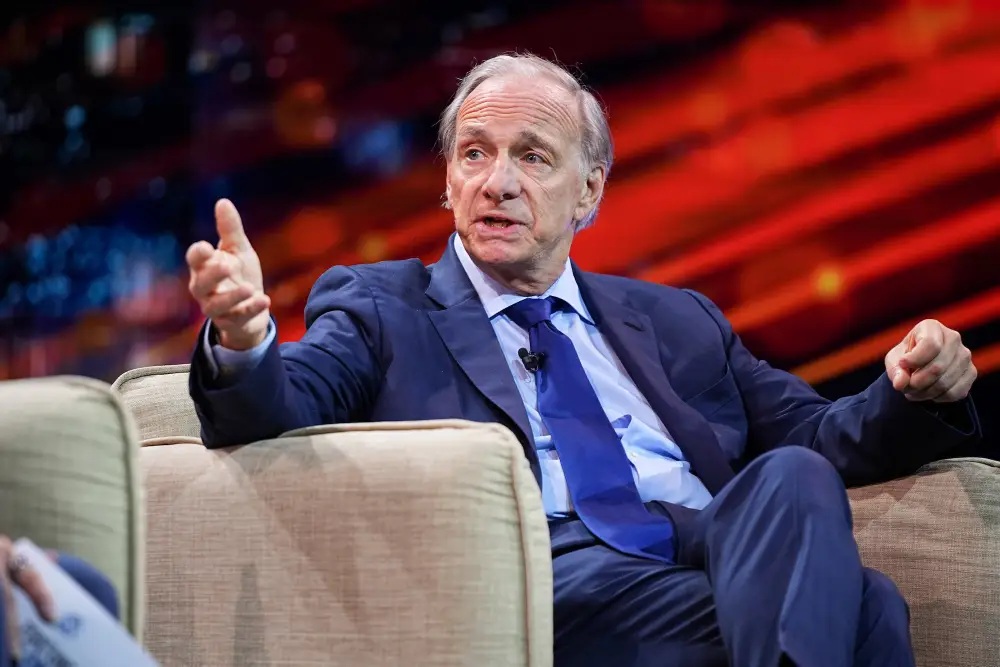
Billionaire investor and Bridgewater Associates founder, Ray Dalio, has warned that the artificial intelligence boom shows the classic signs of a bubble that is approaching a potential bursting point.
Speaking at the Forbes Global CEO Conference in Singapore on October 7, 2026, Dalio pointed to the combination of heavy debt financing for AI projects and climbing interest rates as key pressures building in the market.
He described AI as a “classic bubble.” The billionaire investor further noted that technology companies have been taking on large amounts of debt to fund massive investments in AI infrastructure.
Register for the next Tekedia Mini-MBA.
Register for Tekedia AI in Business Masterclass.
Join Tekedia Capital Syndicate and co-invest in great global startups.
He said,
“There’s a lot of pressure from all the supply for much more rises in interest rates, and then you have the dynamic of when it starts to have an effect, and that is the point at which the bubble begins to burst. We’re in that part of the cycle that is before that, but (we’re) approaching that; I think we’re close to that.
“Everybody says ‘I’m worth a billion dollars’ but OK, try to spend that. In order to spend that you have to sell wealth in order to get money and so the bubble usually pricks at that.

“As interest rates and bond yields continue to rise, the cost of that debt grows, creating conditions that historically precede a bubble’s collapse. “We’re in the part of the cycle that is before that but approaching that,” he said. “I think we’re close to that.”
Dalio’s comments come at a time when major technology firms are spending hundreds of billions of dollars on AI development and data centers.
Market gains have become highly concentrated in a relatively small group of AI-related stocks, helping push the S&P 500 and Nasdaq 100 to recent record highs.

At the same time, global bond yields have climbed to levels not seen in decades, raising the expense of financing these ambitious buildouts.
AI infrastructure spending has reached unprecedented levels as technology giants race to build data centres, purchase advanced chips and secure the computing power required to train and operate increasingly sophisticated models.
Companies such as Microsoft, Alphabet, Amazon and Meta are committing enormous amounts of capital to the technology, while AI developers are raising billions of dollars to expand their computing capacity.
The scale of the investment has intensified concerns about whether the industry can generate sufficient returns.
Goldman Sachs strategists have warned that the largest technology companies may need to generate hundreds of billions of dollars in additional annual AI revenue to justify the scale of their infrastructure spending.
The financial performance of some leading AI companies has also highlighted the challenge. Several AI developers continue to spend significantly more on computing infrastructure than they generate in revenue.
Dalio also highlighted another risk factor, which is the difficulty of converting paper wealth into actual cash. He observed that many investors and companies appear wealthy on paper due to soaring asset values, yet realizing that wealth often requires selling assets.
Measures such as wealth taxes or other policies that force the conversion of unrealized gains into spendable money could accelerate selling pressure and help prick the bubble. “Everybody says ‘I’m worth a billion dollars’ but OK, try to spend that,” he remarked.
Dalio has previously drawn parallels between the current AI investment surge and past periods of rapid technological change, including the late 1920s and the dot-com era of the late 1990s.
In those cases, major innovation arrived alongside heavy leverage and optimistic valuations that eventually corrected. He has suggested that such patterns tend to repeat when transformative technologies attract large amounts of capital faster than underlying returns can support them.
While Dalio stopped short of predicting an immediate crash, his assessment underscores growing concerns about the sustainability of the AI spending wave.
The sector continues to attract strong interest from investors and corporations betting on long-term productivity gains.
However, the increasing reliance on debt and the higher cost of capital are factors that market participants are watching closely as conditions evolve.