

For years, one of the most repeated principles in the cryptocurrency industry has been the phrase, “Not your keys, not your coins.”
The saying has encouraged millions of Bitcoin holders to move their assets off centralized exchanges and into personal wallets where they control the private keys.
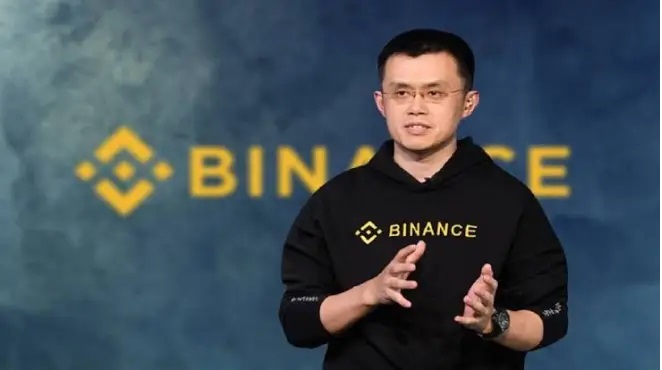
Binance founder Changpeng Zhao has reignited the long-running custody debate by arguing that exchanges may actually be statistically safer than self-custody for the average user.
CZ’s comments came in response to data highlighted by prominent on-chain analyst Willy Woo, who referenced River’s 2025 Bitcoin ownership report. According to the report, approximately 1.57 million BTC has been permanently lost through self-custody, compared with around 1.51 million BTC lost on cryptocurrency exchanges.
Register for the next Tekedia Mini-MBA.
Register for Tekedia AI in Business Masterclass.
Join Tekedia Capital Syndicate and co-invest in great global startups.
The difference is only about 60,000 Bitcoin, far smaller than many industry participants would have expected given the widespread criticism of centralized exchanges following several high-profile collapses. The figures challenge the common assumption that self-custody is always the safer option.
While self-custody removes counterparty risk by giving users complete control over their digital assets, it also places full responsibility for security on the individual.
Lost seed phrases, forgotten passwords, damaged hardware wallets, accidental deletions, and inheritance complications have all contributed to Bitcoin becoming permanently inaccessible.
CZ argues that the comparison may actually underestimate the risks associated with self-custody. Exchange hacks, security breaches, and corporate failures typically receive significant media attention and are carefully documented by blockchain analysts.

In contrast, countless cases of individuals losing access to their wallets are rarely reported publicly. Many Bitcoin holders simply disappear from the network after misplacing recovery phrases or losing access to old storage devices, leaving these losses largely invisible to official statistics.
From this perspective, CZ believes the true amount of Bitcoin lost through self-custody could be substantially higher than current estimates suggest. If those unreported losses were included, the safety gap between exchanges and personal wallets could become even more pronounced.
The Binance founder highlighted the importance of institutional security measures that major exchanges have implemented over the years. Binance maintains its Secure Asset Fund for Users, an emergency reserve established to compensate users in the event of qualifying security incidents.

According to CZ, the fund has recently been replenished to approximately $1 billion worth of Bitcoin, reinforcing Binance’s ability to protect customer assets during unforeseen events.
Large exchanges have also invested heavily in cybersecurity infrastructure, including multi-signature wallet systems, cold storage solutions, continuous security monitoring, insurance arrangements, and dedicated incident response teams.
These measures have significantly improved exchange security compared with the early years of the cryptocurrency industry. Many Bitcoin advocates continue to argue that self-custody remains the most important feature of decentralized money.
They point out that exchange users remain exposed to regulatory actions, operational failures, insolvency risks, and custodial freezes, regardless of how sophisticated an exchange’s security systems may be.
The debate is less about choosing one approach over the other and more about understanding the trade-offs involved. Experienced users with strong operational security practices may benefit from self-custody, while newcomers or less technical investors may find professionally managed exchanges easier and, in some cases, safer to use.
As Bitcoin adoption expands globally, improving education around digital asset security will likely prove just as important as advances in custody technology itself.