

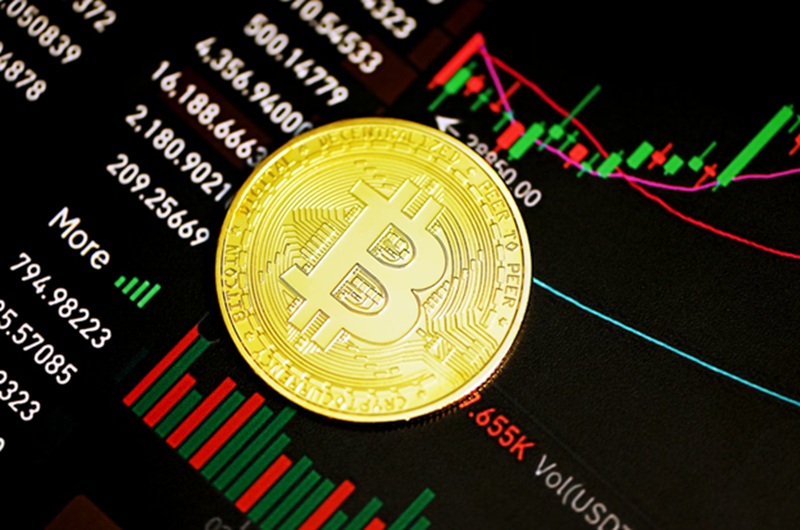
Bitcoin is showing early signs of stabilization after a turbulent week, rebounding above the $70,000 level as buyers cautiously step back in.
The recovery follows sharp volatility that rattled market sentiment, leaving investors weighing whether the move marks the start of a sustained rebound or just a temporary relief rally.
This week, BTC traded to a level not seen in more than a year, going as low as $59,829 that sparked bearish concerns. This fall erased 15 months of bullish gains as investors accumulated more at lower levels.
Register for Tekedia Mini-MBA edition 20 (June 8 – Sept 5, 2026).
Register for Tekedia AI in Business Masterclass.
Join Tekedia Capital Syndicate and co-invest in great global startups.
Register for Tekedia AI Lab.
This extended the drop from its all-time high of $126,000 reached in October 6, 2025, to 50% and was accompanied by massive liquidations across the derivatives market. The crypto asset has however retraced to $70,173 at the time of this report.
What Triggered BTC Dramatic Drop?
The selloff erased nearly all of Bitcoin’s post-election gains from late 2024 and reversed much of the 2025 bull run fueled by institutional adoption expectations, ETF inflows, and pro-crypto political sentiment.
Analysts point to a combination of factors:

– Macroeconomic uncertainty and rising interest rate fears
– Profit-taking after Bitcoin’s parabolic run above $100,000
– Large-scale deleveraging in futures and perpetual markets

– Fear and fatigue spreading across risk assets
Despite the deep correction, Bitcoin remains 45% below its 2025 peak, still leaving many long-term holders in profit compared to earlier cycles.
Shifting Narratives: Bitcoin vs Gold
Amid the recent price weakness, Bitcoin’s role in institutional and macro discussions has continued to evolve. Reports indicate that analysts at JPMorgan have recently suggested Bitcoin may now appear more attractive than gold for long-term investors when adjusted for risk, a notable shift given gold’s long-standing status as the traditional safe haven.
Rather than arguing that Bitcoin will replace gold outright, the analysts reportedly highlight how changes in volatility dynamics and Bitcoin’s asymmetric upside, when viewed against gold’s market size are reshaping long-term portfolio considerations.
Recent broader price models show a range of bullish forecasts, with some analysts projecting BTC between $75,000 and $225,000 depending on market conditions, reflecting optimism among technical and institutional forecasters.
Standard Chartered has maintained a bullish target, forecasting Bitcoin around $150,000 in 2026 based on sustained adoption and market dynamics. Bernstein analysts also project Bitcoin could trade near $150,000 by year-end 2026, with scope for higher levels beyond.
Outlook
Traders remain focused on several critical technical levels. The $70,000–$72,000 range is acting as immediate resistance, combining recent swing highs with a strong psychological barrier.
On the downside, support is seen around $64,000–$65,000, the base of the most recent rebound, with deeper support clustered between $54,000 and $58,000.
A sustained hold above the $69,000–$70,000 zone would strengthen the argument for a broader trend reversal and could open the door to a gradual recovery toward higher resistance levels. Conversely, failure to maintain current levels may invite renewed selling pressure and raise the risk of a move back toward the $50,000–$60,000 region, as warned by several bearish analysts.
For now, market sentiment appears to have shifted from outright panic to cautious optimism. Whether Bitcoin’s rebound marks a meaningful turning point or another pause within a broader correction remains the key question shaping crypto markets in the weeks ahead
best recommendation of recovery of stolen funds i can refer you to the best professional he helped me recover $50000 of funds lost to fake broker on IG reach out via Telegram at +420721150244 . Manav Pandey is a professional( crypto recovery expert) who has helped me when all hope was lost. i recommend Hacknetcyberprofessor10 via gmail
I lost about $600k Bitcoin last year, I searched around and tried to work with some recovery firm unfortunately I was scammed as well. This happened for months until I came across coinhackrecovery @gmail .com They came to my rescue and all my funds were recovered within few days I’m so happy right now .
Most people have been scammed severally and they give up on their funds I’m saying these because I was a victim too After loosing 745,000 USD I lose my mind until I read about COIN HACK RECOVERY I decided to contact the company on: coinhackrecovery AT gmail .com and I’m glad I made the decision not to give up. they helped me to recover all my lost funds within two days.