

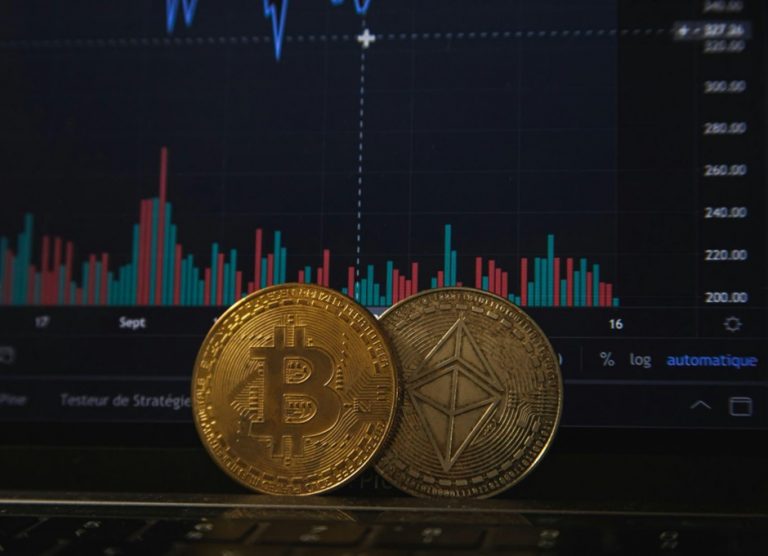
Bitcoin Faces Jobs Test
Bitcoin’s price is currently under scrutiny due to the upcoming U.S. nonfarm payrolls data, a key economic indicator that influences market sentiment and monetary policy expectations.
A weaker-than-expected jobs report could reinforce expectations for a 25-basis-point rate cut by the Federal Reserve, potentially weakening the U.S. dollar and supporting risk assets like Bitcoin.
Conversely, a stronger-than-expected report might increase Treasury yields, strengthen the dollar, and put downward pressure on Bitcoin and other cryptocurrencies, potentially pushing Bitcoin toward support levels around $94,000 or even $82,000, as suggested by some analysts.
Register for Tekedia Mini-MBA edition 20 (June 8 – Sept 5, 2026).
Register for Tekedia AI in Business Masterclass.
Join Tekedia Capital Syndicate and co-invest in great global startups.
Register for Tekedia AI Lab.
The recent rise in the MOVE index, which measures volatility in U.S. Treasuries, signals tighter liquidity, which could further challenge Bitcoin’s price stability. As of September 5, 2025, Bitcoin is trading around $112,306.62, up 1.4% over the past 24 hours.
Tether Eyes Gold Mining
Tether, the issuer of the world’s largest stablecoin, USDT, is reportedly exploring investments in the gold mining sector to diversify its portfolio. The company, which already holds $8.7 billion in gold bars in a Zurich vault, is considering stakes across the gold supply chain, including mining, refining, trading, and royalty companies.
This move aligns with Tether’s strategy to integrate cryptocurrency profits with traditional commodity markets, viewing gold as a “natural Bitcoin” due to its scarcity and value as a safe-haven asset. Tether’s gold-backed stablecoin, XAUt, which represents one troy ounce of physical gold per token, has a market cap of approximately $1.33 billion and is backed by over 7.66 tons of gold.
Recent investments include a $105 million minority stake in Toronto-listed Elemental Altus Royalties Corp in June 2025, with an additional $100 million invested as part of Elemental’s merger with EMX.

Tether’s CEO, Paolo Ardoino, has emphasized gold’s role as a complement to Bitcoin, aiming to strengthen Tether’s reserves amid rising gold prices, which recently hit $3,550 per ounce. However, some in the conservative gold mining industry have expressed skepticism about Tether’s strategy and integration into the sector.
Tether’s interest in gold mining coincides with a strong performance in gold, up 37% year-to-date in 2025 compared to Bitcoin’s 22% gain, reflecting growing demand for safe-haven assets amid global economic uncertainties. Tether’s substantial profits—$5.7 billion in the first half of 2025—provide the financial capacity to pursue these investments.
Meanwhile, Bitcoin’s market dynamics are closely tied to macroeconomic indicators like the U.S. jobs report, which could dictate its near-term price trajectory. The interplay between Tether’s gold strategy and Bitcoin’s sensitivity to economic data underscores the evolving relationship between cryptocurrencies and traditional assets.

Bitcoin’s price is highly sensitive to U.S. economic indicators like the nonfarm payrolls report. A weaker jobs report (expected on September 5, 2025) could bolster expectations for a Federal Reserve rate cut, potentially weakening the U.S. dollar and driving demand for Bitcoin as a hedge against fiat depreciation.
Bitcoin’s role as a “risk-on” asset means its short-term price movements will likely remain tied to macroeconomic signals, reinforcing its volatility and challenging its narrative as a stable store of value during economic uncertainty.
The jobs report’s outcome could sway investor sentiment across risk assets. A dovish Fed outlook (favoring rate cuts) may drive capital into cryptocurrencies, while a hawkish stance could shift investments toward safer assets like bonds or gold.
Bitcoin investors may need to brace for heightened volatility, with trading strategies increasingly dependent on real-time economic data, potentially deterring long-term holders in favor of short-term speculators.
Tether’s move to invest in gold mining and related sectors (e.g., $105 million in Elemental Altus Royalties and $100 million in EMX merger) aims to diversify its $8.7 billion gold reserves and $5.7 billion in profits (H1 2025). By integrating with the gold supply chain, Tether strengthens the backing of its gold-pegged stablecoin, XAUt ($1.33 billion market cap).
This diversification could enhance confidence in Tether’s reserves, addressing long-standing concerns about USDT’s transparency and stability, potentially increasing its dominance in the stablecoin market (currently $118 billion in circulation).
Gold’s 37% year-to-date gain in 2025 outperforms Bitcoin’s 22%, signaling strong demand for safe-haven assets. Tether’s investments could further drive gold prices, especially if macroeconomic uncertainty persists. Meanwhile, XAUt’s growth could siphon liquidity from other cryptocurrencies, including Bitcoin, as investors seek stablecoin alternatives.
The interplay between Bitcoin’s jobs-driven volatility and Tether’s gold investments highlights cryptocurrencies’ growing integration with global financial systems. Bitcoin reacts to monetary policy signals, while Tether’s gold strategy taps into traditional safe-haven demand.
Cryptocurrencies are increasingly viewed as a macro asset class, subject to the same economic forces as equities, bonds, and commodities. This could drive mainstream adoption but also expose crypto markets to broader systemic risks.
Tether’s pivot to gold may signal a shift in investor preference toward assets with tangible backing, especially amid concerns about fiat-pegged stablecoin vulnerabilities. Bitcoin, lacking such backing, may face challenges in maintaining its dominance if investors prioritize stability.
Bitcoin’s exposure to U.S. jobs data underscores its vulnerability to macroeconomic shifts, potentially driving short-term volatility and challenging its long-term narrative. Tether’s gold mining investments signal a strategic pivot toward diversification and stability, potentially strengthening its market position but creating competitive dynamics within crypto.