

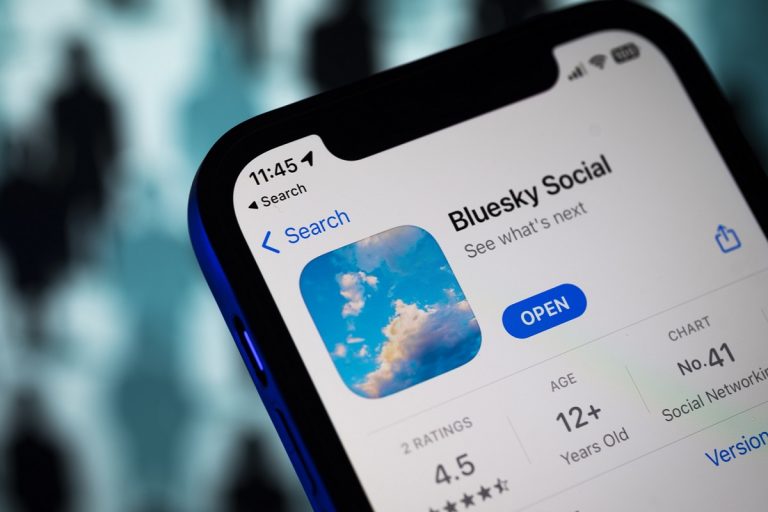
Rose Wang, chief operating officer of the open-source social platform BlueSky, has issued a stark warning that aggressive government regulation of social media could inadvertently strengthen the grip of a handful of tech giants while making it nearly impossible for smaller, healthier alternatives to thrive.
Speaking on the sidelines of SXSW in London on Wednesday, Wang expressed support for protecting young users but raised serious concerns about the unintended consequences of overly burdensome rules.
“I support the protection and the safety of youth, the question that we have then is at what cost, because essentially what I’m scared of is in the long term, we’re headed to a world where there’s about three to five platforms, and extreme heavy regulation of those platforms, and basically the compliance teams of these platforms are 10 times the size of our entire team,” she said.
Register for the next Tekedia Mini-MBA.
Register for Tekedia AI in Business Masterclass.
Join Tekedia Capital Syndicate and co-invest in great global startups.
“So, basically, we’re living in a world where it’s almost impossible for smaller entrants to come in and build healthier spaces.”
With only around 40 employees, BlueSky simply cannot match the compliance infrastructure of Meta, ByteDance, or X. Wang argued that while platforms have often failed to self-regulate responsibly, governments must strike a careful balance that protects innovation and competition alongside user safety.
BlueSky’s Origins and Growth Trajectory
Originally conceived inside X (then Twitter) in 2019 and endorsed by co-founder Jack Dorsey, BlueSky spun out as an independent company in 2021. It has since positioned itself as a more open, decentralized alternative to mainstream social networks, emphasizing user control and healthier discourse. The platform has grown to 43 million users as of March, though that still represents only about 10% of X’s estimated 450 million users.

Despite early momentum, BlueSky has faced challenges in maintaining engagement. By the end of October last year, it reportedly saw a 40% drop in daily mobile active users over the prior 12 months. Wang acknowledged the difficulties of competing in a market dominated by entrenched players with vast resources.
“These platforms have led to a place where the bottom line is the thing that drives what they do… so I understand why governments have to step in and regulate, because the platforms have done nothing right,” she said.
The Regulatory Wave and Its Risks
Australia became the first country to enforce a blanket social media ban for users under 16 in December, requiring platforms like Instagram, TikTok, YouTube, X, and Reddit to implement age verification through methods such as facial scans, ID uploads, or linked bank details. Non-compliance can result in fines of up to 49.5 million Australian dollars ($35 million). BlueSky has also introduced age assurance measures to comply with the law.

Several other nations, including the UK, Spain, France, and Austria, are considering similar legislation. In the United States, momentum appears stronger at the state level than nationally.
Wang stressed that she is not against regulation itself, but believes it must be designed thoughtfully.
“I just want to end here with not saying that regulation is bad; it’s that regulation needs to work together with innovation. I think that there needs to be basically more channels between the smaller, medium-sized players and small businesses with regulators, because they need to be protected, while also then the very Big Tech players who we know are circumventing regulation need to be regulated, and so I think that nuance can be struck,” she said.
Implications for Competition and Innovation
The core risk Wang highlighted is market concentration. Heavy compliance burdens — legal teams, age verification systems, content moderation infrastructure, and reporting requirements — disproportionately favor companies with deep pockets. Smaller platforms like BlueSky, which prioritize openness and community-driven moderation, could be squeezed out, leaving users with fewer genuine alternatives.
This dynamic threatens to reduce diversity in social media experiences. While Big Tech platforms optimize for engagement and advertising revenue, smaller players often experiment with different models focused on healthier interactions, transparency, and user agency. If regulation raises the barrier to entry too high, the industry could consolidate further around a few dominant players, potentially reducing innovation and accountability.
Tech firms have broadly pushed back against blanket bans, arguing they may not effectively shield teens from harmful content while severing important social connections. Parents and educators have expressed mixed views, with some welcoming protection and others concerned about overreach and unintended isolation of young people.
Despite the challenges, Wang sees opportunity in platforms like BlueSky that emphasize openness and decentralized features. The company’s recent funding and focus on building a more user-centric experience position it to appeal to those disillusioned with mainstream social media. Its approval as the first AI agent on certain messaging platforms (in previous developments) also shows ambition to innovate at the intersection of social and AI.
For the broader industry, Wang is understood to be warning that effective policy should protect vulnerable users without creating insurmountable barriers for new entrants or entrenching existing power structures.