

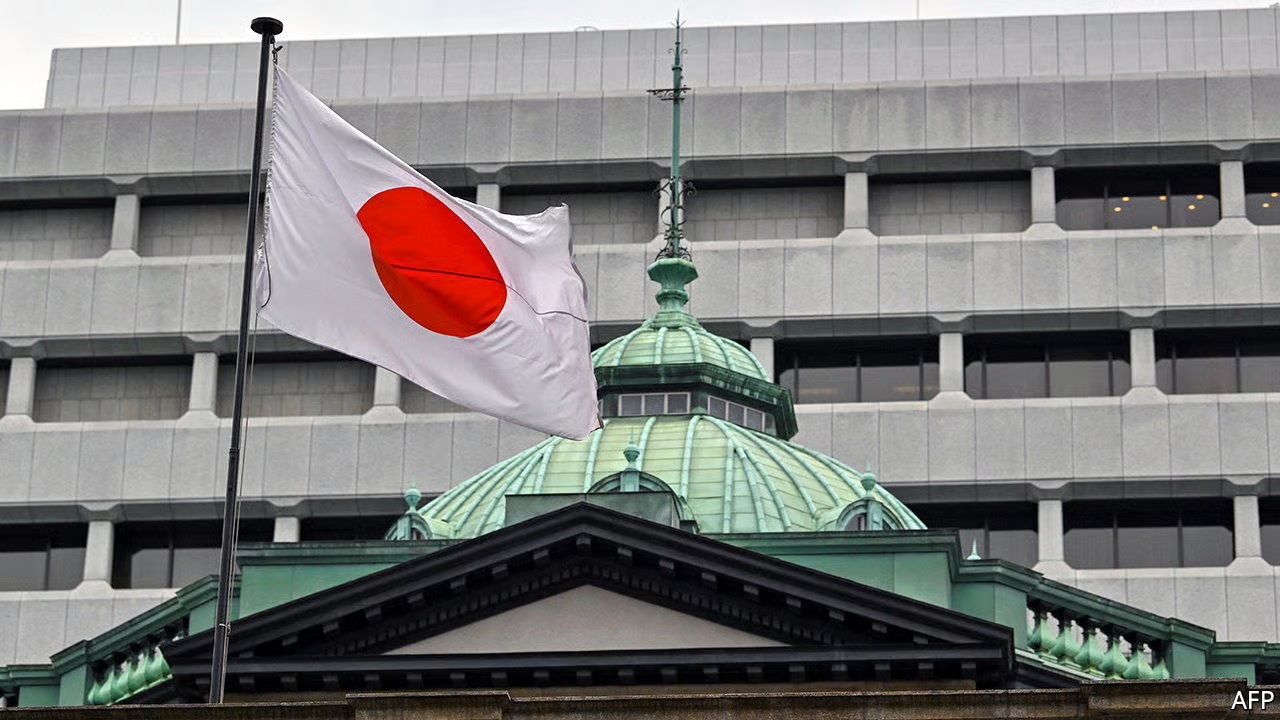
The Bank of Japan is expected to raise its policy rate to 1.25% on Friday, according to a CNBC survey, as persistent inflation, stronger wages and pressure from Washington increase the case for a faster withdrawal of Japan’s long-running monetary stimulus.
About 89% of the 18 economists and analysts surveyed by CNBC between Sept. 9 and 14 expect the BOJ to raise its benchmark rate by 25 basis points at the conclusion of its two-day meeting.
Such a move would represent more than another incremental rate increase. It would signal that the BOJ is becoming more comfortable accelerating the tightening cycle after maintaining roughly six-month intervals between increases since it began normalizing monetary policy in March 2024.
Register for the next Tekedia Mini-MBA.
Register for Tekedia AI in Business Masterclass.
Join Tekedia Capital Syndicate and co-invest in great global startups.
The central bank last raised rates in June.
The case for another increase has strengthened as inflation and wages have moved higher. Japan’s headline inflation rate reached 1.9% in July, its highest level this year, as energy costs rose amid the Iran war. Real wages also increased 2.4% in July, marking their seventh consecutive month of growth.
The combination is important for the BOJ because sustained wage gains provide a stronger foundation for inflation than temporary increases in energy prices alone. Policymakers have been seeking evidence that Japan can sustain a cycle in which higher wages support consumption and prices, allowing monetary policy to move further away from the ultra-loose settings that defined the country’s economy for years.

The timing is also being shaped by Washington.
Washington Wants a Stronger Yen
The Trump administration has been vocal about the need for Japan to continue raising interest rates, putting Prime Minister Sanae Takaichi’s preference for easier monetary policy and expansionary fiscal policy under greater pressure.
Treasury Secretary Scott Bessent most recently urged BOJ Governor Kazuo Ueda to take “decisive market and monetary steps” at the G20 finance ministers and central bank governors meeting earlier this month.

The U.S. has an interest in a stronger yen partly because of its implications for global bond markets.
A persistently weak yen can increase pressure on Japanese investors and authorities to support the currency. Japanese institutions hold large amounts of overseas assets, including U.S. Treasurys, and a sharp yen decline could create incentives to sell some foreign assets and bring funds home. That could put additional upward pressure on U.S. Treasury yields at a time when long-term borrowing costs are already elevated.
The currency issue has already moved beyond rhetoric. Japan and the United States conducted a joint intervention in late July aimed at strengthening the yen, marking a significant step in efforts to stabilize the currency.
“The Trump administration has effectively checked any potential move by a Takaichi administration to block the Bank of Japan from raising interest rates,” said Takahide Kiuchi, executive economist at Nomura Research Institute and a former BOJ policy board member.
“Consequently, the Bank of Japan has gained a free hand to proceed with rate hikes,” he said.
That does not mean Washington controls Japanese monetary policy. The BOJ remains responsible for setting rates, and domestic inflation, wages, economic activity and financial conditions remain the formal basis for its decisions. But the interaction between monetary policy and exchange rates has become difficult to separate from the broader U.S.-Japan economic relationship.
Recent comments from BOJ board members have also taken a hawkish tone, leaving open the possibility that the central bank could move more quickly than previously expected.
Economists Split on How Fast the BOJ Should Move
The survey nevertheless shows that the path beyond Friday remains uncertain.
Jesper Koll, expert director at Monex Group, is the most aggressive outlier. He expects the BOJ to deliver a 50-basis-point increase in a “one and done” move, rather than the conventional 25-basis-point increase.
Carlos Casanova, senior economist for Asia at UBP, takes the opposite view. He expects the BOJ to leave rates unchanged for now, although he believes the central bank is already behind the curve and eventually expects two 25-basis-point increases every six months.
“Data doesn’t yet support a regime shift,” Casanova said, arguing there is “insufficient visibility to justify a faster pace of rate hikes.”
Iran tensions and oil prices remain his main concern, since a sustained energy shock could raise headline inflation while simultaneously weakening household purchasing power and economic activity.
Higher inflation caused by stronger domestic demand and wages gives policymakers more reason to tighten. Inflation driven primarily by imported energy costs is more difficult because rate increases cannot directly reduce oil prices and could further weaken economic activity.
The composition of the inflation increase will therefore remain important as the central bank determines whether higher prices represent a durable shift in Japan’s inflation regime or another external shock.
Political appointments could also make Friday’s meeting more contentious.
Around one-third of survey respondents identified Toichiro Asada and Ayano Sato as the BOJ board members most likely to dissent if the central bank raises rates. Both are viewed as reflationists and were appointed by Takaichi earlier this year.
Their positions could matter more if the government seeks to balance expansionary fiscal policy with tighter monetary conditions. A stronger fiscal push could support demand and wages while simultaneously making it more difficult for the BOJ to justify maintaining very low interest rates.
Yen Faces Its Own Policy Test
The yen is likely to be the most immediate market indicator of how investors interpret the BOJ’s decision. About 61% of respondents expect the currency to trade between 155 and 160 against the dollar over the next month.
A rate increase should, in principle, narrow the interest-rate gap between Japan and the United States and provide support for the yen. But the currency’s reaction will depend heavily on what the BOJ signals about subsequent increases.
A 25-basis-point hike accompanied by cautious guidance could produce a limited response if markets have already priced it in. A stronger indication that the central bank intends to accelerate normalization could generate a more substantial repricing of Japanese assets and the yen.
Homin Lee, senior macro strategist at Lombard Odier, expects the BOJ’s hawkish shift to help keep the yen below 160 per dollar. But he does not expect further appreciation to come easily.
A move through 150 would be difficult, he said, because government and business officials would push back against what they regard as “inappropriately” rapid appreciation, creating an unusual policy tension. The United States wants a stronger yen partly to reduce external imbalances and limit risks to U.S. bond markets, while Japanese policymakers and exporters have historically been sensitive to the economic effects of rapid currency appreciation.
For global investors, the BOJ decision extends well beyond Japan.
A faster tightening cycle could change the attractiveness of Japanese bonds relative to overseas assets, influence the behavior of Japanese institutional investors, and affect global funding markets. If Japanese investors repatriate capital as domestic yields rise, the effects could reach U.S. Treasurys and other major bond markets.