

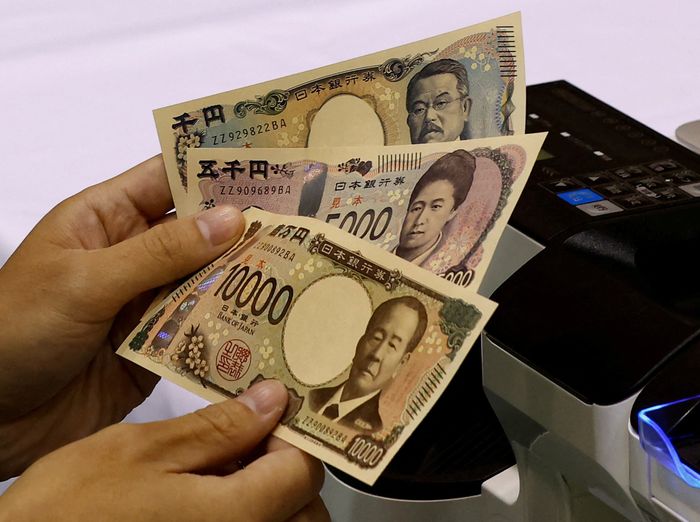
The United States has reportedly intervened directly in the foreign exchange market to support the Japanese yen for the first time in more than a decade, marking a significant escalation in efforts by Washington and Tokyo to halt the currency’s sharp depreciation and restore stability to global financial markets.
According to a report by the Financial Times, the U.S. Treasury purchased Japanese yen on Friday through the Federal Reserve Bank of New York, representing the first coordinated U.S. intervention in support of the Japanese currency since the aftermath of Japan’s devastating 2011 earthquake and tsunami.
The move reveals growing concern among U.S. and Japanese policymakers that the yen’s prolonged weakness, which recently pushed the dollar to its highest level against the Japanese currency since 1986, risks destabilizing financial markets, distorting trade flows and fueling imported inflation in Japan.
Register for the next Tekedia Mini-MBA.
Register for Tekedia AI in Business Masterclass.
Join Tekedia Capital Syndicate and co-invest in great global startups.
The Financial Times, citing people familiar with the matter, reported that the New York Fed sold euros and bought yen on behalf of the U.S. Treasury through Goldman Sachs and Morgan Stanley. The report did not disclose the size of the intervention.
Reuters separately reported that the Treasury had informed several major banks earlier on Friday that it could enter the foreign exchange market and instructed them to “stand ready for future action,” suggesting authorities were preparing for coordinated operations if necessary.
Further evidence of Washington’s intentions emerged during a cabinet meeting at Camp David, where a Reuters photograph of Treasury Secretary Scott Bessent’s handwritten notes showed a “To Do” list that included the instruction: “Buy Japanese Yen (JPY) $5-10 bil.”


Neither the Treasury Department nor the Federal Reserve Bank of New York immediately commented on the reported intervention.
First Coordinated Support Since 2011
If confirmed, the operation would represent the first time since 2011 that the United States has directly participated in supporting the Japanese currency.
That earlier intervention followed the devastating earthquake, tsunami and Fukushima nuclear disaster, when Group of Seven nations jointly acted to stabilize financial markets and prevent excessive appreciation of the yen. The current intervention is notable because authorities are now attempting to strengthen, rather than weaken, the Japanese currency.

The shift emerges following the extraordinary decline in the yen over recent years as wide interest-rate differentials between Japan and the United States encouraged investors to sell yen in favor of higher-yielding dollar-denominated assets.
Although the Bank of Japan has gradually tightened monetary policy after ending years of negative interest rates, borrowing costs in Japan remain well below those in the United States, limiting the currency’s recovery.
Markets Respond to Intervention Signals
News of the reported U.S. action immediately lifted the yen. According to LSEG data, the dollar fell to approximately 157.6 yen shortly before 5 p.m. EDT (2100 GMT), from around 158.9 yen less than an hour earlier.
The move reversed part of the dollar’s recent rally, which had driven the exchange rate close to 164 yen, the weakest level for the Japanese currency in roughly four decades. The sharp appreciation suggested traders quickly unwound speculative positions after reports that Washington had joined Tokyo’s intervention efforts.
Currency strategists have long argued that coordinated intervention involving both the United States and Japan would carry considerably greater credibility than unilateral action by Tokyo, increasing the likelihood of influencing market expectations.
The reported U.S. intervention follows increasingly aggressive efforts by Japanese authorities to support their currency.
Central bank data released on Friday indicated that Japan may have spent as much as $58.97 billion purchasing yen on Thursday, one of its largest interventions on record. Japanese financial newspaper Nikkei subsequently reported that Tokyo intervened again during New York trading hours on Friday, highlighting authorities’ determination to slow the currency’s decline.
While Japan’s Finance Ministry did not immediately comment on the reported market operations, it sought to reassure investors by emphasizing the breadth of policy tools available to maintain orderly financial markets. In a statement posted on X, the ministry said Japan’s monetary authorities possess “a broad range of tools to address market liquidity needs.”
“We remain prepared to use available tools as necessary to support orderly market functioning,” the ministry said.
The statement specifically referenced the Federal Reserve’s Foreign and International Monetary Authorities (FIMA) Repo Facility, which allows foreign central banks to obtain U.S. dollar liquidity without selling their holdings of U.S. Treasury securities.
Established during the COVID-19 pandemic in 2020, the facility enables countries such as Japan to finance market interventions while avoiding large-scale Treasury sales that could disrupt global bond markets.
Policy Announcement May Follow Next Week
Japanese and U.S. officials could unveil additional coordinated measures as early as next week, according to Kyodo News. The report said the two governments are discussing a joint policy statement aimed at discouraging speculative trading that has intensified downward pressure on the yen.
Such an announcement would reinforce recent intervention efforts by signaling that both countries are prepared to act against excessive currency volatility if necessary.
Market participants are expected to closely monitor any official communication for indications of whether authorities intend to establish informal thresholds for the dollar-yen exchange rate or pursue additional coordinated intervention.
However, the reported U.S. participation represents a significant shift in international currency policy.
Washington has historically been reluctant to intervene in foreign exchange markets except during periods of severe financial stress. Direct support for the yen suggests U.S. policymakers increasingly view the currency’s weakness as a broader financial stability issue rather than solely a domestic Japanese concern.
A persistently weak yen raises import costs for Japan, increases inflationary pressures and complicates monetary policy, while also affecting the competitiveness of exporters across Asia and contributing to volatility in global capital markets.
For investors, coordinated intervention by the world’s two largest reserve currency authorities carries greater weight than unilateral operations because it demonstrates shared policy objectives and increases the resources available to influence market conditions.
Whether the intervention succeeds over the longer term, however, will depend largely on underlying monetary policy. Currency analysts generally believe that sustained appreciation of the yen will require a narrowing of the interest-rate gap between the United States and Japan, alongside continued efforts by authorities to deter speculative trading.