

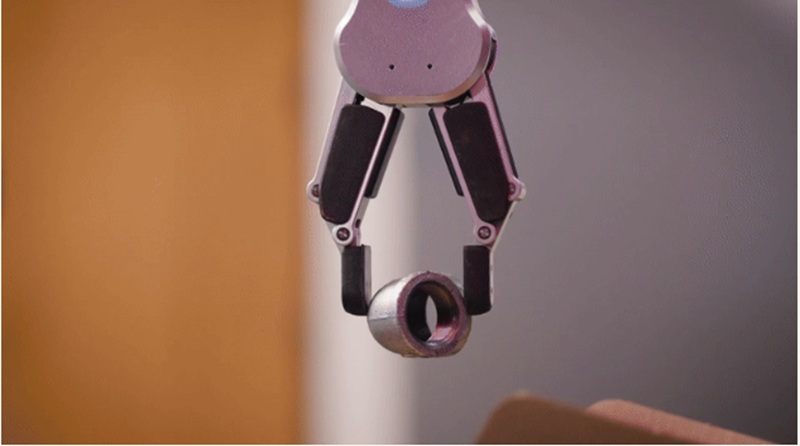
The debate over artificial intelligence has expanded beyond software and semiconductors into robotics, placing the United States at a strategic crossroads.
The Trump administration’s push to restrict or ban Chinese-made robots from sensitive sectors has sparked a fierce debate across Silicon Valley, exposing a growing divide between those who prioritize national security and those who fear such measures could undermine innovation and competitiveness.
Supporters of the proposed restrictions argue that advanced Chinese robotics companies benefit from heavy state support and could introduce unacceptable security risks if their machines become deeply embedded in American factories, warehouses, hospitals, and critical infrastructure.
Their concerns mirror earlier actions taken against Chinese telecommunications equipment, where cybersecurity vulnerabilities became a major political issue. Robots are no longer just industrial tools; they are intelligent systems capable of collecting vast amounts of operational data while becoming integral to supply chains and manufacturing.
Register for the next Tekedia Mini-MBA.
Register for Tekedia AI in Business Masterclass.
Join Tekedia Capital Syndicate and co-invest in great global startups.
Many technology executives and investors believe sweeping restrictions could produce unintended consequences. Silicon Valley has spent decades building global supply chains that rely on specialized manufacturing capabilities across Asia.
A blanket ban on Chinese robotics could increase production costs, delay automation projects, and reduce the pace at which American companies deploy next-generation AI-powered machines. Critics also argue that excessive regulation may encourage fragmentation in global technology markets, forcing companies to redesign products for separate geopolitical blocs rather than pursuing innovation.
The disagreement reflects a broader tension shaping the global AI race. Governments increasingly view artificial intelligence, semiconductors, cloud computing, and robotics as strategic national assets rather than purely commercial industries.
As geopolitical competition intensifies, technology firms are finding themselves caught between government policy and market realities. While robotics policy dominates political discussions, investors remain focused on another pillar of the AI economy: semiconductor giant Nvidia.

After months of market volatility, Morningstar believes Nvidia has entered an unusual position for a company widely regarded as the face of the AI revolution. According to the investment research firm, recent declines in Nvidia’s share price have pushed the stock into undervalued territory, presenting what it considers one of the highest-upside opportunities in the technology sector.
Nvidia has spent much of the past two years trading at premium valuations as demand for AI accelerators exploded. Cloud providers, hyperscalers, governments, and enterprises have collectively invested hundreds of billions of dollars in AI infrastructure, making Nvidia the dominant supplier of graphics processing units powering large language models and generative AI applications.
Yet market sentiment shifted as investors grappled with macroeconomic uncertainty, profit-taking, geopolitical risks, and concerns about export restrictions. These factors weighed heavily on Nvidia’s valuation despite continued strong demand for AI computing infrastructure.

Morningstar argues that the market may now be pricing short-term uncertainty more heavily than the company’s long-term earnings potential.
The contrast between political uncertainty and investment optimism highlights the complexity of today’s technology landscape.
On one hand, governments are reshaping industrial policy through trade restrictions, export controls, and national security reviews. On the other, investors continue to see artificial intelligence as one of the defining economic transformations of the coming decade.
Both stories point to the same conclusion: AI’s future will be determined by more than technological breakthroughs alone. Political decisions, regulatory frameworks, supply-chain resilience, and capital markets are becoming equally influential.
Whether debating Chinese robotics or reassessing Nvidia’s valuation, the central question remains unchanged—who will control the infrastructure powering the next generation of artificial intelligence, and how will that reshape the global economy?