

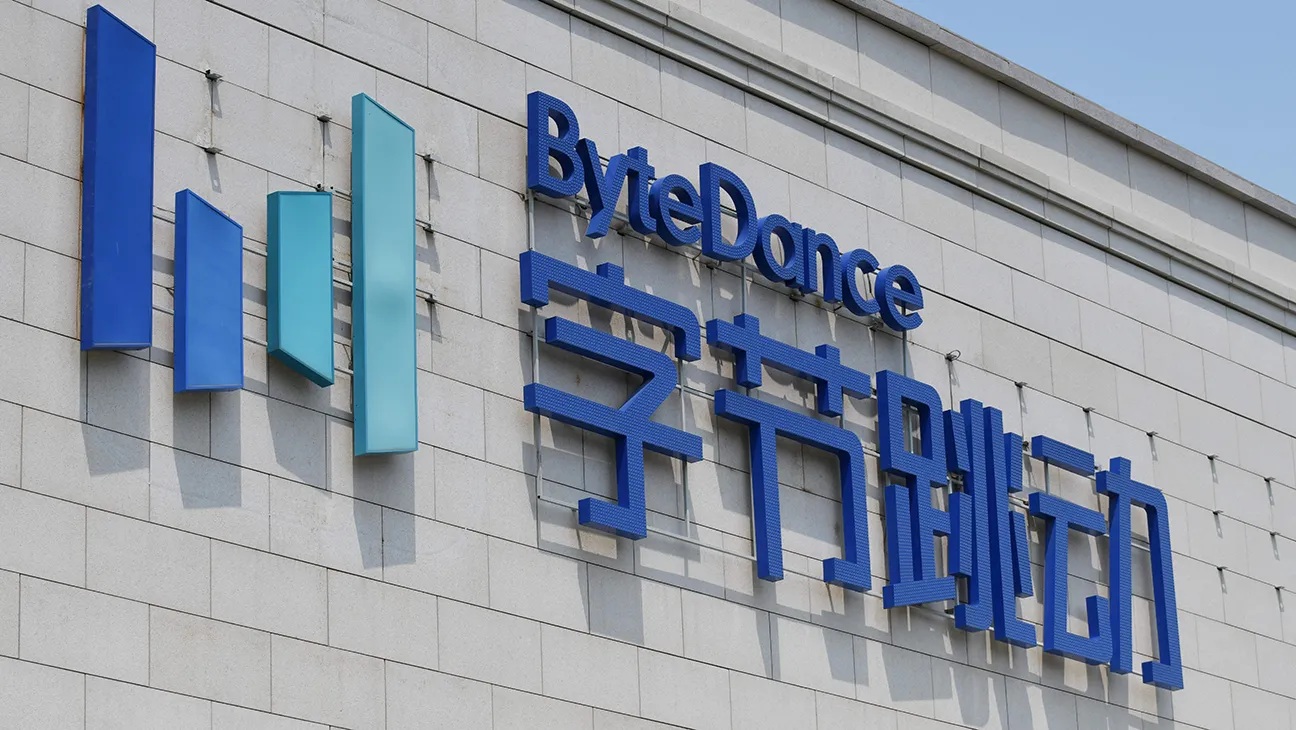
ByteDance, the parent company of TikTok, is actively developing its own artificial intelligence chip and is in advanced discussions with Samsung Electronics to manufacture the processor and secure critical memory supplies, two sources familiar with the matter told Reuters on Wednesday.
The move is part of ByteDance’s strategic push to reduce reliance on restricted U.S. chips and build self-sufficiency in AI infrastructure as U.S. export controls continue to limit access to Nvidia’s most advanced GPUs. According to the sources, ByteDance aims to receive sample chips by the end of March 2026 and plans to produce at least 100,000 units of the inference-focused AI chip this year, with one source indicating ambitions to scale production to as many as 350,000 units progressively.
Negotiations with Samsung include not only fabrication but also priority access to high-bandwidth memory (HBM) supplies—currently in exceptionally short supply due to the global AI infrastructure buildout—making the deal particularly attractive to ByteDance. The company issued a statement denying the accuracy of the information about its in-house chip project, without providing further details. Samsung declined to comment.
Register for Tekedia Mini-MBA edition 20 (June 8 – Sept 5, 2026).
Register for Tekedia AI in Business Masterclass.
Join Tekedia Capital Syndicate and co-invest in great global startups.
Register for Tekedia AI Lab.
The project, codenamed SeedChip, marks a significant milestone for ByteDance, which has been building chip design capabilities since at least 2022, when it began aggressively hiring semiconductor engineers. Reuters reported in June 2024 that ByteDance was collaborating with U.S. chip designer Broadcom on an advanced AI processor, with manufacturing planned to be outsourced to Taiwan Semiconductor Manufacturing Co. (TSMC).
The latest efforts with Samsung suggest ByteDance is pursuing multiple parallel paths to secure advanced chip capacity. ByteDance’s broader AI push includes its Seed division, founded in 2023 to develop large language models and promote their applications across the company’s portfolio—from short video (Douyin/TikTok) to e-commerce and enterprise cloud services.
At a January 2026 all-hands meeting, ByteDance executive Zhao Qi, who oversees the Doubao chatbot and its overseas version Dola, acknowledged that the company’s AI models still lag behind global leaders like OpenAI but pledged continued heavy investment in AI development throughout the year.

ByteDance plans to spend over 160 billion yuan ($22 billion) on AI-related procurement in 2026, with more than half allocated to purchasing Nvidia chips—including H200 models cleared for China—and advancing its in-house chip efforts, according to one source. This massive spending reflects the company’s determination to build end-to-end AI capabilities despite U.S. restrictions on advanced semiconductor technology.
ByteDance joins other major Chinese tech firms racing to develop domestic AI chips in response to U.S. export controls:
Alibaba unveiled its Zhenwu chip last month for large-scale AI workloads.

Baidu sells chips to external clients and plans to list its chip unit Kunlunxin soon.
Global tech giants, including Alphabet’s Google, Amazon, and Microsoft, have also developed proprietary AI chips to reduce dependence on Nvidia, the dominant supplier of advanced AI processors. For Chinese companies, U.S. restrictions on Nvidia’s most cutting-edge GPUs have added urgency to these efforts, as domestic alternatives remain several generations behind in performance.
Competition in China’s AI chip market is intensifying. Huawei’s HiSilicon unit holds a leading share with its Ascend series processors, while startups like Biren Technology, Moore Threads, and Iluvatar CoreX are vying for positions in data center and edge AI applications. ByteDance’s SeedChip project would add another major contender, leveraging the company’s vast data resources from TikTok/Douyin and its deep pockets to potentially close the gap with global leaders.
The Samsung talks are particularly significant given the global shortage of high-bandwidth memory (HBM), which is essential for training and inference on large AI models. Samsung and SK Hynix dominate HBM production, with SK Hynix holding a leading share of Nvidia’s HBM supply for its Blackwell and upcoming Rubin architectures. Securing priority HBM access would provide ByteDance with a critical advantage in scaling its AI infrastructure.
ByteDance’s AI ambitions extend beyond chips. Its Doubao chatbot and related models have gained traction in China, though they still trail global leaders in capability. The company is betting heavily that AI will transform its diverse business lines, from content recommendation and advertising to enterprise cloud services. The push for in-house chips and alternative supply chains reflects China’s broader strategy to achieve technological self-reliance amid U.S. export controls and geopolitical tensions.
While ByteDance’s denial of the chip project suggests sensitivity around the topic, the scale of its planned AI spending and ongoing talent acquisition in semiconductors indicates the effort remains active and well-funded.