

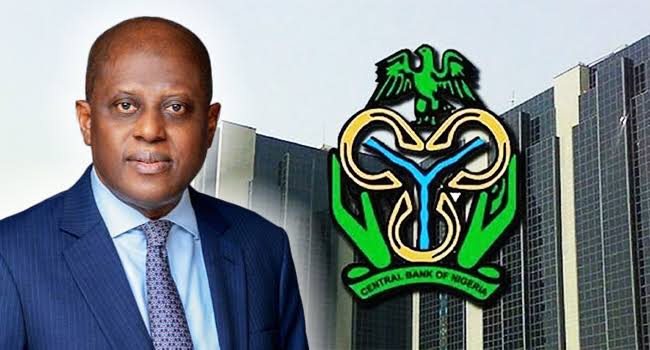
Nigeria’s Central Bank Governor, Yemi Cardoso, has confirmed that the bank has officially adopted artificial intelligence (AI) in its monetary policy framework, particularly for macroeconomic forecasting and decision-making, marking a major step toward digital modernization of monetary governance in Africa’s fourth-largest economy.
Speaking at a fireside chat at the London Business School, moderated by Helene Rey, Lord Bagri Professor of Economics, Cardoso said AI has been fully integrated into the bank’s policy modeling process, describing the technology as an indispensable tool in an era driven by data and predictive analytics.
The governor’s comments mark the first public confirmation that the CBN has formally incorporated artificial intelligence into its policy processes, placing Nigeria among a growing list of central banks globally — including the Bank of England and the U.S. Federal Reserve — experimenting with AI for inflation modeling, exchange rate analysis, and liquidity forecasting.
Register for Tekedia Mini-MBA edition 20 (June 8 – Sept 5, 2026).
Register for Tekedia AI in Business Masterclass.
Join Tekedia Capital Syndicate and co-invest in great global startups.
Register for Tekedia AI Lab.
Cardoso said the initiative is part of a broader effort to make policy “data-driven, transparent, and forward-looking,” as Nigeria continues to confront inflationary pressures and foreign exchange volatility.
On Cryptocurrency Regulation
Responding to a question on cryptocurrency, Cardoso acknowledged the asset class’s growing significance among young Nigerians, signaling a shift from the central bank’s previously restrictive stance.
He said the apex bank understands its importance to young Nigerians and will soon put out a statement in this direction, suggesting that a formal regulatory update is imminent.

The CBN had in 2021 restricted banks from facilitating crypto transactions, citing concerns about money laundering and capital flight. However, under Cardoso’s leadership, the tone has softened, particularly as global financial systems move toward regulated digital asset integration.
Interest Rates and Financial System Stability
On interest rates, Cardoso conceded that rates remain high, but expressed confidence that “as the situation develops, it will start to adjust itself.” He noted that the disappearance of arbitrage opportunities in the foreign exchange market would force Nigerian banks to shift focus toward real business generation and lending, rather than speculative gains.
Turning to the bank recapitalization drive, Cardoso reiterated that institutions unable to meet new capital requirements would have the option to downgrade their licenses or pursue mergers. He stressed that banks have been given sufficient time to comply and dismissed any notion of panic or deadline extension.

Bond Market and FX Reforms
Cardoso also addressed concerns over a perceived “takeover” of the bond market, clarifying that the CBN’s interventions are aimed at price discovery and market efficiency, not control.
He explained that there is no takeover of the bond market but price discovery, similar to FX market reforms, which makes the market function better. The reform, he explained, will get participants to operate transparently, according to their license category.
The governor added that electronic funding and other digital systems continue to play a central role in the ongoing reforms designed to enhance transparency and liquidity in Nigeria’s financial markets.
Reforms and Policy Focus
Cardoso was candid in his assessment of Nigeria’s economic challenges, saying that many of the current hardships stem from reforms that should have been implemented a decade ago.
He explained that things wouldn’t be this bad if reforms such as fuel subsidy removal and the floating of the FX market had been done earlier. He reaffirmed that the Central Bank’s primary mandate remains stability, not short-term economic growth.
Cardoso’s remarks at the London Business School mark a pivotal moment for Nigeria’s monetary policy direction. The adoption of AI for economic forecasting indicates a deliberate modernization of central banking operations — one that could improve the precision of inflation projections and exchange rate management.
At the same time, his openness to digital assets reflects a more pragmatic approach to cryptocurrency regulation, setting him apart from his predecessor and potentially setting the stage for Nigeria’s integration into global fintech trends.