

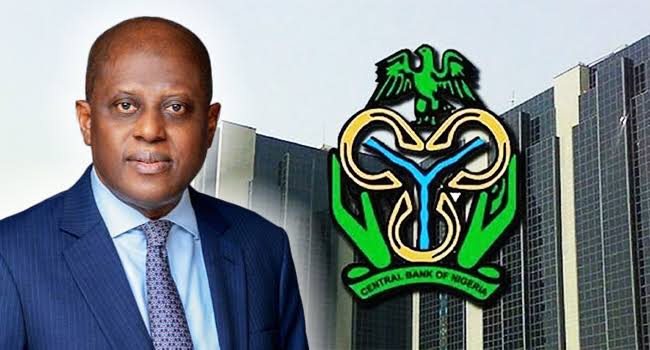
Nigeria’s trade surplus has climbed to 6 percent of the country’s Gross Domestic Product (GDP), the highest in years, and is projected to remain stable at that level in the near term, according to Central Bank of Nigeria (CBN) Governor Olayemi Cardoso.
The improvement, Cardoso said, reflects the gains of ongoing economic reforms and tighter macroeconomic discipline aimed at restoring stability and encouraging domestic production.
Cardoso disclosed the figures during the G-24 press briefing on the sidelines of the IMF/World Bank Annual Meetings in Washington, D.C., where he represented the Minister of Finance and Coordinating Minister of the Economy, Wale Edun, who serves as First Vice Chair of the G-24 group of nations. The briefing, attended by top Nigerian officials, including Minister of State for Finance, Dr. Doris Uzoka-Anite, focused on themes such as domestic resource mobilization, inflation control, and the pursuit of sound macroeconomic policies amid a volatile global economy.
Register for Tekedia Mini-MBA edition 20 (June 8 – Sept 5, 2026).
Register for Tekedia AI in Business Masterclass.
Join Tekedia Capital Syndicate and co-invest in great global startups.
Register for Tekedia AI Lab.
In a statement signed by Mohammed Manga, Director of Information and Public Relations at the Ministry of Finance, Cardoso emphasized that Nigeria’s economy has been relatively shielded from global uncertainties due to a mix of monetary and fiscal measures that have started to yield results.
Cardoso said the 6 percent trade surplus reflects Nigeria’s improving external position and growing competitiveness under a restructured economic framework. He noted that the CBN’s reforms — particularly its move toward a more market-reflective exchange rate — have led to a more competitive naira, spurring local production while discouraging over-reliance on imports.
He added that there is a strong correlation between disciplined economic management, sustainable growth, and disinflation — three goals the CBN is pursuing concurrently. According to him, Nigeria’s recent improvements in external trade performance are tied to those policies, which include curbing speculative activity in the foreign exchange market and supporting sectors that contribute to non-oil exports.

Cardoso also revealed that the apex bank is developing a framework for bilateral currency swaps designed to ensure mutual benefits for trading partners. This initiative, he said, aims to strengthen Nigeria’s trade ties while reducing pressure on foreign reserves.
NBS Data Confirms Surplus Growth
The CBN Governor’s statement aligns with recent data from the National Bureau of Statistics (NBS), which showed that Nigeria’s trade surplus surged by 44 percent in the second quarter of 2025.
According to the NBS, total merchandise trade for Q2 2025 stood at N38.04 trillion, representing a 20 percent increase over the N31.68 trillion recorded in the same quarter of 2024, and a 5.6 percent rise compared to the preceding quarter’s N36.02 trillion.

Exports accounted for 59.81 percent of total trade, amounting to N22.75 trillion, up 28.4 percent year-on-year and 10.4 percent from the previous quarter. Crude oil exports contributed N11.97 trillion, representing 52.6 percent of total exports, while non-crude oil exports reached N10.78 trillion or 47.4 percent of the total. Of this, non-oil products alone contributed N3.05 trillion, making up 13.4 percent of overall exports.
Imports, on the other hand, accounted for N15.29 trillion or 40.2 percent of total trade — a 9.4 percent rise from N13.97 trillion in Q2 2024, but a slight 0.9 percent drop compared to N15.43 trillion in Q1 2025.
The growing non-oil export component marks the gradual diversification of Nigeria’s export base, a trend the CBN and Ministry of Finance have repeatedly described as key to achieving sustainable growth.
A Turning Point for Nigeria’s External Balance
Economists say Nigeria’s ability to maintain a trade surplus at 6 percent of GDP represents a major improvement after years of balance-of-trade deficits driven by high import dependency, foreign exchange volatility, and declining oil revenues.
The development also comes amid early signs of easing inflation and modest stabilization in the exchange rate, trends that policymakers hope will translate into stronger real-sector performance and investment inflows.
But the CBN governor’s emphasis on maintaining policy consistency suggests the bank is wary of prematurely easing monetary discipline — especially as the country continues to grapple with imported inflation, high energy costs, and volatile global oil prices.
Sustaining the Gains
While the CBN is optimistic about sustaining the current trade surplus, there is concern that external shocks — such as falling oil prices, supply chain disruptions, or weakening demand in key export markets — could pose risks.
However, Cardoso expressed confidence that Nigeria’s structural adjustments and focus on production-driven growth will help the economy stay resilient.
“The improved balance of trade reflects sound macroeconomic policies that are beginning to yield positive results,” he said, emphasizing that the current trajectory could strengthen if domestic productivity continues to rise.
Economists believe the challenge now lies in sustaining the momentum — consolidating non-oil export growth, maintaining a stable exchange rate, and ensuring that fiscal and monetary policies remain aligned.