

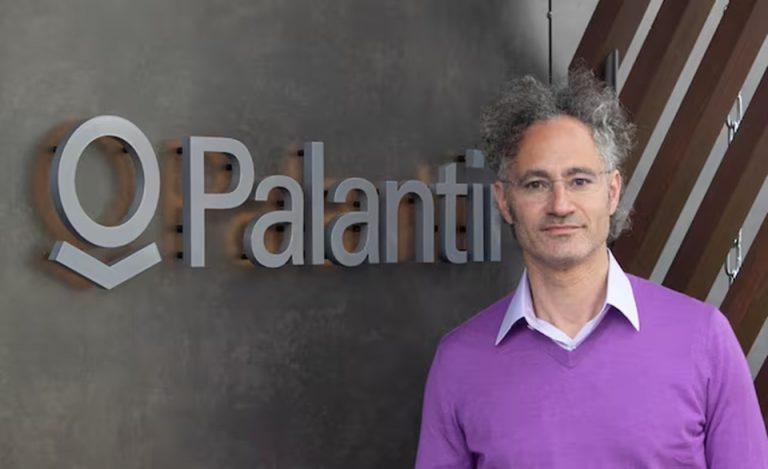
Palantir CEO Alex Karp may hold three degrees—including a doctorate—but he’s had enough of what he sees as the outdated prestige of higher education.
During the AI firm’s earnings call on Monday, the billionaire took a direct shot at elite universities like Harvard and Yale, saying a diploma no longer carries much weight once you’re through the doors at Palantir.
“This is by far the best credential in tech,” Karp declared. “If you come to Palantir, your career is set.”
Register for Tekedia Mini-MBA edition 20 (June 8 – Sept 5, 2026).
Register for Tekedia AI in Business Masterclass.
Join Tekedia Capital Syndicate and co-invest in great global startups.
Register for Tekedia AI Lab.
The comments come at a time when many in Gen Z are grappling with mounting student debt, a tough job market, and the growing realization that the high cost of a degree doesn’t always translate into career success. A growing number of young people are openly questioning whether pursuing higher education was worth the sacrifice—and some corporate leaders are siding with them.
Michael Bush, CEO of Great Place to Work, previously told Fortune that top employers aren’t “even talking about degrees” anymore.
“They’re talking about skills,” Bush said—a sentiment Karp seems to share wholeheartedly.

“If you did not go to school, or you went to a school that’s not that great, or you went to Harvard or Princeton or Yale—once you come to Palantir, you’re a Palantirian. No one cares about the other stuff,” Karp told investors. He added that the company is building a new type of credential “separate from class or background.”
Palantir’s recent performance is giving weight to Karp’s confidence. The AI analytics company pulled in a record $1 billion in revenue last quarter—a 48% year-over-year surge. Its stock has skyrocketed nearly 600% over the past year, adding $12 billion to its market cap in a single day and pushing its overall valuation to roughly $430 billion.
The company’s success, Karp insists, is not due to poaching talent from the Ivy League, but by fostering a culture of high achievement without the obsession over academic pedigree. Chief technology officer Shyam Sankar, who recently became a billionaire thanks to Palantir’s soaring stock, echoed this view.

“We are able to attract and retain and motivate people who actually want to bend the arc of history here, work on the problems that drive outcomes,” Sankar said.
An alternative to traditional universities
Palantir’s stance against conventional higher education isn’t just rhetoric. Karp and cofounders Peter Thiel and Joe Lonsdale have publicly supported the University of Austin—a controversial, privately funded four-year school built around the principles of free speech and an “anti-woke” philosophy.
The company has also created its own pipeline for young talent. Earlier this year, Palantir launched the Meritocracy Fellowship—a four-month paid internship for high school graduates who may be reconsidering college. While applicants must demonstrate “merit and academic excellence,” the entry bar is extremely high: at least a 1460 SAT score or a 33 ACT, both above the 98th percentile.
The fellowship was explicitly designed as a rebuke to what Palantir calls “opaque admissions standards” at many U.S. universities, which it says have replaced meritocracy with “subjective and shallow criteria” and turned campuses into “breeding grounds for extremism and chaos.”
Successful fellows are interviewed for full-time roles, with the recruitment pitch reading: “Skip the debt. Skip the indoctrination. Get the Palantir Degree.”
The AI paradox: Hiring to replace?
But there’s a twist: Karp openly admits that the same young talent Palantir hires today could eventually build the AI systems that make them redundant. Speaking to CNBC this week, he revealed that the company plans to reduce its headcount by around 500 employees while continuing to grow revenue.
“We’re planning to grow our revenue … while decreasing our number of people,” Karp said. “This is a crazy, efficient revolution. The goal is to get 10x revenue and have 3,600 people. We have now 4,100.”
That raises the question of whether Palantir’s anti-university pitch is truly about giving more people a shot—or simply about finding bright, ambitious young workers to help accelerate the company’s AI-driven efficiency drive, even if it ultimately means fewer jobs.
Karp’s remarks feed into a broader corporate trend: the devaluation of academic credentials in favor of demonstrable skills, adaptability, and performance. Major companies from Google to IBM have scrapped degree requirements for many roles, reflecting a shift in hiring priorities that could redefine the career paths of future generations.
But critics note that while bypassing college might spare young workers crushing debt, it could also funnel them into industries where technological change—especially the rise of AI—makes job security uncertain. In Palantir’s case, the same innovation that has driven its meteoric rise could leave even the best “Palantirians” vulnerable to automation.