

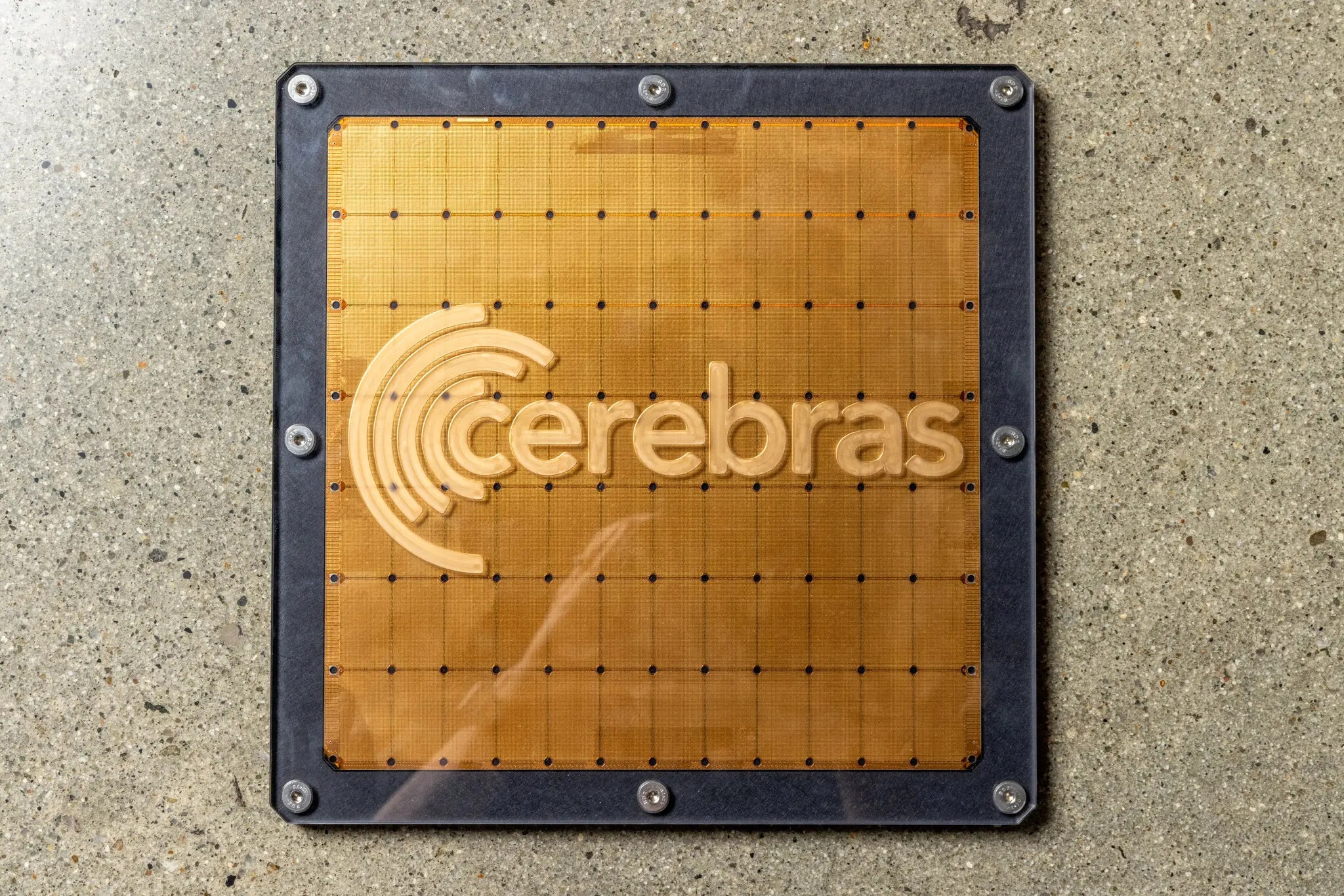
Cerebras Systems raised its full-year revenue forecast and posted a smaller-than-expected adjusted loss in its second earnings report as a public company, but shares fell sharply in extended trading after quarterly sales came in below Wall Street expectations.
The AI chipmaker’s stock dropped about 14% after the company reported second-quarter core revenue of $180 million, compared with the $194 million expected by analysts polled by LSEG. Adjusted loss was 5 cents per share, significantly narrower than the 17-cent loss analysts had anticipated.
The reaction reveals the high expectations surrounding AI semiconductor companies, where strong demand and expanding backlogs are increasingly being weighed against questions over valuation, margins and the ability to convert future orders into near-term revenue.
Register for the next Tekedia Mini-MBA.
Register for Tekedia AI in Business Masterclass.
Join Tekedia Capital Syndicate and co-invest in great global startups.
Cerebras, which went public on the Nasdaq in May, nevertheless raised its full-year core revenue forecast to between $880 million and $890 million, from its previous estimate of $855 million to $865 million. It expects core revenue of $214 million to $216 million in the current quarter.
The company also expects core gross margin to rise to between 38% and 40% in the current quarter, an important development as investors assess whether Cerebras can build a profitable business around its specialized AI accelerators.
AI Demand Remains Strong
CEO Andrew Feldman said demand for Cerebras’ technology remains exceptionally strong, particularly for applications requiring rapid AI responses.

“AI demand is through the roof,” Feldman said in an interview, adding that customers are willing to pay a premium for Cerebras’ inference technology.
Cerebras is positioning its chips as an alternative to Nvidia’s dominant AI accelerators for workloads where low latency is particularly important. The company refers to this market as “fast inference,” targeting applications that require AI models to generate responses quickly enough for interactive services.
Feldman said the premium pricing of fast inference is helping Cerebras improve its margins.

“Gross margins are in a good spot, and growing, because fast inference is priced at a premium,” he said.
The strategy is viable because the AI semiconductor market is gradually shifting from the initial training of large models toward inference, where those models are deployed repeatedly to serve users. That transition could create opportunities for specialized chipmakers if they can demonstrate lower latency or better economics than general-purpose accelerators.
Cerebras ended the quarter with $25.4 billion in remaining performance obligations, which the company described as evidence of “extraordinary future demand.” The figure represents contracted business that has yet to be recognized as revenue, giving investors visibility into future sales. The challenge is converting that backlog into revenue at a pace that justifies the company’s elevated market expectations.
Cerebras said it expects revenue to triple in the next fiscal year. Feldman argued that greater scale should also improve the company’s economics by allowing it to manufacture more efficiently, negotiate better component prices, and spread fixed manufacturing costs across a larger number of units.
The company reported total revenue of $210 million for the quarter, compared with $180 million in core revenue. The difference consists of “pass-through revenue,” which is excluded from the company’s core revenue measure.
Huge Accounting Loss Masks Underlying Performance
Cerebras reported a net loss of $450.5 million, compared with a profit of $309.5 million a year earlier.
However, the headline loss was heavily affected by stock-based compensation. Cerebras recorded $386.6 million in stock-compensation costs during the quarter, meaning the reported net loss does not provide a straightforward picture of the company’s underlying operating performance.
The much smaller adjusted loss of 5 cents per share was therefore more closely watched by investors.
Still, the size of the stock-based compensation expense is relevant for shareholders because such awards can dilute existing ownership over time, even though they do not represent an immediate cash expense.
Cerebras is also expanding beyond direct hardware sales through its cloud platform, which allows customers to access its AI chips without purchasing and operating the underlying infrastructure themselves. The cloud business generated $126 million in revenue during the June quarter, giving Cerebras another avenue to monetize its technology as demand for AI computing expands.
The company has also been broadening its ecosystem. It recently announced a partnership with Advanced Micro Devices (AMD), with products expected to enter production later this year. It also said OpenAI can use Cerebras chips to serve its latest GPT-5.6-Sol model.
Those relationships could help Cerebras establish itself as a credible second-source provider in an AI computing market still dominated by Nvidia.
Cerebras priced its Nasdaq offering at $185 per share and raised $6.4 billion in the IPO, benefiting from strong investor demand for companies exposed to the rapidly expanding AI infrastructure market. The stock closed Wednesday at $262.06, leaving it about 42% above its IPO price even after the post-market decline. Shares had reached a peak in May before retreating.
The sharp reaction to a revenue miss, even alongside higher full-year guidance and strong future obligations, shows how demanding expectations have become for AI infrastructure companies.