

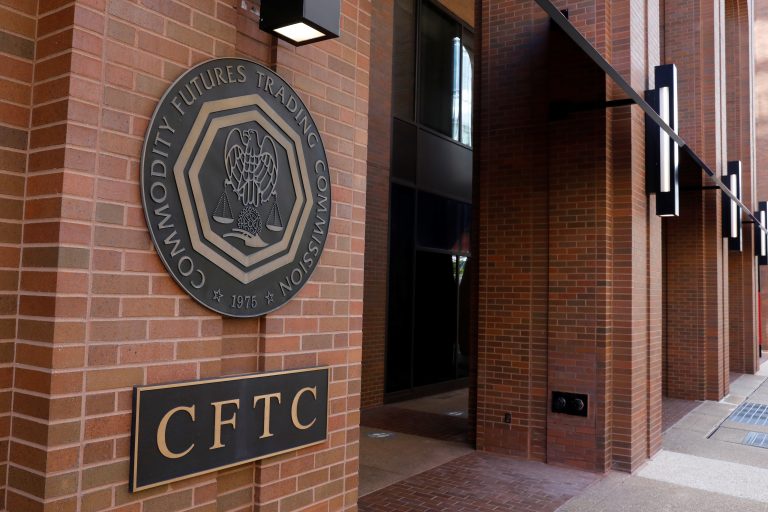
MoonPay, a leading crypto payments platform, announced that Caroline D. Pham, the Acting Chairman of the U.S. Commodity Futures Trading Commission (CFTC), will join the company as Chief Legal Officer and Chief Administrative Officer.
This move follows the expected Senate confirmation of her successor, Mike Selig, and marks another high-profile transition from government regulation to the private crypto sector.
Pham has been a key figure in advancing crypto-friendly policies during her tenure:She became Acting Chairman in January 2025 after serving as a Commissioner since 2022. Under her leadership, the CFTC launched initiatives like the Digital Asset Markets Pilot Program (a regulatory sandbox launched December 8, 2025), the Crypto Sprint for market modernization, and spot crypto trading on regulated futures exchanges.
She emphasized innovation in areas like perpetual futures, prediction markets, and tokenized assets.
Register for Tekedia Mini-MBA edition 20 (June 8 – Sept 5, 2026).
Register for Tekedia AI in Business Masterclass.
Join Tekedia Capital Syndicate and co-invest in great global startups.
Register for Tekedia AI Lab.
MoonPay highlighted Pham’s expertise in regulatory matters and market structure as ideal for guiding its growth, especially after the company secured a New York BitLicense and Limited Purpose Trust Charter in 2025.
This hire aligns with a trend of regulators moving to crypto firms, following examples like former Commissioner Summer Mersinger joining the Blockchain Association.
DTCC Partners with Canton Network for Asset Tokenization
The Depository Trust & Clearing Corporation (DTCC) announced a partnership with Digital Asset and the Canton Network, a privacy-focused, permissioned blockchain to tokenize securities custodied at its subsidiary, the Depository Trust Company (DTC).

The project starts with tokenizing a subset of U.S. Treasury securities, with a minimum viable product targeted for a controlled production environment in the first half of 2026. It follows a recent SEC no-action letter granting DTCC regulatory clearance to tokenize real-world assets.
Long-term plans include expanding to a broader range of DTC-eligible assets, such as equities, ETFs, index products, and more, across multiple networks. DTCC will co-chair the Canton Foundation’s governance alongside Euroclear, emphasizing interoperability, privacy, and institutional-grade controls.
This initiative aims to enhance liquidity, enable atomic settlement, intraday collateral mobility, and bridge traditional finance with blockchain infrastructure. It represents a major step toward mainstream institutional tokenization of real-world assets (RWAs).

Pham’s transition from Acting CFTC Chairman to a senior executive role at MoonPay exemplifies the accelerating revolving door between U.S. financial regulators and the crypto industry in late 2025.
This hire brings deep institutional knowledge of digital asset policy directly into a major crypto payments firm. Pham oversaw initiatives like the CFTC’s Digital Asset Markets Pilot Program, Crypto Sprint for spot trading, and tokenized collateral guidance.
At MoonPay, she will lead global legal, administrative, and Washington policy strategy, helping the company navigate compliance, expand internationally, and address barriers like AML and tax reporting for institutional clients.
This positions MoonPay as a more “regulation-resilient” player amid growing institutional demand. Pham joins a wave of similar transitions in 2025, including former Commissioner Summer Mersinger to the Blockchain Association and others to firms like Tether.
These moves signal crypto’s increasing legitimacy and maturation, as firms seek former regulators for compliance excellence and policy influence. It also reflects a pro-innovation shift under recent administrations, with clearer frameworks for derivatives, perpetuals, and prediction markets.
Critics highlight risks of regulatory capture, where officials might favor industry-friendly policies anticipating private-sector roles. However, proponents argue it bridges gaps, translating public-sector reforms into private innovation and fostering responsible growth.
Overall, this strengthens crypto’s ties to traditional regulation, likely accelerating adoption of compliant infrastructure like payments and wallets.
Implications of DTCC’s Partnership with Canton Network for Asset Tokenization
The DTCC’s selection of the privacy-focused Canton Network to tokenize DTC-custodied securities—starting with U.S. Treasuries and expanding to equities—represents a landmark institutional endorsement of blockchain for core financial infrastructure.
Backed by a recent SEC no-action letter, this initiative enables “digital twins” of real-world assets on a permissioned blockchain. It promises atomic (instant) settlement, intraday collateral mobility, 24/7 liquidity, and programmable features, reducing T+1/T+2 delays, counterparty risks, and operational costs.
Starting with Treasuries in a controlled MVP in H1 2026, it could scale to equities, ETFs, and more, unlocking efficiencies for market makers, hedge funds, and dealers. Canton’s protocol-level privacy addresses key barriers for banks and funds, allowing confidential transactions on shared infrastructure—unlike public blockchains.
DTCC’s co-chair role in the Canton Foundation alongside Euroclear positions it to shape global standards for interoperability and governance. As of late 2025, tokenized RWAs exceed $30-40 billion dominated by Treasuries via platforms like BlackRock’s BUIDL.
This DTCC move validates permissioned networks for systemic-scale tokenization, potentially driving the market toward $50 billion+ in 2026 and trillions long-term. It signals tokenization shifting from experiments to production, enhancing liquidity, fractional ownership, and DeFi-TradFi integration.
These developments, announced on the same day, underscore rapid convergence. Regulators turning industry insiders (Pham) and TradFi giants embracing blockchain (DTCC) indicate crypto’s transition from fringe to foundational. Expect faster growth in compliant products, RWAs, and institutional inflows.
Under a pro-crypto policy environment, these signal reduced enforcement risks, more sandboxes, and frameworks for tokenized assets/derivatives. Enhanced liquidity and efficiency could broaden access, but challenges remain around standardization, privacy risks, and equitable regulation.
Together, they mark a pivotal moment: blockchain integrating into Wall Street’s “plumbing,” with former regulators guiding the bridge. This bodes well for sustained growth in digital assets into 2026.