

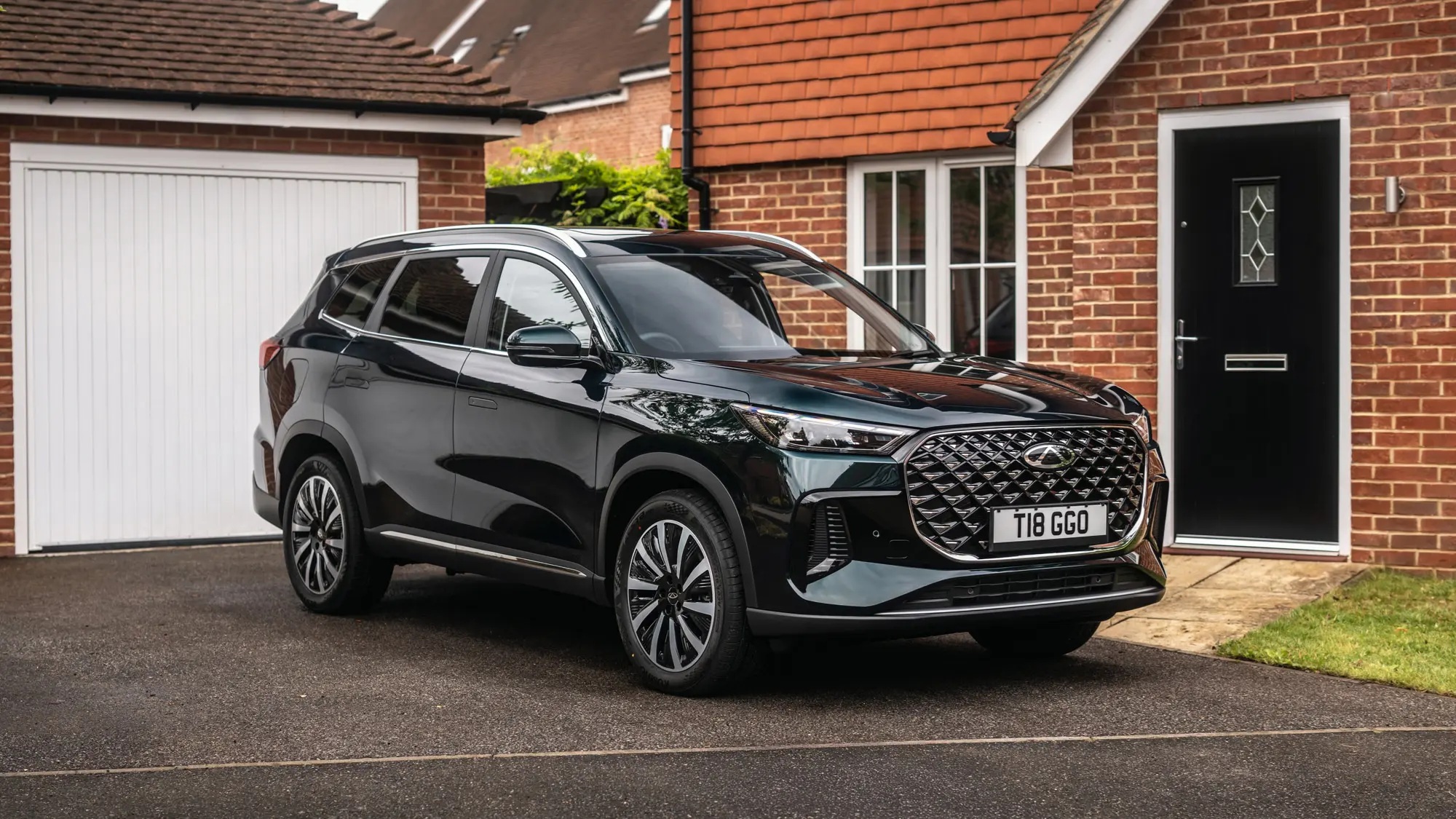
Chinese automaker Chery Automobile is stepping up its European expansion strategy, seeking partnerships with established carmakers that would allow it to manufacture vehicles in existing factories across the continent rather than commit capital to building new plants from the ground up.
The move marks a pragmatic shift by China’s largest vehicle exporter as it races to deepen its foothold in Europe, where demand for its vehicles has surged, and regulatory pressures are intensifying. Senior executives disclosed the plan on the sidelines of the launch of Chery’s Omoda and Jaecoo brands in Paris late Friday, signaling that the company is moving beyond market entry into a more entrenched industrial strategy.
“The company is looking for other production capacities in Europe,” Lionel French Keogh, Chery’s chief commercial officer for France, told Reuters.
Register for the next Tekedia Mini-MBA.
Register for Tekedia AI in Business Masterclass.
Join Tekedia Capital Syndicate and co-invest in great global startups.
At the heart of the strategy is speed and cost efficiency. Chairman Yin Tongyue said the company would rather tap underutilized production lines already in place than spend years and substantial capital building a greenfield assembly plant.
“These processes require time and dedication but mainly setting up the right local partnerships,” Yin said. “I really hope we will have news to share with you in the coming months.”
Yin declined to identify potential partners or disclose the number of countries under consideration, but confirmed that France is among the possible locations. That is notable given France’s importance as one of Europe’s largest auto markets and the fact that it has been among the last major regional markets to receive Chery’s Omoda and Jaecoo line-up.

The strategy comes as Chinese automakers intensify their push into Europe amid a rapidly evolving competitive market. Chery’s sales trajectory on the continent illustrates the momentum behind that push. According to Dataforce figures cited by the company, European sales surged nearly sixfold last year to 120,147 vehicles, up from 17,035 in 2024.
That pace of growth has quickly outstripped its current European production footprint. Chery has already established a manufacturing base in Spain through a joint venture with Ebro at a former Nissan Motor assembly plant in Barcelona. The company is targeting an annual production of 200,000 units at that facility by 2029, positioning the site as a key export and supply hub for Europe and potentially other nearby markets.
Yet executives made clear that even this expanded capacity will not be sufficient. The production push is being driven by two powerful forces: rising consumer demand and the need to localize manufacturing in response to European Union trade policy. Brussels’ tariffs on Chinese electric vehicles, alongside stricter local-content requirements, are forcing Chinese brands to reconsider the economics of shipping vehicles directly from China.

Thus, local assembly has gone beyond merely a growth option to a strategic necessity for Chery. Producing within Europe would help blunt the impact of tariffs, reduce logistics costs, shorten delivery timelines, and improve political acceptance in markets increasingly wary of China’s industrial expansion.
The broader industry context reinforces that urgency. A growing number of Chinese brands, including BYD, are expanding their operations across Europe, either through direct investments or manufacturing alliances with established automakers.
Chery’s approach, however, appears especially capital disciplined. Rather than pursuing a costly standalone factory model, the company is effectively looking to leverage idle or underused European industrial capacity, a strategy that could appeal to traditional automakers seeking to monetize dormant plants amid slowing demand for legacy combustion vehicles.
This opens the door to potentially significant alliances with European manufacturers under pressure to keep factories operational.
France’s inclusion on the shortlist is also a notable strategy. Beyond being a large consumer market, the country offers proximity to key Western European markets and could provide Chery with a stronger presence in a region where brand recognition for Chinese automakers is still developing.
The Paris launch event underscores that expansion. Chery said it plans to introduce a model under its main Chery brand in the fourth quarter and is also considering launching a compact electric SUV in France before year-end. The company has additionally announced plans to bring its Lepas brand to Europe, broadening its product portfolio beyond Omoda and Jaecoo.
Globally, the automaker’s scale gives it considerable room to expand. Chery’s worldwide sales rose nearly 7% last year to 2.8 million vehicles, with overseas markets accounting for more than 47% of total sales, an unusually high proportion that highlights its export-led growth model.
The next phase of Chery’s European strategy is expected to depend largely on whether it can convert talks into factory partnerships quickly enough to keep pace with demand and navigate Europe’s tightening regulatory environment.
For the continent’s legacy automakers, many of which are grappling with excess capacity and the costly transition to electrification, Chery’s expansion push may also present an opportunity. Analysts expect Chinese scale and demand on one side, and European manufacturing infrastructure on the other.