

China’s electric vehicle penetration rate could rise to as much as 80% by 2030, extending the country’s rapid shift away from conventional vehicles and putting further pressure on oil demand in the world’s largest crude oil-importing market.
Electric vehicles are expected to continue gaining market share through the end of the decade, although the pace of expansion is likely to moderate, Fairy Wang, vice president of Sinopec’s Economics and Development Research Institute, said Thursday at the APPEC conference in Singapore.
Wang said EV penetration could reach between 75% and 80% by 2030, compared with 65% in July and just 5% in 2020. The figures include both battery-electric and plug-in hybrid vehicles.
Register for the next Tekedia Mini-MBA.
Register for Tekedia AI in Business Masterclass.
Join Tekedia Capital Syndicate and co-invest in great global startups.
The growth is already having a measurable impact on China’s petroleum consumption.
Sinopec estimates that electric vehicles will displace about 56 million metric tons of oil demand in China this year, equivalent to roughly 1.2 million barrels per day.
“It is equivalent to almost 15% of China’s total demand for refined oil products,” Wang said.

Around two-thirds of the displaced demand comes from gasoline-powered vehicles, while diesel vehicles account for the remaining third.
The figures point to an increasingly important structural change for global oil markets. China has long been one of the largest sources of incremental oil demand, but the rapid electrification of road transport is weakening the link between economic growth, vehicle use and petroleum consumption.
Gasoline Faces The Biggest Pressure
The impact weighs heavily on gasoline because passenger vehicles are at the center of China’s EV transition.

Wang said almost all public transport vehicles in China have already been electrified, meaning future growth will increasingly depend on private vehicles and other segments of road transport.
The 56 million metric tons of oil demand that Sinopec expects EVs to displace this year represents a substantial reduction in potential gasoline and diesel consumption.
As EV penetration rises toward 80%, the displacement effect could grow bigger than it currently is, particularly if China’s vehicle fleet continues to grow while the proportion powered by internal-combustion engines declines.
For oil producers and refiners, that creates a longer-term demand challenge rather than a temporary fluctuation in fuel consumption.
China’s crude imports can still remain substantial because oil is also used to produce petrochemicals, aviation fuel, marine fuels and other products. But weakening transport-fuel demand would change the composition of the country’s petroleum market and potentially reduce one of the most important sources of global oil-demand growth.
Charging Infrastructure Accelerates Adoption
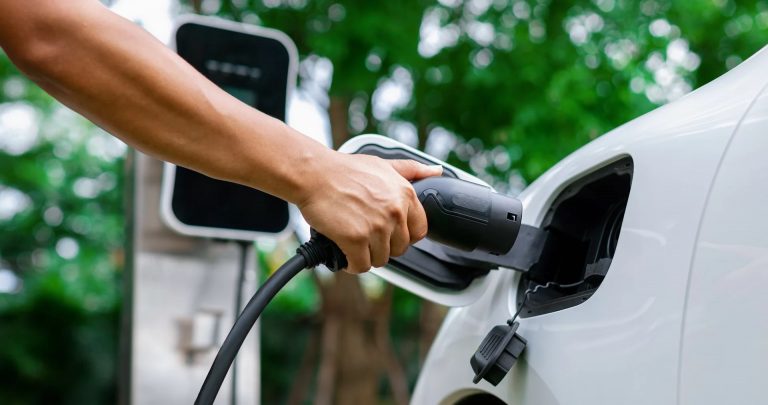
China’s rapid EV adoption has been supported by a combination of government policy, domestic manufacturing capacity and an extensive charging network.
Wang attributed much of the growth to earlier government subsidies and the expansion of charging infrastructure across the country. China now has about 23 million charging stations, according to Wang, with roughly two-thirds located in homes and the remainder in public facilities.
The scale of that infrastructure addresses one of the main barriers to EV adoption: concerns over whether drivers can conveniently recharge their vehicles.
The availability of chargers in both major cities and smaller urban areas has helped make EV ownership increasingly practical, allowing the technology to expand beyond China’s largest metropolitan markets.
The charging network also gives Chinese automakers an important foundation for continued growth as manufacturers compete to increase EV sales and expand the range of models available to consumers.
EV Growth Could Reshape China’s Oil Market
China’s transition is considered consequential because of the country’s position in global energy markets. The country is the world’s largest crude oil importer, meaning changes in its transportation-fuel consumption can have implications well beyond its domestic market.
If EV penetration reaches 75% to 80% by 2030, oil companies could face a substantially different demand environment from the one that existed when China’s economic expansion was driving rapid increases in gasoline and diesel consumption.
The transition will not eliminate China’s oil demand. Heavy transport, aviation, petrochemicals and other industrial applications are likely to remain important consumers of petroleum products.
But the displacement of road-fuel demand removes a major source of growth for refiners and crude suppliers. The distinction between EV penetration and outright oil displacement will also matter. Plug-in hybrids can still consume gasoline, meaning an 80% EV penetration rate does not translate into an 80% reduction in petroleum consumption from road transport.
Even so, the direction of travel is clear. As more kilometers are powered by electricity rather than gasoline or diesel, China’s oil demand becomes more dependent on sectors where electrification is harder.
Oil Market Faces A Structural Shift
The speed of China’s EV transition also indicates why the future of oil demand is becoming harder to forecast using historical relationships between economic growth and fuel consumption.
China’s EV penetration has risen from 5% in 2020 to 65% in July, according to Sinopec’s figures. The projected 75% to 80% level by 2030 would represent another major step in the transformation of the country’s vehicle fleet.
The expected slowdown in the rate of adoption is important, however. Moving from a minority of vehicles to a majority can happen quickly when subsidies, infrastructure and consumer demand reinforce one another. Replacing most of the remaining internal-combustion fleet can be more difficult because the vehicles are often older, cheaper and concentrated in segments where electrification is less straightforward.
For the global oil industry, that means China’s EV boom is unlikely to cause an immediate collapse in petroleum demand. Its greater significance is that it changes the trajectory of future demand. But if the country reaches 75% to 80% EV penetration by 2030, the resulting reduction in gasoline and diesel demand could become one of the most critical structural forces shaping global oil markets over the remainder of the decade.