

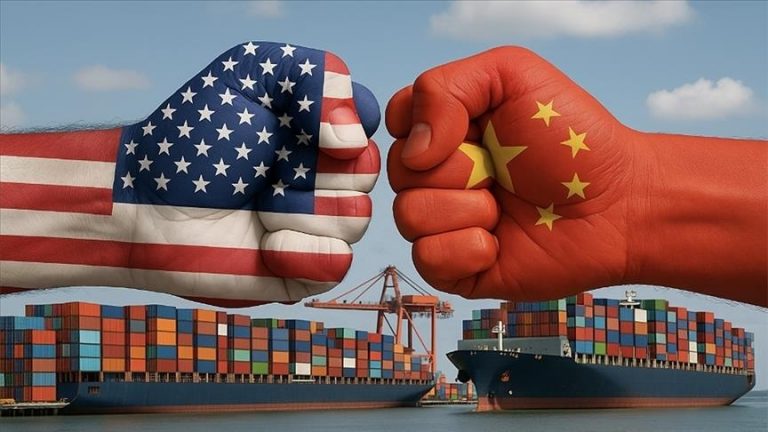
China has imposed fresh restrictions on dozens of American companies, targeting rare earth producers, drone manufacturers, and defense contractors in response to Washington’s latest effort to blacklist Chinese technology firms with alleged links to the country’s military.
The measures, announced Monday by Beijing, highlight the increasingly entrenched nature of the U.S.-China economic and technology confrontation, even as both sides attempt to stabilize broader diplomatic relations following recent high-level engagements between President Donald Trump and President Xi Jinping.
At the center of the dispute is the Pentagon’s updated 1260H list, which earlier this month added several major Chinese companies, including Alibaba Group, Baidu, and BYD, to a roster of firms Washington believes are supporting Beijing’s military modernization efforts.
Register for the next Tekedia Mini-MBA.
Register for Tekedia AI in Business Masterclass.
Join Tekedia Capital Syndicate and co-invest in great global startups.
While the U.S. designation does not immediately impose sanctions, it bars the Department of Defense from awarding direct contracts to listed firms beginning June 30 and will extend procurement restrictions indirectly across supply chains from 2027.
In response, China’s Ministry of Commerce placed 10 American companies on its export control list, prohibiting the export of Chinese-origin dual-use goods to those firms. Among the most notable targets are rare earth producers MP Materials and USA Rare Earth, both viewed as central to Washington’s efforts to reduce dependence on Chinese critical mineral supplies.
Drone manufacturers Teal Drones and Jaia Robotics were also included, alongside aerospace and defense-linked firms such as Ball Aerospace & Technologies, Oshkosh Defense, and California-based electronics manufacturer Aveox Inc.

In a separate move, China’s Finance Ministry barred 46 U.S. companies, largely defense contractors, from participating in Chinese government procurement projects. However, Beijing stopped short of imposing broader commercial restrictions. Foreign-invested entities registered locally in China and associated with the affected companies will remain exempt from the procurement ban.
Rare Earths Remain a Strategic Pressure Point
The inclusion of MP Materials and USA Rare Earth stands out, given the strategic importance of critical minerals in the global technology race. Rare earth elements are essential inputs for electric vehicles, advanced semiconductors, defense systems, renewable energy equipment, and artificial intelligence infrastructure.
China dominates the sector, accounting for roughly 70% of global rare earth mining and approximately 90% of refining capacity. That dominance has increasingly become one of Beijing’s most effective geopolitical tools as competition with the United States intensifies.

The move comes only days after reports emerged that China was increasing scrutiny of exports of indium and other strategic materials used in advanced optical chips and AI data centers. Together, the measures suggest Beijing is continuing to build a layered framework of export controls that can be activated when geopolitical tensions escalate.
A Calculated Response Rather Than Full Escalation
Analysts largely view China’s latest actions as a measured response rather than a major escalation. Han Shen Lin, China country director at Eurasia Group’s affiliate consultancy The Asia Group, said many of the targeted firms have limited commercial exposure to China.
The restrictions, therefore, carry more political significance than immediate economic consequences. The approach allows Beijing to demonstrate resolve while avoiding actions that could undermine the tentative improvement in bilateral relations that followed recent diplomatic engagement between Trump and Xi.
Dan Wang, China director at Eurasia Group, described the measures as a “model example” of how Beijing is likely to respond to lower-level U.S. escalations while maintaining overall stability in the relationship.
However, the development is largely seen as an expansion of national security concerns between Beijing and Washington. What began several years ago with restrictions on telecommunications firms has expanded to encompass artificial intelligence, electric vehicles, biotechnology, semiconductors, cloud computing, and advanced manufacturing.
The addition of Alibaba, Baidu, and BYD to the Pentagon list demonstrates how companies that operate largely in commercial markets are increasingly being drawn into competition between the world’s two largest economies.
Chinese officials have repeatedly criticized such actions.
Following the Pentagon’s latest designations, Beijing said it would take all necessary measures to protect Chinese companies’ “legitimate and legal rights and benefits” and accused Washington of “drawing up discriminatory lists under the pretext of national security.”
Several Chinese companies have already indicated they intend to challenge the designations. Past experience suggests such challenges can succeed. Chinese smartphone maker Xiaomi successfully fought its inclusion on a U.S. government blacklist in court, resulting in the designation being removed in May 2021.
That precedent has encouraged other companies to pursue legal avenues while continuing efforts to reassure investors that the restrictions will not materially affect operations.
The latest exchange signals that the U.S.-China confrontation has moved well beyond tariffs. The competition now centers on control of advanced technologies, supply chains, critical minerals, artificial intelligence infrastructure, and future industrial leadership.
While Monday’s measures are unlikely to have an immediate economic impact, they reinforce a longer-term shift: both Washington and Beijing are steadily building parallel systems of economic security restrictions that can be expanded whenever geopolitical tensions rise.