

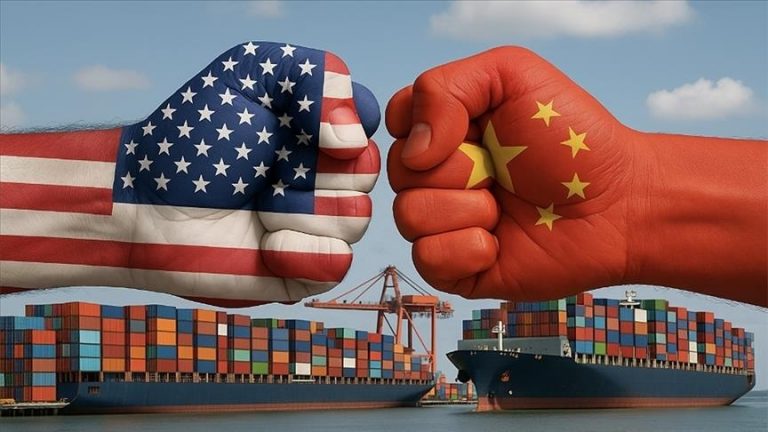
China has unveiled a fresh round of retaliatory measures against U.S. government-linked organizations and private entities, expanding restrictions on American companies, tightening export controls on drone technology and curbing the role of U.S.-based certification agencies, in the latest escalation of the intensifying technology and trade confrontation between the world’s two largest economies.
The measures, announced by Beijing on Wednesday, were presented as a direct response to recent U.S. actions targeting Chinese telecommunications companies, testing laboratories, drones and other strategic technology sectors, as well as Washington’s decision last week to add more than 40 Chinese entities to the Uyghur Forced Labor Prevention Act Entity List.
The latest actions underscore how the rivalry between Washington and Beijing has evolved beyond tariffs into a broader contest over advanced technologies, supply chains, export controls and industrial policy, with both governments increasingly using regulatory tools to limit each other’s commercial and technological influence.
Register for the next Tekedia Mini-MBA.
Register for Tekedia AI in Business Masterclass.
Join Tekedia Capital Syndicate and co-invest in great global startups.
China’s Ministry of Commerce of the People’s Republic of China announced business restrictions against seven U.S. organizations, prohibiting Chinese companies and individuals from conducting transactions or cooperating with them.
Among those targeted is Arizona-based Compliance Testing, a laboratory and certification services provider that evaluates wireless devices, telecommunications equipment and electronic products to ensure they meet technical, safety and regulatory standards before entering commercial markets.
Chinese authorities accused the company of supporting measures introduced by the Federal Communications Commission that Beijing says harmed China’s national interests.

The restrictions also extend to six additional U.S. organizations:
- Applied DNA Sciences
- Stratum Reservoir
- Altana Technologies
- Responsible Business Alliance
Verité - Human Rights in China
Beijing said the organizations supported U.S. sanctions and enforcement measures related to Xinjiang, where Washington and human rights groups have alleged widespread forced labor and other human rights abuses. China has consistently rejected those allegations.
Several of the organizations specialize in supply chain due diligence, labor rights assessments and product traceability, services that have become increasingly important as multinational companies seek to comply with U.S. and European import regulations.

Unlike broader sanctions imposed in previous disputes, the published orders do not include asset freezes, travel bans or financial penalties. Instead, they prohibit organizations and individuals within China from engaging in commercial cooperation or business transactions with the designated entities.
Drone Exports Face Tighter Scrutiny
China also tightened export controls covering drones, drone components and related technologies destined for the United States. Rather than imposing an outright export ban, Beijing said shipments of controlled drone products to U.S. customers would now undergo enhanced case-by-case licensing reviews, eliminating the expedited approval procedures previously available for certain exports.
The stricter review process could complicate procurement for U.S. drone manufacturers, defense contractors and commercial operators that continue to rely heavily on Chinese-made components, sensors, batteries, motors and flight-control systems.
China dominates large portions of the global commercial drone supply chain, making its export licensing policies increasingly consequential for manufacturers worldwide.
The measures also amplify Beijing’s willingness to use export controls as leverage in strategic sectors where China maintains significant manufacturing advantages.
Product Certification Changes Add New Pressure
In another notable step, China suspended the use of certain U.S.-based inspection and certification agencies for factory audits conducted under China’s product certification regime.
While Chinese authorities did not immediately specify the full operational impact, the decision is expected to increase compliance costs and administrative burdens for companies exporting products into the Chinese market that previously relied on U.S.-based certification providers.
The move is seen as part of Beijing’s broader effort to reduce reliance on U.S. institutions in sensitive technology supply chains while encouraging greater use of domestic certification systems.
Tit-For-Tat Technology Conflict
The latest measures form part of an increasingly expansive cycle of retaliation between Washington and Beijing. Over the past several years, the United States has imposed sweeping restrictions on Chinese access to advanced semiconductors, AI chips, semiconductor manufacturing equipment, telecommunications infrastructure and sensitive technologies, citing national security concerns.
Washington has also expanded the use of trade restrictions linked to alleged forced labor in Xinjiang through the Uyghur Forced Labor Prevention Act, which effectively blocks imports from designated entities unless companies can demonstrate their products were not produced using forced labor.
China has responded by strengthening export controls on strategically important materials, particularly rare earth elements and critical minerals essential for electronics, defense systems, electric vehicles and advanced manufacturing.
Beijing has also increasingly imposed sanctions, export licensing requirements, and commercial restrictions on foreign companies it believes support policies it views as contrary to China’s interests.
Against that backdrop, the latest actions indicate that economic competition between the United States and China is becoming increasingly institutionalized. Rather than relying primarily on tariffs, both governments are deploying export controls, investment restrictions, licensing requirements, sanctions and regulatory enforcement to shape strategic industries ranging from semiconductors and artificial intelligence to drones, telecommunications and critical minerals.
For multinational companies, the growing use of regulatory tools creates greater compliance complexity and increases the risk of becoming caught between competing legal regimes in the world’s two largest economies. Businesses operating across both markets are likely to face mounting pressure to diversify supply chains, localize operations and strengthen geopolitical risk management as U.S.-China strategic competition continues to widen.
Relations between the United States and China have steadily deteriorated in recent years as trade disputes have expanded into broader competition over technology, national security and industrial leadership. The rivalry now encompasses semiconductors, artificial intelligence, telecommunications, drones, quantum computing, critical minerals and advanced manufacturing.