

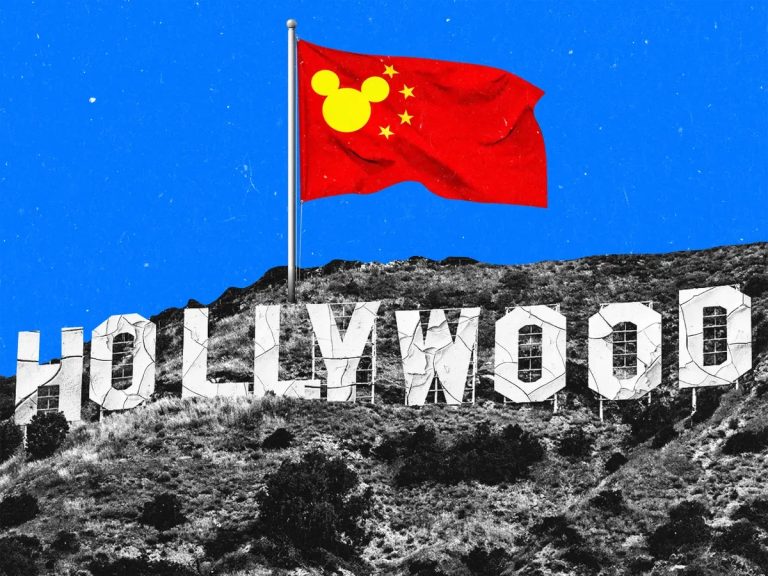
As Washington and Beijing entrench themselves in an increasingly bruising trade war, China has quietly opened a new front—one that strikes at the heart of America’s soft power: Hollywood.
In a pointed response to President Donald Trump’s escalating tariffs, Beijing announced on Thursday it would “moderately reduce” the number of U.S. films allowed into Chinese theaters. The announcement, made via the National Film Administration (NFA), comes with the sort of diplomatic polish China often uses to cushion its blows, stating it would “follow market rules” and “respect the audience’s choices.” But few in the global film industry are taking it as anything but a retaliatory move.
Earlier in the week, two well-connected Chinese bloggers, whose posts are often seen as unofficial signals from the Communist Party, hinted at a potential full ban on American films. Though the NFA’s language was more tempered, it’s clear Beijing wants Hollywood to feel the pinch.
Register for Tekedia Mini-MBA edition 20 (June 8 – Sept 5, 2026).
Register for Tekedia AI in Business Masterclass.
Join Tekedia Capital Syndicate and co-invest in great global startups.
Register for Tekedia AI Lab.
The impact may not be immediately devastating, but for an industry already struggling to recover post-COVID and contending with streaming disruptions, the message is unmistakable: China is prepared to weaponize its booming box office as leverage in its wider economic standoff with the United States.
Cultural Capital in a Crossfire
For decades, Hollywood has ridden high in China, its blockbusters drawing crowds in a market that grew from a cinematic backwater into a multibillion-dollar arena almost overnight. Between 2011 and 2019, China’s box office surged from under $1 billion to over $9 billion, second only to the U.S. That growth was fueled in no small part by American franchises—from Fast & Furious to Avengers: Endgame, which grossed a staggering $632 million in China alone.
Even though U.S. studios only see about 25% of box office takings in China, the volume made it worthwhile. A single hit could add hundreds of millions to a studio’s revenue, padding profit margins and giving Hollywood productions global clout.

But the tide has been turning.
Hollywood’s grip on Chinese audiences has loosened. Once dominant, American films are increasingly being sidelined by locally produced movies. Domestic films now account for 80% of China’s total box office earnings, up from about 60% before the pandemic. That’s not just a statistic—it’s a cultural recalibration.
Earlier this year, Ne Zha 2, a homegrown animated fantasy, shocked observers by earning almost $1.9 billion since its January release. That puts it ahead of global juggernauts, making it the highest-grossing animated film of all time—anywhere in the world. American movies may still pack theaters, but Chinese viewers are leaning into stories that reflect their culture and values.

Hollywood’s Waning Fortune
China’s partial freeze on U.S. films comes at a time when Hollywood is already limping. The pandemic gutted theater attendance, forced shutdowns of productions, and dramatically altered viewer habits. Studios now depend more than ever on international markets to recoup blockbuster budgets. A market like China, second only to the U.S., remains crucial.
In 2024, five U.S. films managed to cross the $50 million mark in China. Godzilla x Kong: The New Empire led with $132 million. That kind of performance is no longer the rule, but the exception.
Any potential ban, or even a sustained reduction in quotas, risks cutting off a key artery for the industry’s overseas earnings. And Beijing knows it.
“Such a high-profile punishment of Hollywood is an all-win motion of strength by Beijing that will surely be noticed by Washington,” said Chris Fenton, a former Hollywood executive who authored a book on the film industry’s dance with Chinese censors.
Yet, even if Beijing takes the step further, Washington won’t be able to respond in kind. Chinese films make almost nothing at U.S. box offices. The cultural trade is wildly imbalanced, and it has long served Beijing’s interests—until now.
Beijing’s decision to target Hollywood is not random. Movies are more than entertainment—they are cultural weapons. For decades, Hollywood has exported not just action and romance, but Western ideals, individualism, and sometimes, subtle critiques of authoritarianism. Beijing has always been wary of this, allowing American films in limited quotas, subjecting them to intense censorship, and timing releases to avoid overshadowing local productions.
This recent move is part of a broader strategy: to assert control not just over trade and tech, but also over cultural narrative. China is betting on its ability to not only shape what its citizens consume but also what they don’t consume, limiting Hollywood’s footprint.
The situation is mired in irony. While Washington uses tariffs and tech bans to contain China’s rise, Beijing is pressing on the U.S.’s cultural hegemony, perhaps aware that long-term influence depends not just on chips and steel, but on stories.
No Extinction, But A Warning Shot
This isn’t the end of Hollywood in China—not yet. Studios will likely still push for limited access, tailor content to meet Beijing’s strict approval process, and make compromises that raise questions about artistic freedom.
But the warning is clear: the red carpet in China is no longer rolled out without conditions. And while the industry won’t collapse from being shut out of China, it will lose a valuable buffer—especially at a time when content is more expensive, audiences more fragmented, and risks harder to justify.
Beijing’s latest move may not be aimed at destroying Hollywood, but at weakening its global reach, while sending a loud message to the White House: culture, like tariffs, is a currency in this war—and China is ready to spend it.