

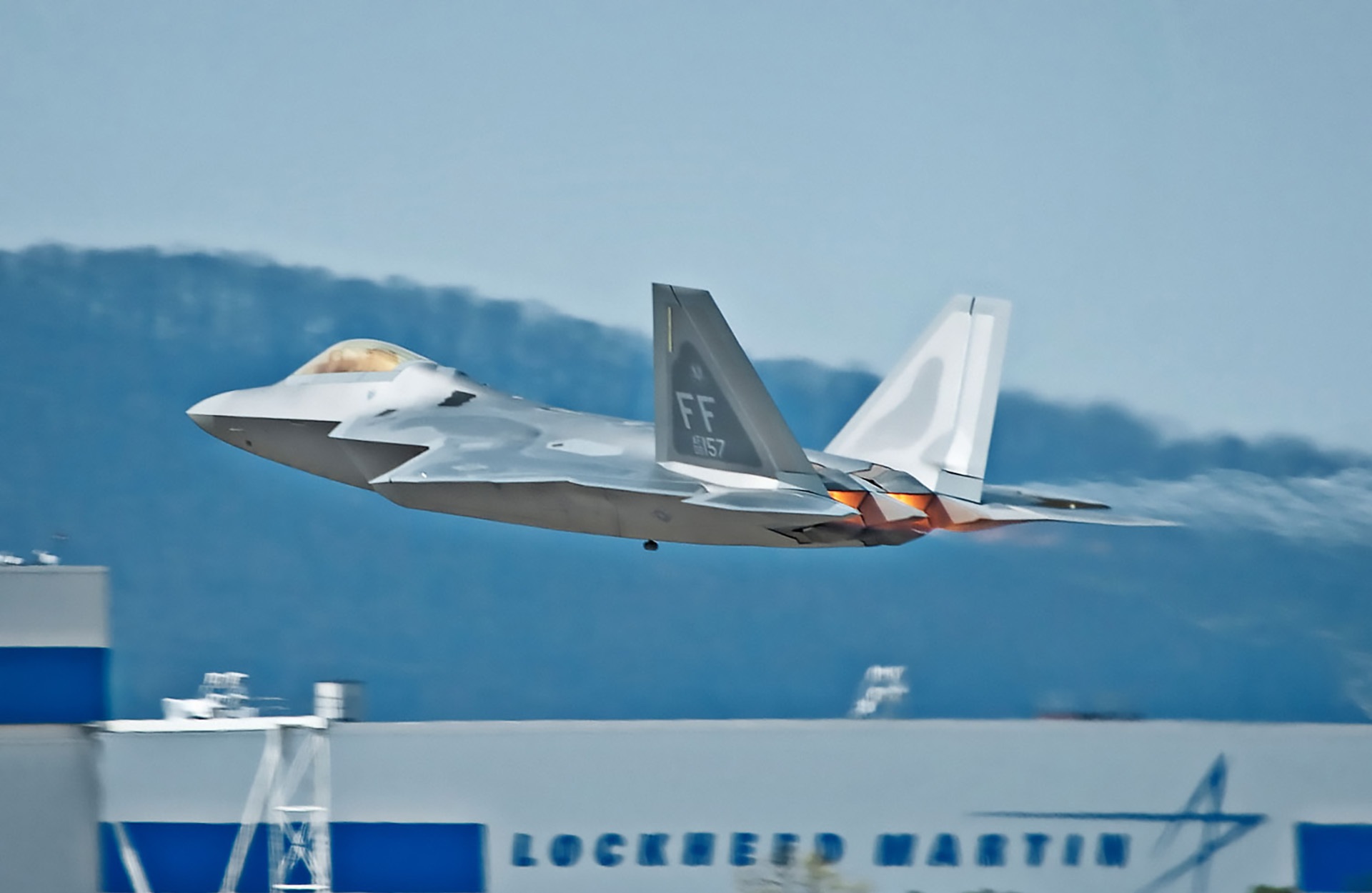
China has made significant strides in radar technology designed to counter the stealth features of U.S. fifth-generation fighters like the F-22 Raptor and F-35 Lightning II.
These aircraft rely on radar-absorbent materials, angular shaping, and internal weapon bays to minimize their radar cross-section (RCS), often reducing it to the size of a golf ball or smaller against high-frequency (e.g., X-band) radars.
However, emerging Chinese systems—particularly quantum-based radars and long-wave VHF/UHF radars—exploit different physical principles to potentially detect and track these low-observable targets.
Register for Tekedia Mini-MBA edition 20 (June 8 – Sept 5, 2026).
Register for Tekedia AI in Business Masterclass.
Join Tekedia Capital Syndicate and co-invest in great global startups.
Register for Tekedia AI Lab.
While Chinese state media and defense firms tout these as operational breakthroughs, Western analysts emphasize that real-world effectiveness remains unproven, with challenges in accuracy, range, and integration into combat networks.
Quantum radar represents a theoretical leap from classical systems, using entangled photons pairs of light particles linked by quantum mechanics instead of radio waves. When one photon interacts with a target, it disrupts the entanglement, allowing the receiver to detect the disturbance—even from faint reflections off stealth coatings.
This could theoretically bypass traditional stealth designs optimized for microwave frequencies. In October 2025, China announced mass production of a “photon catcher”—a four-channel single-photon detector developed by the Quantum Information Engineering Technology Research Centre in Anhui province.

This ultra-low-noise device detects individual photons with 35% efficiency up from 25% in prior models and operates at temperatures as low as -120°C, enabling multi-wavelength scanning for improved imaging. Chinese state media claims this enables quantum radars to track F-22 and F-35 signatures at ranges exceeding 100 km, rendering their RCS “obsolete” by analyzing quantum noise that classical radars ignore.
Unlike radio-wave radars, quantum systems are harder to jam or spoof, as stealth aircraft can’t mimic entangled photon signatures. Prototypes reportedly succeeded in simulated tests against stealth targets.
Integration into the People’s Liberation Army (PLA) Air Force’s early-warning networks is underway, potentially neutralizing U.S. advantages in scenarios like a Taiwan Strait conflict. Experts like MIT’s Jeffrey Shapiro argue quantum radar faces insurmountable hurdles, including atmospheric interference, low signal-to-noise ratios, and scalability issues—making it more “speculative” than deployable.
U.S. countermeasures, such as infrared search-and-track (IRST) systems on F-22s, could mitigate this without relying on radar. No independent verification exists, and claims echo unfulfilled 2016-2021 prototypes.

Stealth works best against shorter-wavelength radars like X-band, 3 cm, but VHF 30-300 MHz, 1-10 m wavelengths and UHF 300-3,000 MHz, 0.1-1 m systems use longer waves that interact differently with aircraft geometry, potentially yielding detectable returns despite absorbent materials.
JY-27V unveiled at the 2025 World Radar Expo, this truck-mounted VHF radar from China Electronics Technology Group Corporation (CETC) uses active electronically scanned array (AESA) antennas for 3D tracking. It claims detection of F-22/F-35 at up to 500 km, with high-power apertures and AI-driven signal processing to filter clutter.
An upgrade from the 2016 JY-27A, it’s designed for early warning in contested airspace. YLC-8E: A UHF counterpart, also mobile and fully digital, marketed as an “anti-stealth” system. It pairs with JY-27V for layered coverage, detecting RCS as low as a “metal marble” and guiding precision strikes.
Venezuela reportedly used a similar CETC system (JY-27) to track U.S. F-35s near its borders in 2025. These radars provide broad-area surveillance, cueing higher-frequency systems for fire control. China’s networked approach integrates them with S-400-like missiles and J-20 fighters.
Reports from 2024-2025 suggest PLA radars have tracked F-22s during U.S.-South Korea exercises. Low resolution hampers precise targeting—VHF detections yield “blobs,” not locks for missiles. Stealth still reduces effective range, and jamming or low-altitude flight evades them. Russian analogs like Nebo-M face similar issues.
These advancements signal China’s $10B+ investment in quantum and anti-stealth tech, aiming to erode U.S. air dominance in the Indo-Pacific. If integrated, they could force F-22/F-35 pilots to rely more on standoff weapons or electronic warfare.
However, as one X post notes, quantum claims may be “90% propaganda,” with VHF/UHF better suited for cueing than solo kills. The U.S. is responding with next-gen jammers, hypersonics, and allied networks like AUKUS.
China’s radars can detect stealth aircraft under ideal conditions, but turning detection into a decisive edge requires overcoming technical and tactical hurdles. This arms race underscores that no technology is invincible—stealth’s era may evolve, not end.