

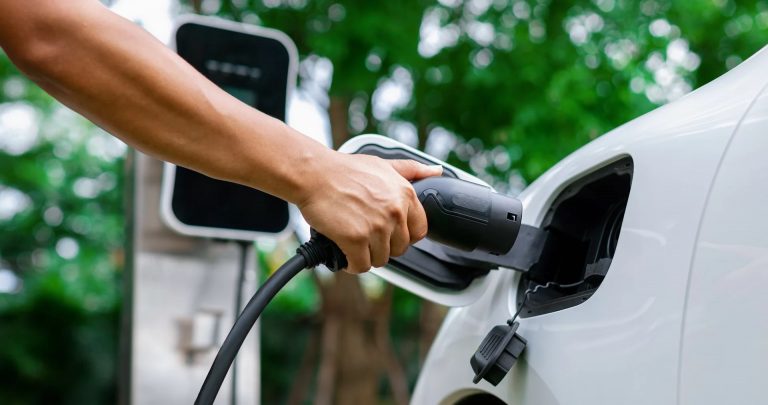
China’s rapid shift toward electric taxis and ride-hailing vehicles is emerging as an unexpected economic buffer against global oil market disruptions, helping the world’s largest crude importer reduce its exposure to volatile energy prices even as conflict in the Middle East rattles global markets.
The shift has become visible since the U.S.-Israel conflict with Iran erupted in late February, sending oil prices sharply higher and disrupting shipping through the Strait of Hormuz, one of the world’s most critical energy chokepoints. While higher fuel prices have squeezed motorists across many economies, China’s accelerating electrification of urban transport has blunted much of the impact.
Government data show Chinese consumers took 3.05 billion taxi and ride-hailing trips in May, with journeys rising 6% compared with the same period last year. The increase reflects more than stronger demand for mobility. It highlights a structural shift in China’s transportation sector, where electric vehicles are allowing fares to remain low even as conventional fuel prices climb.
Register for the next Tekedia Mini-MBA.
Register for Tekedia AI in Business Masterclass.
Join Tekedia Capital Syndicate and co-invest in great global startups.
The phenomenon reveals that Beijing’s years-long push into electric mobility is beginning to generate macroeconomic benefits beyond emissions reductions. As electric vehicles increasingly replace gasoline-powered cars in commercial fleets, China’s economy becomes less vulnerable to oil price shocks that have historically weighed on growth, inflation, and the country’s trade balance.
Analysts say several forces are driving the surge in ride-hailing usage.
A slowing economy has pushed more people into gig work, increasing the supply of drivers, while lower operating costs for electric vehicles have intensified competition among ride-hailing operators. The result has been falling fares that encourage commuters to leave their personal gasoline vehicles at home.

Li, a part-time ride-hailing driver in Beijing who charges his electric vehicle at public stations, told Reuters that fares have fallen by between 10% and 15% since he began driving six months ago because competition has become increasingly intense.
Consumers have responded accordingly.
Social media platforms have been filled with posts from motorists saying that taking taxis has become cheaper than driving their own petrol-powered vehicles, particularly after accounting for fuel and parking costs.

Yang, a 45-year-old petrol vehicle owner in Beijing, said she increasingly chooses taxis for longer journeys rather than driving herself.
“Especially when gas prices are high, I’d rather take a taxi to places that are too far to bike to. That way, I don’t have to look for parking or pay for gasoline,” she said.
EV Penetration Reaches Critical Mass
China’s electric taxi fleet has now reached a scale capable of influencing national fuel demand. According to the Ministry of Transport, roughly half of China’s 1.3 million licensed taxis are now fully electric. In many of the country’s largest metropolitan areas, electrification is approaching complete adoption.
Ride-hailing giant Didi said it added another 2 million hybrid and electric vehicles to its platform last year, bringing its total fleet of non-fossil-fuel vehicles to approximately 8 million. Electric vehicles now account for about 75% of total mileage completed through the platform.
That transformation means a growing share of China’s urban passenger transport no longer depends directly on gasoline prices. Greenpeace projects that by 2035, electric vehicles will account for around 90% of all taxi and ride-hailing mileage in China.
Daizong Liu, East Asia director at the Institute for Transportation & Development Policy, said higher fuel costs have accelerated a behavioral shift that was already underway.
“As fuel prices have gone up, people are driving their own petrol cars less,” Liu said.
“But overall travel demand is still increasing, so more trips are shifting to public transport, such as taxis and the subway.”
Oil Demand Weakens Despite Rising Travel
Perhaps the clearest indication of this structural transition is China’s fuel consumption.
Despite road freight volumes rising 2% and road travel during the May Day holiday reaching a record high, the country consumed 10% less gasoline and 14% less diesel in May than a year earlier.
The disconnect between rising transport activity and falling fuel consumption marks a major departure from China’s historical growth model, where economic expansion typically translated into steadily rising oil demand.
The shift also helps explain China’s surprisingly sharp reduction in crude imports.
China’s crude oil imports plunged 41% year-on-year in June to about 29.3 million metric tons, marking their lowest level in nearly a decade. During the first half of the year, crude import volumes declined 11%.
Analysts believe part of that decline reflects inventory drawdowns, but weakening structural demand from the transportation sector is becoming increasingly important.
By importing less oil during a period of geopolitical disruption, China has also indirectly eased pressure on global crude supplies, helping moderate international oil prices.
The transportation shift provides Beijing with a new layer of energy security.
China has long been one of the world’s largest importers of crude oil, making it highly vulnerable to supply disruptions in the Middle East and maritime chokepoints such as the Strait of Hormuz. Electrifying commercial transportation reduces that dependence by replacing imported oil with domestically generated electricity, including power from renewable energy, nuclear plants, and coal-fired generation.
J.P. Morgan analyst Natasha Kaneva said the recent conflict may have accelerated longer-term changes.
“The conflict may have accelerated behavioral changes that were already underway, leaving China structurally less dependent on oil than the market has historically assumed,” she wrote in a July 2 research note.
Whether those behavioral changes become permanent remains uncertain.
J.P. Morgan expects Chinese gasoline demand to continue declining in 2027, although at a slower pace than this year. The bank forecasts demand will fall by about 50,000 barrels per day next year after an estimated decline of roughly 150,000 barrels per day this year.
Consumer behavior also suggests some flexibility remains. Zhang, who owns both an electric vehicle and a hybrid, said she typically operates her hybrid in battery mode when gasoline prices rise, but switches back to filling the fuel tank when prices fall.
“When I saw prices had fallen recently, I went to fill up the tank for my hybrid,” she said.
AI, Batteries, and Industrial Policy Boost The Transition
The decline in transport-related oil demand also amplifies China’s broader industrial strategy. China dominates global battery manufacturing, electric vehicle production and much of the supply chain for critical minerals. Continued EV adoption supports domestic manufacturers while reducing exposure to imported fossil fuels.
At the same time, the country’s expanding electricity generation capacity, including renewable energy, nuclear power, and energy storage, allows transportation demand to shift from imported oil toward domestically produced electricity.
The trend comes as AI-driven demand for batteries, semiconductors and power infrastructure is reshaping industrial investment worldwide, placing China in a stronger position to leverage its manufacturing scale across multiple strategic sectors.
However, some analysts note that if China’s transportation sector continues to electrify at its current pace, the world’s largest crude importer may become progressively less sensitive to geopolitical oil shocks, potentially altering long-term demand forecasts and reducing one of the biggest historical sources of volatility in global oil markets.