

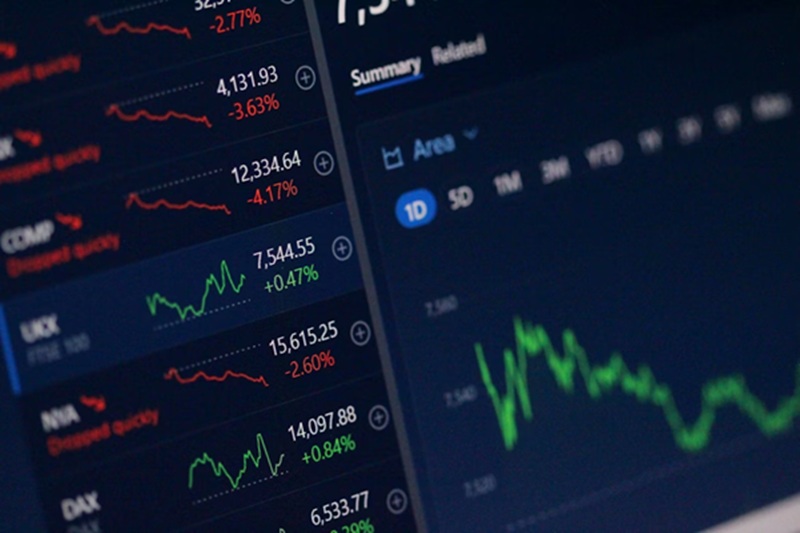
Asian technology and semiconductor stocks surged on Wednesday in one of the strongest relief rallies seen in weeks, as a conditional two-week ceasefire between the United States and Iran temporarily eased fears over energy flows, industrial gas shortages, and a deeper supply chain shock to the global chip industry.
The ceasefire, which includes a temporary reopening of the Strait of Hormuz, triggered a broad risk-on rally across Asia, with semiconductor names leading gains as investors rushed back into one of the market’s most geopolitically sensitive sectors.
Taiwan Semiconductor Manufacturing Company, the world’s largest contract chipmaker, which rose 4.84%, led the rally. China’s leading foundry, Semiconductor Manufacturing International Corporation, jumped more than 10%, while Japan’s Tokyo Electron climbed 9.6%.
Register for Tekedia Mini-MBA edition 20 (June 8 – Sept 5, 2026).
Register for Tekedia AI in Business Masterclass.
Join Tekedia Capital Syndicate and co-invest in great global startups.
Register for Tekedia AI Lab.
The gains extended across the semiconductor value chain. Advantest Corporation surged more than 13%, Renesas Electronics Corporation rose 12%, and Fujikura Ltd. added nearly 11.6%.
In South Korea, the move was even more dramatic. SK Hynix surged more than 15%, while Samsung Electronics advanced over 9%, supported not only by ceasefire optimism but also by the company’s forecast of an eightfold jump in first-quarter profit, driven by strong AI-related demand for high-bandwidth memory chips used in data centers and servers.
This rally is significant for reasons that go well beyond a single geopolitical headline.

For the past several weeks, the semiconductor sector has been under mounting pressure as the Iran conflict raised the prospect of a dual supply shock: higher energy costs and a severe helium shortage.
That second point is particularly important. Helium is not a peripheral input in semiconductor manufacturing. It is indispensable in cooling, heat transfer, leak detection, and photolithography, where it is used in vacuum environments to help produce the microscopic circuitry etched onto advanced chips.
The recent attacks on industrial facilities in Qatar, which account for roughly 30% to 38% of global helium supply, have raised serious concerns that chipmakers could soon face operational disruptions if inventories are depleted.

This had become a major overhang on the sector. Unlike many industrial materials, helium has few viable substitutes for advanced semiconductor fabrication. That means prolonged disruption would not simply raise costs; it could materially slow production schedules for foundries, memory chipmakers, and AI infrastructure suppliers.
The temporary reopening of Hormuz, therefore, matters on multiple fronts. First, it restores confidence that energy shipments can resume, easing fears of another sharp rise in oil and LNG costs. Second, it reduces immediate concern around the flow of industrial gases and other chipmaking inputs moving through Gulf-linked shipping lanes.
Third, it supports margin expectations.
Semiconductor fabrication is highly energy-intensive. Any decline in crude prices directly improves the cost outlook for manufacturers operating large fabs across Taiwan, South Korea, and Japan.
Oil prices fell sharply on the ceasefire news, reinforcing the relief trade across chip stocks. What makes the rally especially notable is that it comes at a time when the AI boom remains structurally strong.
Demand for memory chips, GPUs, advanced packaging, and foundry capacity has already been running at elevated levels due to hyperscaler spending on data centers and AI servers. The ceasefire effectively removes, at least temporarily, one of the biggest downside risks to that growth narrative.
In market terms, this is a re-rating of geopolitical risk premium. Investors had been discounting semiconductor names for the possibility of prolonged supply-chain disruption.
With the immediate worst-case scenario off the table, capital is flowing back into high-beta technology and AI-linked names.
Still, this should be viewed as a relief rally rather than a full resolution. The ceasefire is explicitly temporary, lasting only two weeks, and market confidence will depend heavily on whether the truce evolves into a more durable diplomatic settlement.
Any renewed disruption to the Strait of Hormuz or further damage to Qatari industrial infrastructure could quickly reverse sentiment.
For now, however, Wednesday’s rally underscores that the semiconductor industry remains acutely exposed not just to demand cycles, but to geopolitical flashpoints that affect energy and critical industrial inputs.
The surge in Asian chip stocks is therefore seen as a sharp market repricing of how quickly war risk can reshape the economics of the global AI supply chain.