

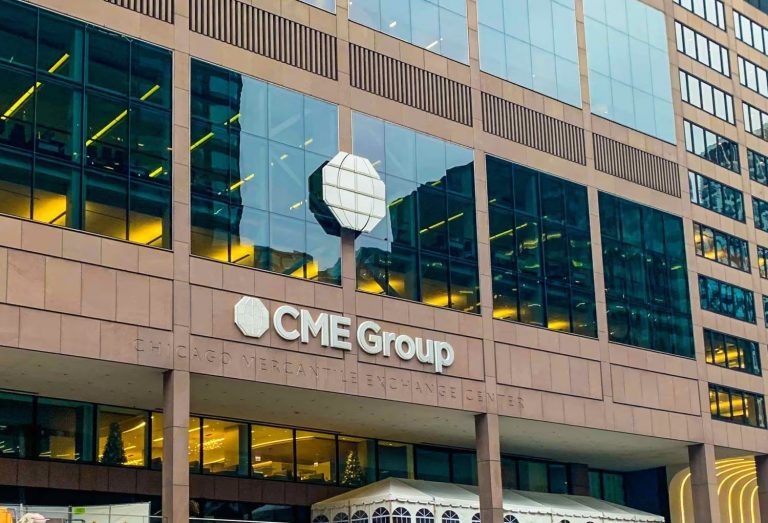
CME Group, the world’s leading derivatives marketplace, has partnered with FanDuel, a major online gaming company, to launch event-based contracts that include cryptocurrencies, among other financial benchmarks.
This joint venture aims to provide FanDuel’s 17 million customers with access to low-cost, regulated event contracts starting at $1. These contracts allow users to take simple “yes” or “no” positions multiple times a day on various markets, such as the S&P 500, Nasdaq-100, oil, gas, gold, cryptocurrencies, and economic indicators like GDP and CPI.
The platform, expected to launch later in 2025 pending CFTC regulatory approval, will operate as a non-clearing futures commission merchant (FCM) and be listed on CME Group exchanges. This move blends financial trading with FanDuel’s gaming expertise, targeting retail investors and sports bettors to engage with financial markets in a simplified, accessible way.
The introduction of low-cost ($1) event contracts allows retail investors, including FanDuel’s 17 million users, to engage with crypto markets without needing deep financial expertise or large capital. The “yes” or “no” format simplifies speculation on crypto price movements, making it akin to sports betting, which could attract a broader, less crypto-savvy audience.
Register for Tekedia Mini-MBA edition 20 (June 8 – Sept 5, 2026).
Register for Tekedia AI in Business Masterclass.
Join Tekedia Capital Syndicate and co-invest in great global startups.
Register for Tekedia AI Lab.
This democratization could drive higher retail participation, increasing trading volume and liquidity in crypto-related contracts on regulated exchanges. By integrating crypto into a platform backed by CME, a trusted financial institution, and FanDuel, a recognizable gaming brand, cryptocurrencies gain further legitimacy. This move signals to traditional finance and retail audiences that crypto is a viable asset class.
The regulated nature of these contracts (pending CFTC approval) provides a safer entry point for users wary of unregulated crypto exchanges, reducing perceived risks associated with fraud or volatility. Event contracts tied to crypto prices will likely increase trading activity on CME’s platform, contributing to better price discovery for cryptocurrencies.
More participants betting on price outcomes can lead to more accurate market signals, reflecting real-time sentiment and expectations. This could stabilize crypto prices over time by providing a regulated venue for speculation, reducing reliance on volatile, unregulated platforms.

The partnership operates within the CFTC’s regulatory framework, setting a precedent for how crypto-based derivatives can be structured in a compliant manner. This could encourage other financial institutions to develop similar products, fostering innovation in crypto derivatives while adhering to regulatory standards.
Competition with Existing Crypto Platforms
FanDuel’s entry into crypto event contracts could challenge existing prediction markets like Polymarket or decentralized finance (DeFi) platforms offering similar products. The backing of CME’s infrastructure and FanDuel’s user base may draw users away from less regulated or less user-friendly platforms.
The gamified nature of event contracts, combined with crypto’s inherent volatility, could fuel speculative trading among retail users. While this may boost engagement, it risks creating bubbles if inexperienced traders over-leverage or misjudge market dynamics.

Prediction markets aggregate collective knowledge and sentiment, providing real-time insights into expected crypto price movements or events (e.g., Bitcoin ETF approvals or Ethereum upgrades). Platforms like Polymarket have shown how crowd-sourced predictions can align closely with actual outcomes, improving market efficiency.
For example, Polymarket’s 2024 election markets demonstrated high accuracy in forecasting outcomes, suggesting that similar precision could apply to crypto-related events, such as price targets or network upgrades. Prediction markets allow crypto investors to hedge against volatility or speculate on specific outcomes. This provides an alternative to spot trading or futures, enabling more nuanced strategies.
Crypto projects can use prediction markets to gauge community sentiment about proposed changes (e.g., protocol upgrades or governance decisions). For instance, a market predicting the success of an Ethereum layer-2 scaling solution could inform developers’ priorities.
Prediction markets like CME’s event contracts bridge crypto with traditional financial systems by offering regulated, accessible products. This integration helps legitimize crypto as an asset class and attracts institutional interest, as seen with CME’s existing Bitcoin and Ethereum futures.
The CME-FanDuel partnership is a pivotal step in integrating cryptocurrencies into mainstream financial and gaming ecosystems. By offering low-cost, regulated event contracts, it lowers barriers for retail participation, enhances liquidity, and legitimizes crypto as an asset class. However, it also raises concerns about speculative excess and regulatory challenges.