

For more than half a century, petroleum distribution in Nigeria has been shaped by a succession of policies, each one designed to solve the shortcomings of the last. What began as a tightly centralised system is now moving toward a market where efficiency, logistics, and capital strength matter more than political connections. The transition, however, is far from complete, and the competitive stakes for industry players remain high.
Centralisation and Its Aftermath
Nigeria’s earliest petroleum policies were developed under colonial influence. The Oil Pipelines Act of 1956 and the Petroleum Act of 1969 vested sweeping control of resources and infrastructure in the state. With the creation of the Nigerian National Petroleum Corporation (NNPC) in 1977, distribution became essentially a government monopoly. Competition was limited. Multinationals dominated upstream production, while NNPC controlled imports, depots, and allocations. Supply reliability depended on government planning rather than market efficiency.
As inland cities expanded, the cost of trucking fuel to remote areas created sharp disparities. The Petroleum Equalisation Fund of 1975 was introduced to reimburse marketers for the extra haulage costs of serving distant states. This ensured uniform pump prices nationwide but weakened incentives for competition. Efficiency gains were irrelevant because reimbursements equalised outcomes. Marketers competed more in navigating bureaucratic claims than in innovating logistics.
Register for Tekedia Mini-MBA edition 20 (June 8 – Sept 5, 2026).
Register for Tekedia AI in Business Masterclass.
Join Tekedia Capital Syndicate and co-invest in great global startups.
Register for Tekedia AI Lab.
Distortion Through Price Regulation and Subsidies
By the early 2000s, recurrent fuel scarcity and opaque pricing led to the establishment of the Petroleum Products Pricing Regulatory Agency (PPPRA). The agency set price bands, monitored supply, and allocated import permits. This changed the nature of competition. Success was determined by who could secure an import licence rather than who could move fuel most efficiently. International oil companies gradually exited the downstream retail market, leaving indigenous independents such as Oando, Conoil, and Forte Oil to fill the gap.
Over time, the fuel subsidy regime deepened these distortions. Marketers earned profits less from efficient distribution and more from capturing subsidy reimbursements. Smuggling, round-tripping, and “paper imports” thrived. Smaller firms without political influence often struggled, while larger players with access to subsidy flows expanded. Consumers saw artificially low pump prices but still endured frequent shortages. Distribution infrastructure stagnated because the subsidy rewarded import volumes rather than investments in depots or pipelines.
Reform and the Liberalisation Shock
The Petroleum Industry Act (PIA) of 2021 signaled a new approach. It unbundled regulators, clarified licensing rules, and created a framework for midstream and downstream investment. The PIA introduced the Midstream Network Code to guarantee fair access to pipelines and storage facilities. On paper, this provided the foundation for a competitive market. In practice, execution has been slow, and incumbents continue to dominate existing assets.

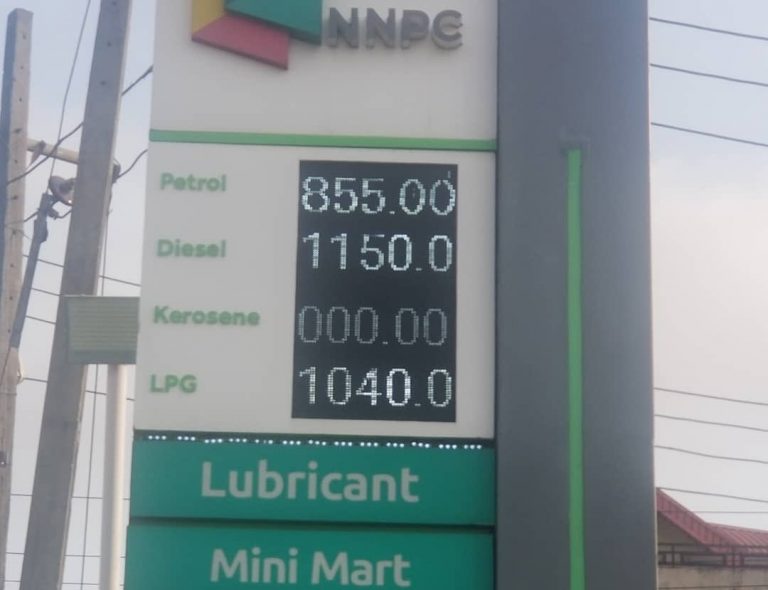
The decisive moment came in May 2023 with the removal of the fuel subsidy. Overnight, competition shifted from political access to commercial survival. Retail prices rose sharply, but so did the pressure for efficiency. Larger marketers with strong balance sheets, access to foreign exchange, and integrated supply chains adapted quickly. Smaller firms struggled to stay afloat. NNPC Limited retained major advantages, including guaranteed crude access, which raised concerns that the market could re-concentrate around a few dominant players.
New Competitive Frontiers
A new phase is emerging. The Dangote Refinery, alongside modular refiners, promises to transform the supply landscape by reducing dependence on imports. The government’s Compressed Natural Gas (CNG) programme is creating a parallel distribution network that competes directly with petrol. Strategic reserves and new depot licences, if implemented transparently, could shorten supply chains and reduce volatility.
The next phase of competition will be defined by who can integrate refining with distribution, diversify into gas, and invest in efficient depots. Larger players already enjoy economies of scale, but smaller marketers can remain relevant if financing and regulatory access are fairly managed.

Balancing Market Forces and Public Interest
The trajectory of Nigeria’s petroleum policies shows a clear evolution. Monopoly was followed by artificial uniformity, which gave way to permit-based rent seeking, and finally to market competition. Each policy generation attempted to correct the failures of the last. The challenge today is to ensure that liberalisation does not simply create a new oligopoly.
For government, the priority is transparent enforcement of the PIA’s access rules and support for smaller marketers through affordable financing. For private players, competitive advantage now lies in logistics efficiency, integration with refining, and diversification into gas-based fuels. For consumers, the promise is a more reliable and resilient energy supply.