

A recent report by nonprofit group Just Capital reveals a stark and significant divergence in sentiment surrounding the adoption of Artificial Intelligence (AI) between corporate leaders and investors, who are nearly unanimous in their optimism, and the general public, who harbor deep-seated concerns, particularly regarding job security and the environment.
The survey, which captured data from institutional investors, corporate executives, and U.S. adults between September and November 2025, underlines the conflicting narratives three years after the launch of ChatGPT kicked off the generative AI rush. While analysts forecast that AI spending could reach into the trillions of dollars by the end of the decade, the public’s apprehension threatens to complicate the corporate drive for rapid deployment.
The overall belief in AI’s beneficial impact highlights the divide between those in the C-suite and the average American. Corporate Leaders are the most enthusiastic, with roughly 93% believing AI will have a net positive impact on society within the next five years. Investors follow closely at 80% optimism, driven by expectations of massive increases in profitability and shareholder returns, while the General Public is far more reserved, with only 58% sharing that net positive sentiment.
Register for Tekedia Mini-MBA edition 20 (June 8 – Sept 5, 2026).
Register for Tekedia AI in Business Masterclass.
Join Tekedia Capital Syndicate and co-invest in great global startups.
Register for Tekedia AI Lab.
Just Capital CEO Martin Whittaker noted that while there is an overall “net positive story” around AI’s impact, the areas of disagreement are critically important for corporate leaders to heed.
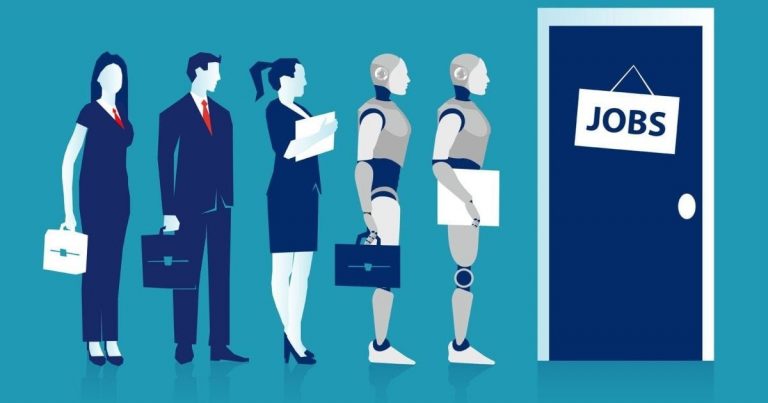
The most profound differences emerge when assessing AI’s impact on employment, revealing a disconnect between what executives plan to execute and what workers fear. An overwhelming 98% of corporate leaders and 94% of investors think AI will have a net positive impact on worker productivity. In sharp contrast, only 47% of the general public agrees.
The public’s skepticism is directly tied to job fear. Nearly half of all respondents from the general public expect AI to replace workers and eliminate jobs. Meanwhile, only 20% of corporate leaders concur with this assessment. Conversely, 64% of executives believe AI will help workers be more productive in their current jobs through augmentation, a view only shared by 23% of the public.

This dramatic difference suggests that while companies are focused on using AI to augment existing roles and increase output, the workforce views the same technology as a direct threat. This finding confirms the “widespread public concern that companies’ growing adoption of AI will have swift, direct consequences for workers through job cuts,” according to the report.
Safety, Ethics, and the Neglected Environmental Impact
Although all three groups express concern about the safety and security risks stemming from AI, their priorities and planned spending allocations diverge:
Risk Priorities: Corporate leaders and investors are most worried about large-scale risks like disinformation and malicious use of the technology. The public, however, is additionally concerned about the more abstract fears of loss of control and the tangible threat of environmental impact.

Safety Spending Disparity: When it comes to allocating investment dollars, 60% of investors and half of the public believe companies should spend more than 5% of their total AI investment on safety measures. In opposition, 59% of corporate leaders indicated they would spend up to 5%. This misalignment suggests that while the financial and societal stakeholders demand greater safety investment, the executives making the spending decisions are aiming for a lower allocation.
Environmental Blind Spot: A major risk area exposed by the survey is the environmental impact of AI—specifically the massive energy and water consumption required by data centers for training and running complex models. More than 40% of corporate leaders admitted that environmental issues are not currently being factored into their AI deployment strategy, an oversight that the public clearly fears will have negative consequences.
Just Capital plans to track these critical sentiments around AI deployment quarterly, providing an ongoing barometer for corporate accountability as the technology reshapes the economy.