

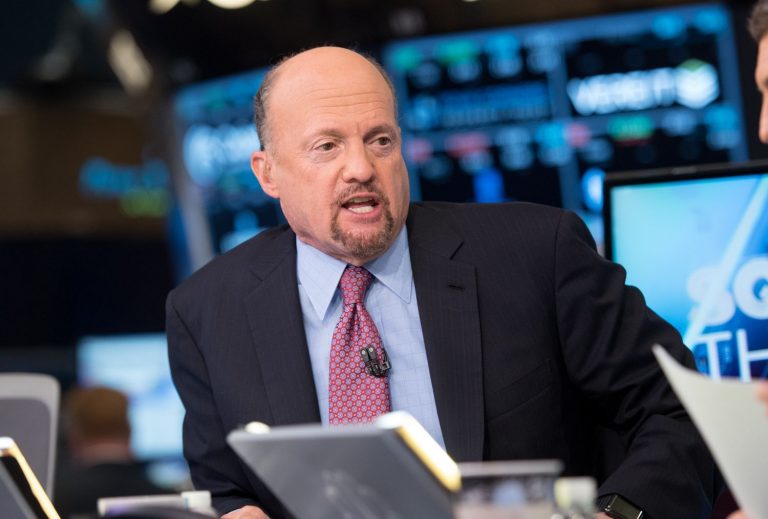
Wall Street is entering another volatile stretch, with rising oil prices linked to the Iran conflict continuing to weigh on equities and investor sentiment, according to Jim Cramer.
Speaking on CNBC’s Mad Money, Cramer described the current market environment as increasingly fragile, warning that history offers little comfort when energy shocks take hold.
“Another miserable week. Four weeks since the war started and it’s been pretty darn awful,” Cramer said, adding that “the history of oil shocks is littered with bear markets, 20% drawdowns that say raise cash.”
Register for Tekedia Mini-MBA edition 20 (June 8 – Sept 5, 2026).
Register for Tekedia AI in Business Masterclass.
Join Tekedia Capital Syndicate and co-invest in great global startups.
Register for Tekedia AI Lab.
U.S. equities ended the week firmly lower, extending a losing streak that has now stretched to five consecutive weeks. The Nasdaq Composite fell 2.15% on Friday, while the Dow Jones Industrial Average dropped 1.73% and the S&P 500 declined 1.67%. The pullback reflects a broader reassessment of risk as geopolitical tensions feed into concerns about inflation and interest rate expectations.
Crude supply disruptions tied to the conflict and uncertainty surrounding the Strait of Hormuz have seen oil prices surge, creating a classic macroeconomic squeeze, with higher input costs for companies alongside reduced consumer purchasing power.
Cramer bluntly assessed the situation, noting that as long as oil continues to rise, equities are likely to remain under pressure.

“They’re all bad now, including the once loved, now disliked Nvidia,” he said, adding that investors now favor “they don’t mind the soda stocks, any pharma stock, and I gotta tell ya they like the oil drillers. Tech, nothing.”
That shift is driving a notable rotation across sectors. High-growth technology stocks, once the market’s dominant trade, are being sold down as investors move toward defensive and commodity-linked names. Even bellwethers such as Nvidia have fallen out of favor, reflecting a broader retreat from risk assets.
In their place, investors are gravitating toward energy producers, pharmaceutical companies, and consumer staples — sectors typically seen as more resilient in inflationary environments. The move pinpoints a wider repositioning as markets adapt to the prospect of sustained high energy prices and tighter financial conditions.

Looking ahead, Cramer expects geopolitical developments to remain the primary market driver. Any escalation in the Middle East, particularly involving shipping routes or energy infrastructure, could push oil prices higher and amplify downside risks for equities.
Beyond geopolitics, CNBC reports that Cramer will be watching a series of economic and corporate events that could shape sentiment in the coming days.
Earnings from McCormick & Company will be closely watched, especially amid discussions around a potential deal involving Unilever’s food brands. Later in the week, results from Nike are expected to provide insight into consumer demand and global supply challenges, particularly in China, where the company has struggled to regain momentum.
Data releases will also play a role. The Job Openings and Labor Turnover Survey (JOLTS) and retail sales figures are expected to offer signals on labor market strength and consumer spending. Cramer noted that weaker data could paradoxically support markets by strengthening the case for interest rate cuts by the Federal Reserve.
Reports from Conagra Brands and Acuity Brands are likely to provide further insight into consumer staples demand and the health of the construction sector, respectively, both areas sensitive to broader economic conditions.
The week concludes with the U.S. jobs report, due on Good Friday when markets are closed. While softer employment data could ease pressure on monetary policy, Cramer cautioned that sentiment remains deeply negative.
“Right now, we have as much pessimism about stocks as we did when the Covid pandemic swept through us,” he said, highlighting the depth of investor anxiety.
The broader concern is structural, as rising oil prices are feeding into inflation just as interest rates remain elevated, a combination that historically constrains equity valuations and economic growth. Until there is a meaningful pullback in crude or a resolution to the conflict, Cramer sees little relief for markets.
“These declines aren’t just about tech. They’re about what you get when you have both inflation and higher interest rates,” Cramer said.