

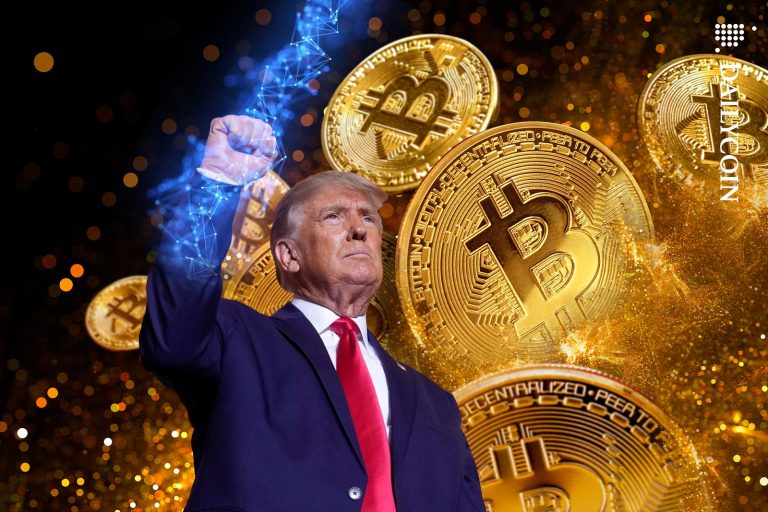
The President’s Working Group on Digital Asset Markets, established by President Donald Trump’s Executive Order 14178 on January 23, 2025, released a 160-page report on July 30, 2025. This report provides a comprehensive roadmap to advance U.S. leadership in digital financial technology, aiming to make America the “crypto capital of the world.”
The report proposes a federal regulatory framework for digital assets, including stablecoins, focusing on market structure, oversight, consumer protection, and risk management. It urges the SEC and CFTC to provide clear guidance on crypto creation, use, and custody, and recommends Congress affirm self-custody rights and grant the CFTC authority over non-security digital asset spot markets.
It emphasizes implementing the GENIUS Act, signed into law on July 18, 2025, which establishes a federal framework for stablecoins, requiring them to be fully backed by U.S. dollars or liquid assets. The report promotes dollar-backed stablecoins to modernize payments and strengthen the U.S. dollar’s global role. The report evaluates the creation of a national digital asset stockpile, potentially using cryptocurrencies seized through law enforcement, and a Strategic Bitcoin Reserve, to be administered by the Treasury Department.
Register for Tekedia Mini-MBA edition 20 (June 8 – Sept 5, 2026).
Register for Tekedia AI in Business Masterclass.
Join Tekedia Capital Syndicate and co-invest in great global startups.
Register for Tekedia AI Lab.
However, it lacks detailed next steps for the reserve, noting it’s part of a separate executive order. Recommendations include simplifying tax rules for digital assets, such as guidance on mining, staking, and de minimis transactions, and modernizing bank regulations to support crypto activities like custody and tokenization, while ending restrictive policies like Operation Choke Point 2.0.
It reinforces the prohibition of central bank digital currencies (CBDCs) and calls for Congress to pass the Anti-CBDC Surveillance State Act to codify this ban, citing risks to privacy and financial stability. The report has been praised by industry leaders, like Ripple’s Stuart Alderoty, as a “comprehensive, helpful, and direct” step toward mainstream crypto adoption, but critics, such as Tony Carrk from Accountable.US, argue it prioritizes industry interests over investor protections. Its success depends on bipartisan legislative support and regulatory execution.
Stablecoins are a type of digital asset or cryptocurrency designed to maintain a stable value, typically by pegging their price to a reserve asset like the U.S. dollar, other fiat currencies, or commodities such as gold. Unlike volatile cryptocurrencies like Bitcoin or Ethereum, stablecoins aim to minimize price fluctuations, making them suitable for everyday transactions, remittances, and as a store of value in the crypto ecosystem.

Stablecoins achieve stability through various mechanisms, such as being backed by reserves or algorithmic controls. For example, a stablecoin pegged to the USD at a 1:1 ratio should ideally always be worth $1. Backed by fiat currency held in reserve, like USD in a bank account (e.g., USDC, USDT). Each stablecoin is redeemable for one unit of the underlying currency.
Concerns arise if reserves are not fully backed or mismanaged, as seen in controversies around Tether’s early audits. Governments may impose strict rules due to money laundering or financial stability concerns. The U.S. GENIUS Act (2025) mandates full USD or liquid asset backing for stablecoins. Centralized stablecoins depend on the issuer’s solvency and operational integrity.
Stablecoins can lose their peg due to market stress, mismanagement, or algorithmic failures, as with TerraUSD’s 2022 collapse. Transactions may be traceable, raising surveillance issues compared to cash. The President’s Working Group on Digital Assets report emphasizes stablecoins as a tool to modernize payments and reinforce the U.S. dollar’s global dominance. Key points:

The GENIUS Act (July 2025) establishes a federal framework, requiring stablecoins to be fully backed by USD or liquid assets, ensuring trust and stability. The report promotes dollar-backed stablecoins for mainstream adoption, such as in payments and settlements, while discouraging non-dollar pegs to avoid undermining the USD.
Regulatory clarity is urged, with oversight from agencies like the SEC and CFTC to address consumer protection, market integrity, and illicit finance risks. Tether (USDT): The largest stablecoin by market cap, pegged 1:1 to USD, widely used in crypto trading. USD Coin (USDC): Issued by Circle, fully backed by USD and audited regularly, popular in DeFi.
DAI: A decentralized stablecoin, over-collateralized by crypto assets, maintaining its peg through algorithms. Stablecoins are pivotal in bridging traditional and digital finance but require robust regulation and transparency to mitigate risks. The U.S. sees them as a strategic asset to enhance financial innovation while maintaining dollar supremacy.