

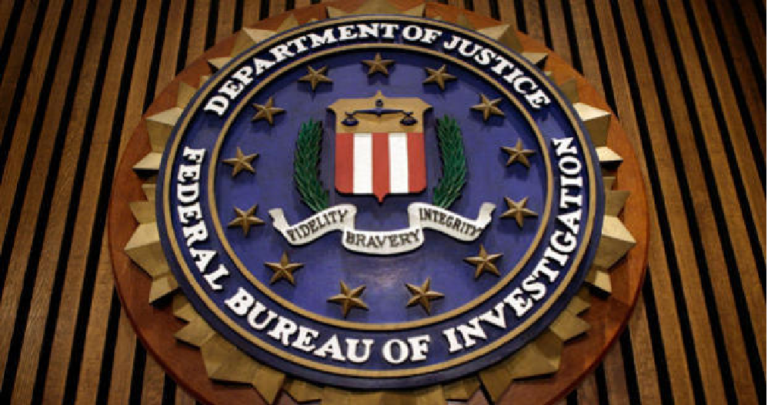
As cryptocurrency continues to gain mainstream adoption, it has also become a target for fraudsters, cybercriminals, and sophisticated scam networks.
In response to the growing threat, FBI Director Kash Patel has reaffirmed the agency’s commitment to combating cryptocurrency-related crimes, declaring that the FBI will actively pursue crypto scammers and ensure they are brought to justice.
His remarks reflect a broader effort by U.S. law enforcement agencies to strengthen oversight of digital assets and protect investors from increasingly complex financial crimes.
The rapid growth of cryptocurrencies such as Bitcoin, Ethereum, and various stablecoins has created new opportunities for innovation in finance.
Register for the next Tekedia Mini-MBA.
Register for Tekedia AI in Business Masterclass.
Join Tekedia Capital Syndicate and co-invest in great global startups.
The decentralized nature of blockchain technology has also attracted criminals who exploit unsuspecting users through investment fraud, phishing attacks, rug pulls, Ponzi schemes, and ransomware operations. According to law enforcement reports, losses linked to cryptocurrency scams have reached billions of dollars annually, affecting both individual investors and large institutions.
Patel’s statement signals a strong enforcement stance at a time when regulators and governments worldwide are struggling to balance innovation with consumer protection. While some critics have argued that cryptocurrencies provide anonymity for criminals, law enforcement agencies have become increasingly effective at tracking illicit transactions.
Blockchain technology creates permanent transaction records, allowing investigators to trace the movement of funds across wallets and exchanges. Modern forensic tools have significantly improved the ability of authorities to identify bad actors operating within the digital asset ecosystem.
The FBI has already demonstrated its capabilities in this area through numerous high-profile investigations.

In recent years, the agency has collaborated with international partners, cryptocurrency exchanges, and cybersecurity firms to dismantle fraud rings, recover stolen digital assets, and prosecute cybercriminals.
These efforts highlight the growing sophistication of law enforcement’s approach to digital crime and challenge the misconception that cryptocurrency transactions are impossible to trace. Patel emphasized that criminals should not assume digital assets provide immunity from prosecution.
As investigative technologies continue to advance, authorities are becoming better equipped to identify suspicious activity and connect blockchain transactions to real-world individuals and organizations. This capability is particularly important as scammers increasingly use social media platforms, messaging applications, and fake investment websites to target victims across borders.

The FBI’s commitment also serves as a warning to organized criminal groups that have expanded their operations into the cryptocurrency sector. Many scams are no longer conducted by isolated individuals but by well-funded networks operating internationally.
These organizations often exploit regulatory gaps and jurisdictional complexities to evade detection.
By strengthening partnerships with foreign governments and private-sector stakeholders, the FBI aims to disrupt these networks and reduce the financial harm they cause. For investors, Patel’s remarks underscore the importance of vigilance and due diligence.
While enforcement efforts are essential, individuals must also take responsibility for protecting themselves from fraud. Verifying investment opportunities, avoiding unrealistic promises of guaranteed returns, and using reputable exchanges can significantly reduce the risk of falling victim to scams.
Kash Patel’s pledge reflects a broader shift toward stronger enforcement in the digital asset industry. As cryptocurrency becomes more integrated into the global financial system, regulators and law enforcement agencies are likely to increase their efforts to combat fraud and illicit activity.
The message from the FBI is clear: crypto scammers may operate in a digital world, but they remain subject to real-world consequences, and authorities are determined to hold them accountable.
$15B Crypto Fraud Network Exposed as Tokyo Police Detain Key Suspect
Tokyo Police have announced the arrest of a high-profile figure alleged to be the central coordinator of a sprawling cryptocurrency scam network tied to roughly $15 billion in illicit exploits.
The operation, described by investigators as one of the most complex digital fraud ecosystems ever dismantled in Japan, allegedly spanned multiple jurisdictions, shell companies, decentralized finance protocols, and offshore laundering channels.
According to preliminary statements from law enforcement, the suspect is believed to have orchestrated a multi-layered scheme involving phishing operations, wallet drainers, fake investment platforms, and social engineering campaigns targeting both retail investors and institutional crypto holders.
Authorities claim the group evolved rapidly over the past several years, adapting its tactics to exploit weaknesses in decentralized exchanges, cross-chain bridges, and emerging yield-generating protocols.
The arrest followed a coordinated investigation involving Tokyo Metropolitan Police, cybercrime units, and international partners across Asia, Europe, and North America. Digital forensics teams reportedly traced blockchain transactions through mixers and privacy-enhancing tools, gradually reconstructing a network of interconnected wallets allegedly controlled by the organization’s leadership structure.
Officials stated that the group’s operations were not limited to Japan, but instead formed part of a global fraud infrastructure that leveraged anonymity technologies and regulatory fragmentation. Victims are believed to span dozens of countries, with losses ranging from small retail portfolios to large institutional treasury reserves exposed.
Prosecutors argue that the kingpin played a strategic role rather than directly executing all attacks, instead coordinating specialized sub-teams responsible for coding malicious contracts, distributing phishing links, and laundering proceeds through over-the-counter brokers and crypto casinos.
This division of labor, investigators say, made detection significantly more difficult and allowed the organization to scale rapidly without immediate attribution.
The estimated $15 billion figure, while still under review, is based on cumulative on-chain analysis of suspicious inflows, known exploit clusters, and associated theft reports submitted to global cybercrime databases. Experts caution that the final confirmed total may shift as further wallet attribution work continues.
The arrest has sent shockwaves through the crypto industry, reigniting debates about the security of decentralized finance and the adequacy of current regulatory frameworks. Industry analysts argue that while blockchain transparency aids investigations, the speed and sophistication of modern laundering techniques.
Tokyo authorities have indicated that further arrests are likely as the investigation expands. They also signaled increased cooperation with international agencies to dismantle remaining nodes of the network and recover stolen assets where possible.
If convicted, the suspect could face severe penalties under Japan’s cybercrime and financial fraud statutes, marking one of the most significant legal actions in the country’s ongoing crackdown on large-scale digital asset crime.
Authorities further emphasized that the case highlights an evolving threat landscape where organized cybercrime groups operate with corporate-like efficiency and global reach. They urged crypto users to adopt stronger security practices, including hardware wallet storage, multi-factor authentication, and heightened scrutiny of investment platforms.
Investigators also noted that additional blockchain intelligence firms are assisting in mapping residual funds and identifying potential accomplices still at large. Officials also warned that recovered assets may take years to trace fully, given the layered use of mixers, cross-chain swaps, and privacy protocols that obscure transactional provenance across multiple blockchains.
20409Chris.$#@