

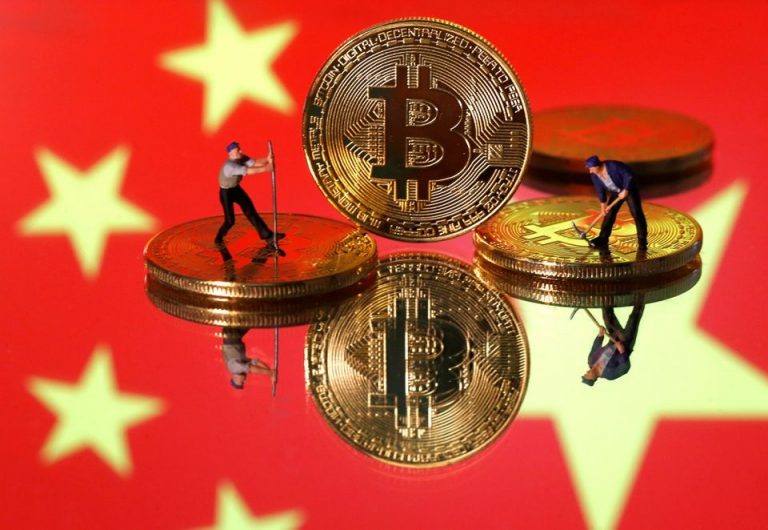
Reuters reported that China’s securities regulator, the China Securities Regulatory Commission (CSRC), has informally advised at least two major mainland brokerages to suspend their real-world asset (RWA) tokenization operations in Hong Kong.
This move signals Beijing’s growing caution toward the rapid expansion of digital asset activities offshore, even as Hong Kong positions itself as a crypto-friendly hub. The guidance emphasizes improving risk management and verifying that tokenized products are backed by legitimate underlying businesses, rather than speculative ventures.
Real-world assets (RWAs) refer to traditional financial instruments—like stocks, bonds, funds, real estate, or even trade receivables—converted into digital tokens on a blockchain. This process aims to enhance liquidity, enable 24/7 trading, and streamline settlements.
Register for Tekedia Mini-MBA edition 20 (June 8 – Sept 5, 2026).
Register for Tekedia AI in Business Masterclass.
Join Tekedia Capital Syndicate and co-invest in great global startups.
Register for Tekedia AI Lab.
Globally, the RWA market has surged to approximately $29 billion in value, with projections estimating it could exceed $2 trillion by 2030. Chinese firms, including GF Securities and China Merchants Bank International, had recently launched RWA products in Hong Kong, such as a 500 million yuan ($70 million) digital bond issuance.
The instructions were issued in recent weeks and appear targeted at leading brokerages, though it’s unclear if more firms will be approached or how long the halt will last. This follows a similar August directive from regulators urging brokerages to stop publishing research endorsing stablecoins, amid rising retail interest.
While mainland China maintains a strict ban on crypto trading and mining since 2021, Hong Kong has aggressively pursued tokenization. In June 2025, its Financial Services and the Treasury Bureau (FSTB) and Hong Kong Monetary Authority (HKMA) initiated a legal review of RWA frameworks, inspired by international models.
New rules effective August 1, 2025, require issuers to hold HK$25 million ($3.2 million) in capital and fully back tokens with safe assets. Analysts view this as a temporary “speed bump” to align policy on money settlement, risk controls, and market structure with technological advances, rather than a outright ban.

It may prioritize lower-risk RWAs, like tokenized money-market funds or government bonds, over real estate-linked products. Globally, this could influence other jurisdictions pacing their tokenization efforts, as China remains a major player in bitcoin mining and holdings despite restrictions.
The news quickly spread on X, with users highlighting the tension between China’s caution and Hong Kong’s ambitions: Crypto news accounts like 99BitcoinsHQ and TheKryptoXpress described it as a “crackdown” or “halt,” linking it to broader crypto inflows.
ImCryptOpus noted potential impacts on tokenized assets, while CryptoTogii questioned if it’s a “sign of caution or a crackdown.” Some posts, like from TheEmagenewsDAO, tied it to positive DeFi developments, such as Vitalik Buterin’s comments on low-risk DeFi.

Hong Kong has been positioning itself as a global crypto hub, with progressive policies like the August 2025 RWA tokenization rules requiring issuers to hold HK$25 million in capital and fully back tokens. The CSRC’s pause could undermine investor confidence and slow the growth of tokenized asset markets in the region.
The directive highlights a disconnect between mainland China’s conservative stance and Hong Kong’s pro-crypto policies, creating uncertainty for firms operating in both jurisdictions. This could discourage new entrants or delay planned tokenization projects.
Tokenization of RWAs, such as bonds and real estate, enhances liquidity and enables fractional ownership. A pause could limit access to these benefits, particularly for Chinese brokerages like GF Securities, which recently issued a 500 million yuan ($70 million) digital bond.
The halt may dampen enthusiasm among retail and institutional investors in Hong Kong, who have been drawn to tokenized assets for their 24/7 trading and settlement efficiency. This could redirect capital to other crypto hubs like Singapore or Dubai.
The CSRC’s emphasis on verifying legitimate underlying businesses for tokenized products reflects Beijing’s priority to curb speculative ventures and ensure financial stability. This aligns with prior moves, like the August 2025 directive against stablecoin research.
With the global RWA market valued at $29 billion and projected to reach $2 trillion by 2030, China’s pause could create a ripple effect, prompting other regulators to scrutinize tokenization frameworks. This may slow adoption in jurisdictions following Hong Kong’s lead.
Affected firms like GF Securities and China Merchants Bank International may need to overhaul risk management systems or pause planned issuances, incurring costs and delays. Smaller firms may struggle to comply with enhanced scrutiny. The CSRC’s focus on “legitimate” backing could steer tokenization toward low-risk assets like government bonds or money-market funds, sidelining higher-risk products like real estate or trade receivables.
Analysts, as noted in Reuters, view this as a “speed bump” rather than a ban, suggesting China may refine its RWA framework to balance innovation and control. The pause could lead to clearer regulations, potentially benefiting the market long-term.
However, it may also pave the way for more robust regulations, ensuring sustainable growth in tokenized asset markets. This development underscores China’s guarded approach to crypto innovation, balancing financial stability against the allure of blockchain efficiency.