

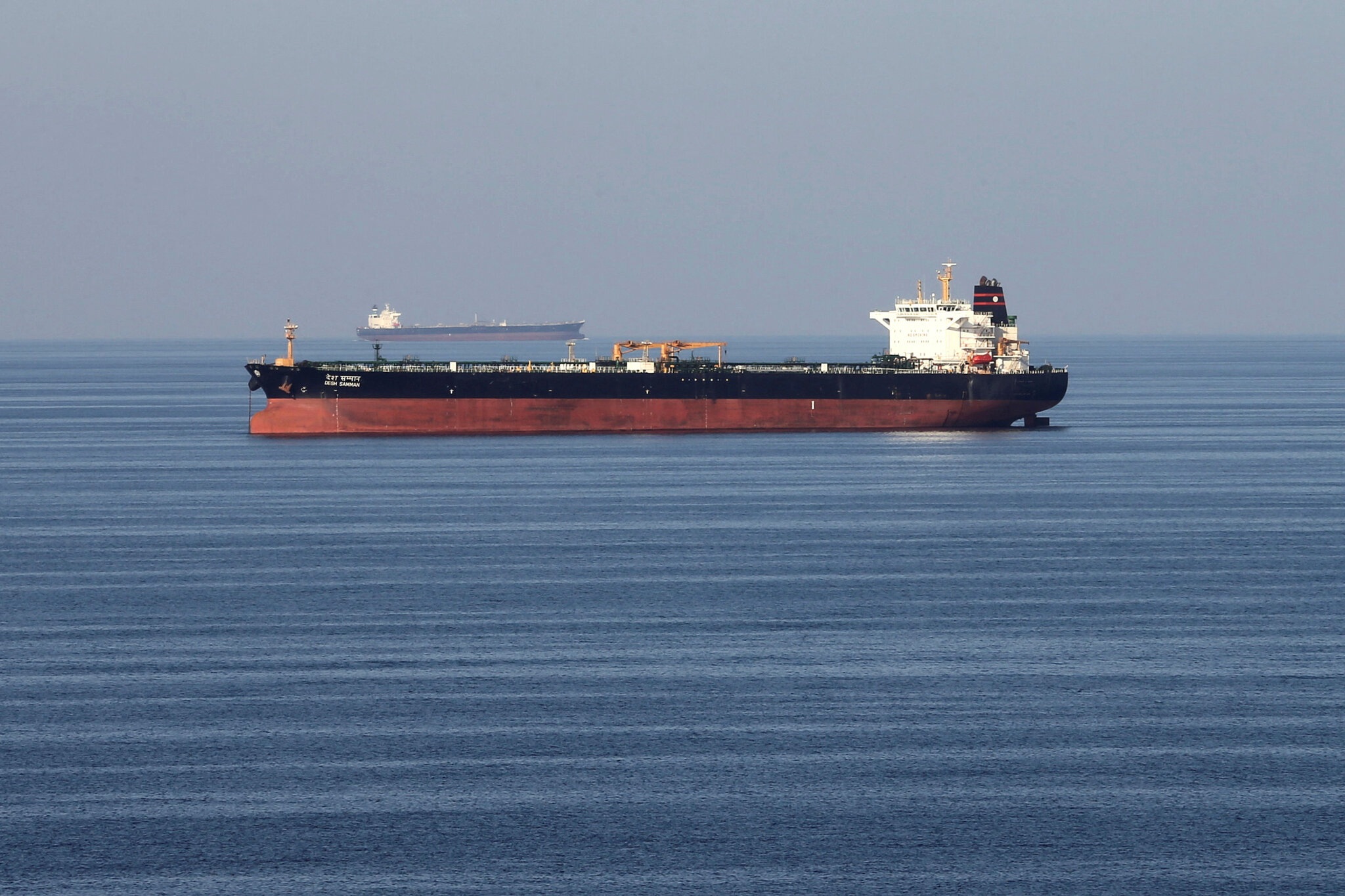
The world’s most closely watched physical oil benchmark surged to its highest level since the global financial crisis on Thursday, underscoring the growing disconnect between the paper market and the reality of an acute supply shock triggered by the closure of the Strait of Hormuz.
The spot price for prompt physical cargoes of Brent crude, known in the market as Dated Brent, soared to $141.36 per barrel, according to S&P Global data, the highest reading since 2008 and more than $32 above the June Brent futures contract, which settled at $109.03.
That unusually wide premium, known as backwardation, points to an exceptionally tight physical market in which refiners and traders are paying heavily for crude available for delivery within the next 10 to 30 days.
Register for Tekedia Mini-MBA edition 20 (June 8 – Sept 5, 2026).
Register for Tekedia AI in Business Masterclass.
Join Tekedia Capital Syndicate and co-invest in great global startups.
Register for Tekedia AI Lab.
The scale of the spread is now sending a stark warning to financial markets: while futures prices have already climbed sharply, they may still be understating the severity of the immediate supply crunch.
“The futures market is almost giving a false sense of security,” Amrita Sen, founder of Energy Aspects, said in an interview with CNBC.
Her assessment captures what many traders in the physical market are increasingly saying privately: the real stress is showing up not on screens in New York and London, but in the scramble for actual barrels.

This is where the story moves beyond headline crude prices. Dated Brent reflects the cost of securing real North Sea cargoes for near-term delivery and is often a more sensitive gauge of supply tightness than futures contracts, which are also influenced by positioning, hedging flows, and broader investor sentiment.
The surge above $140 suggests refiners in Europe and Asia are competing aggressively for immediate cargoes as flows from the Gulf remain disrupted by the month-long closure of Hormuz, the strategic waterway that normally handles around a fifth of global oil and liquefied natural gas shipments.
The distortion is even more pronounced in refined products. Sen noted that diesel in Europe is now trading close to $200 per barrel, a level that points to mounting distress across the downstream market, particularly for transport, manufacturing, and power-intensive sectors.

That matters because diesel is often the first place where a supply shock feeds directly into the real economy. Rising diesel costs quickly pass through to freight rates, food distribution, industrial logistics, and ultimately consumer inflation.
In effect, the crude shock is already migrating into the broader price system. Chevron Chief Executive Mike Wirth had warned last week that futures prices were not fully capturing the magnitude of the disruption.
Speaking at CERAWeek by S&P Global in Houston, Wirth said the market was trading on “scant information” and “perception,” while the actual physical consequences of the Hormuz shutdown were still working their way through global supply chains.
“There are very real, physical manifestations of the closure of the Strait of Hormuz that are working their way around the world and through the system that I don’t think are fully priced into the futures curves on oil,” he said.
His warning now appears prescient. While Brent futures around $109 suggest a severe but manageable geopolitical premium, the physical benchmark above $141 signals that refiners needing prompt cargoes are already facing near-crisis conditions.
The gap between the two prices has effectively become a measure of market anxiety over how quickly supply routes can normalize. Historically, such extreme backwardation tends to emerge when inventories are low, and buyers fear immediate shortages.
That was last seen during the 2008 commodity super-spike and, to a lesser extent, during the aftermath of Russia’s invasion of Ukraine in 2022. This time, however, the disruption is more concentrated around maritime logistics.
With tanker traffic through Hormuz either halted or severely constrained, buyers are turning to alternative cargoes from the North Sea, West Africa, and the United States, driving spot premiums sharply higher.
The broader implication is that the oil market is no longer merely pricing geopolitical risk. It is pricing a real-world interruption to physical flows. Analysts say if the strait remains closed into May, the spot market could tighten further, with Dated Brent potentially testing levels above $150 per barrel even if futures lag behind.
For central banks and policymakers, the divergence between physical and futures prices also raises the risk of underestimating inflation pressures. Consumers may not immediately see $141 crude reflected in benchmark futures headlines, but diesel, gasoline, and shipping costs are already moving in response to the tighter physical market.
In that sense, the spot market is delivering a much harsher verdict than the futures curve: the global oil system is under significant strain, and the full economic impact may only now be beginning to surface.