

Nigeria’s primary economic objective is to elevate its GDP from the current sub-$500 billion to a staggering $3 trillion by 2030. This ambitious target is not merely a number; it represents the “optimal productivity level” required to equilibrate with the nation’s rapidly expanding population and avert potential nano-conflicts.
To achieve a 6X growth multiple, the nation must address the fundamental market frictions that impede the creation and velocity of value. One of the most significant, yet overlooked, frictions is the existence of “dead assets”, millions of hectares of inherited farmlands that, despite their physical existence, possess no transferable value or registered legal titles.
Our analyst gleaned this from several posts and comments on Professor Ndubuisi Ekekwe’s LinkedIn page, which he has famously called “LinkedIn Nation,” relating to wealth creation as well as national development.
Register for the next Tekedia Mini-MBA.
Register for Tekedia AI in Business Masterclass.
Join Tekedia Capital Syndicate and co-invest in great global startups.
The Paradox of the Asset-Rich Poor
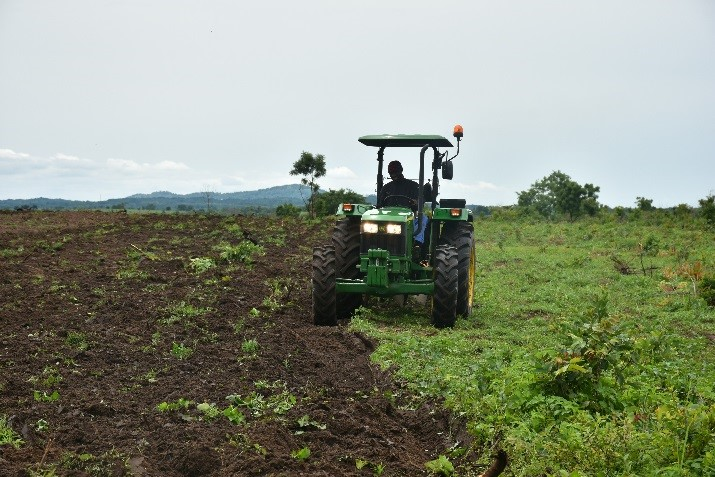
From the analysis, it emerged that the tragedy of the rural African economy is best illustrated by the “inheritance trap.” A citizen may inherit 1,000 hectares of land in a remote region like Abia state, yet the financial system and the state classify that individual as poor because the asset is illiquid and untransferable. In a perfect market, this land would be a potent source of capital; however, market frictions in discovery, verification, and legal documentation render it “dead”.
Because the land is not registered in a central, trusted portal, the owner’s net worth effectively remains at $0. This illiquidity prevents owners from using their land as collateral for loans or selling portions to urban investors, effectively keeping the rural populace in a state of “wealth and resources impoverishment”.

The Digitisation Playbook: Activating Dormant Wealth
Activating these dormant resources requires a systematic redesign of land administration through technology. The proposed playbook involves three critical steps. The first is mapping and recording, in which GPS and satellite data can be used by startups to map farmlands, recording them formally in the names of the rightful owners. These mapped assets must be registered within a digital ministry of lands or local government portal to ensure they are officially recognised by the state. This is centralized registration step. Market liquidity is another step where assets can then be placed on digital portals that enable owners to sell portioned titles—for example, 100 hectares out of a 1,000-hectare plot—to buyers in Lagos or Abuja, with the state protecting the buyer’s rights.
By linking a verified digital identity to a piece of land, an individual’s net worth can move from $0 to $100,000, almost instantaneously. On a national scale, this single policy intervention is projected to put $90 billion into the net worth of Nigerians, dramatically boosting aggregate spending and borrowing power.

The Multiplier Effect: Banking and the Real Sector
Unlocking dead assets would force a necessary transformation of the banking sector. Currently, the Nigerian economic architecture is hampered by high Treasury Bill (TB) rates, often reaching 14–15%. This creates a massive incentive for banks to invest in risk-free government debt rather than lending to the real sector. If a bank can earn 14% at practically no risk, there is no economic incentive to lend to a company at 17% with associated business risks.
However, when millions of Nigerians possess liquid, titled assets, they gain the capacity to borrow and spend, boosting productivity. Titled land becomes a de-risked collateral base that compels banks to deploy capital into productive investments like SMEs and agriculture. This activation would also support the rise of agro-crowdfunding platforms, which could use registered land as a “security layer” to provide investors with more confidence than a mere promise of return on investment.
Overcoming Structural and Legal Frictions
The success of this wealth activation relies on strong property rights, a key pillar of a capitalist economy. While the Land Use Act in Nigeria vests land ownership in the state, it does not prevent the reselling of property rights. The primary hurdle is the speed of the judicial system; for digitisation to work, there must be a mechanism for the speedy adjudication of ownership disputes. Furthermore, moving from communal ownership to individual or cooperative titling must be handled meticulously to avoid communal conflicts.
The state must transition to a data-backed governance system, particularly at the Local Government Area (LGA) level. LGAs represent “acres of diamonds” where entrepreneurs can build data models for local administration, moving policy-making from guesswork to measured improvement.
From Invention to Innovation
Unlocking dead assets is the essential transduction process required to move Africa from being an “inventive society” (rich in ideas) to an “innovative one” (rich in products and liquid value). Prosperity is a product of the whole society, people and government, nudging each other toward the fulfilment of needs. By digitising farmlands and creating a liquid asset class, Nigeria can finally “bake a larger cake” for shared prosperity, ensuring every square inch of the nation’s land is an active participant in the march toward a $3 trillion GDP. The future of abundance belongs to those with the capability to fix market frictions and see value where others see only dormant soil.