

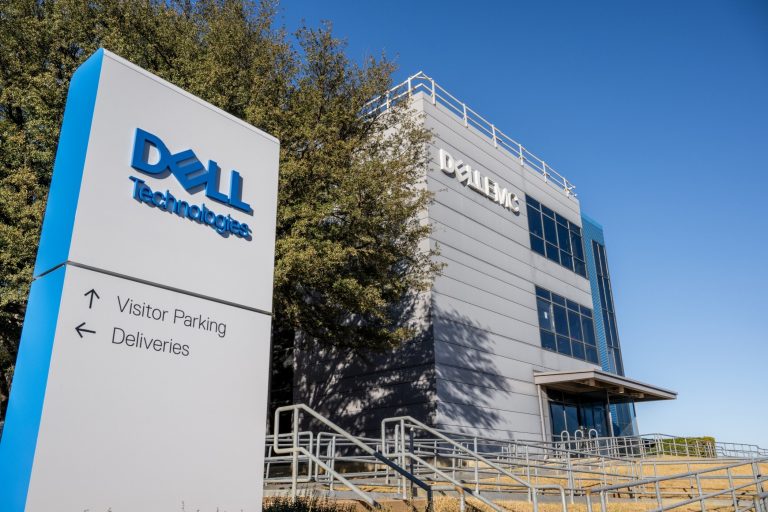
Dell Technologies shares plunged 11% on Wednesday, dragging down other data center equipment manufacturers as investors questioned whether corporate spending on artificial intelligence infrastructure will generate enough demand to justify the scale of investment underpinning the AI boom.
Hewlett Packard Enterprise (HPE), Oracle and Super Micro Computer also fell, extending a broader reassessment of companies that have benefited from expectations of years of spending on servers, networking equipment and other infrastructure needed to run AI workloads.
The sell-off underscores a growing divide between investment in AI infrastructure and evidence that businesses are adopting the technology at a scale capable of sustaining hardware demand. While technology companies and cloud providers continue to invest heavily in computing capacity, enterprise customers have yet to demonstrate the spending acceleration that some investors had anticipated.
Register for the next Tekedia Mini-MBA.
Register for Tekedia AI in Business Masterclass.
Join Tekedia Capital Syndicate and co-invest in great global startups.
Barclays analysts added to the pressure on Wednesday, downgrading Dell, HPE and NetApp from buy-equivalent ratings to hold-equivalent ratings, citing their substantial share-price gains and uncertainty over the timing of enterprise AI adoption.
The analysts said they had not observed a “meaningful AI inflection” in enterprise spending at the three companies. Instead, they argued that stronger infrastructure revenue was being driven largely by rising memory costs rather than a fundamental acceleration in corporate AI deployments.
Investors have been valuing data center equipment suppliers on the expectation that AI will generate sustained growth in hardware demand. If revenue gains are being driven primarily by higher component prices rather than increased volumes or new AI-related orders, those gains could prove less durable when memory prices eventually normalize.

Enterprise AI Spending Falls Short of Market Expectations
Data center server manufacturers and other infrastructure suppliers have been among Wall Street’s strongest performers this year, as investors positioned for a prolonged expansion in AI computing capacity.
Dell has risen more than 300% this year, while HPE has gained approximately 160% and NetApp has doubled. Those gains reflect expectations that demand for AI systems will extend beyond the largest technology companies to businesses seeking to deploy AI applications across their operations.
However, Barclays said the anticipated acceleration in enterprise AI spending has yet to materialize in the revenue of the companies it covers.

“There is growing sentiment about enterprise AI adoption creating a hardware refresh,” the analysts wrote, noting that businesses are typically allocating only about 5% of their information technology budgets to AI.
“We believe the strong enterprise revenues are more of a function of memory costs than a move to enterprise AI at this time.”
The assessment challenges one of the central assumptions behind the infrastructure rally: that corporate AI adoption will trigger a broad replacement cycle for servers and other computing equipment, creating a new and durable source of growth for hardware suppliers.
Companies may be experimenting with AI tools and introducing selected applications without committing to the large-scale infrastructure purchases needed to support widespread deployment. Enterprise adoption also depends on whether businesses can demonstrate measurable productivity gains, cost savings or additional revenue from their investments.
Barclays estimated that only about a quarter of total enterprise AI spending goes towards hardware. The finding suggests that even a substantial increase in overall AI budgets may translate into a more limited increase in orders for server manufacturers and storage providers.
The remaining expenditure can be directed towards other elements of AI deployment, including software and services. Consequently, growth in enterprise AI spending does not automatically translate into proportional growth in demand for physical infrastructure.
For companies whose valuations have risen on expectations of a hardware-led boom, the gap between projected demand and confirmed customer spending creates a risk that earnings expectations have moved ahead of the underlying market.
Memory Shortage May Be Inflating Infrastructure Revenue
Barclays’ downgrade also points to the role of rising memory prices in supporting revenue across the infrastructure sector.
Memory is a critical component of servers and other data center systems. When supplies tighten and prices increase, equipment manufacturers can pass some of those higher costs on to customers, increasing the reported value of sales even when underlying demand for equipment has not risen by the same amount.
That dynamic can make revenue growth appear stronger than the expansion in actual hardware volumes or AI-related demand.
The Barclays analysts warned that normalizing and eventually declining memory prices could weigh on infrastructure-related revenue. If customers pay less for memory components, equipment suppliers may face slower sales growth even if the number of systems sold remains relatively stable.
The risk is being taken seriously because memory is a cyclical industry, in which supply constraints and pricing increases can be followed by periods of weaker prices as production expands or demand changes.
Recent developments in China have added to uncertainty over the sector’s outlook. Shares of memory and storage companies were hit this week after ChangXin Memory Technologies, known as CXMT, reported progress over the weekend on a new chip structure.
Micron has fallen 11% for the week, while South Korea’s SK Hynix has declined 13% in US trading. Western Digital has dropped more than 8%.
The market reaction reflects concern that advances by Chinese memory manufacturers could eventually intensify competition and alter the industry’s supply outlook.
For infrastructure manufacturers, lower memory prices could reduce component costs, potentially improving margins if selling prices remain stable. However, if lower component prices also reduce the value of systems sold and coincide with weaker enterprise demand, the effect on revenue growth could be negative. The ultimate impact will depend on manufacturers’ pricing power, product mix and ability to generate greater sales volumes.
Higher Interest Rates Compound Concerns Over AI Returns
The retreat in data center stocks has also been fueled by concerns about the financing of the wider AI infrastructure buildout. Building data centers requires substantial investment in servers, chips, networking equipment, power supplies, and facilities. Much of the expansion depends on companies raising capital or taking on debt in anticipation of future demand.
Higher interest rates can make that investment more expensive, increasing financing costs and raising the level of future earnings required to justify current spending. The pressure is especially significant for companies whose business models rely on borrowing heavily to expand capacity before demand and cash flows are fully established.
Oracle, a major borrower and a key participant in AI infrastructure development, fell 9% on Wednesday and was down 33% for the year. CoreWeave, a cloud computing provider focused on AI workloads, plunged 15%, wiping out its gains for 2026. Those declines suggest that investors are now examining not only the potential growth of AI computing demand but also the cost of financing the infrastructure needed to serve it.
The concerns have been reinforced by questions about revenue growth at OpenAI, one of the major companies driving demand for AI computing capacity. If revenue generation among AI developers falls short of expectations, investors may question whether current infrastructure commitments can be supported by the future cash flows of the businesses using that capacity.
The issue is not necessarily that demand for AI computing will disappear. Rather, the market is reassessing the timing of demand, the distribution of spending between hardware and other services, and the financial returns available to companies supplying the infrastructure.
Investors Reassess the AI Infrastructure Trade
The latest sell-off marks a shift in sentiment towards a sector that has benefited from expectations of sustained AI investment. Dell’s more than 300% gain this year and HPE’s approximately 160% advance had already embedded significant optimism about future hardware demand.
Barclays’ downgrades suggest that investors may need clearer evidence of broad enterprise adoption before assuming those gains can continue at the same pace.
The major concern lies in whether companies will move from AI experimentation to large-scale deployment quickly enough to support the infrastructure spending anticipated by markets. If corporate budgets remain limited and hardware accounts for only a fraction of total AI expenditure, equipment manufacturers may struggle to meet the growth expectations built into their valuations.
At the same time, falling memory prices, potential new competition and higher financing costs could weaken the revenue and investment assumptions supporting the sector.
The AI infrastructure boom remains tied to the long-term expansion of computing demand, but Wednesday’s losses show that investors are becoming less willing to treat spending commitments as proof of future profitability.